At a Glance: Rolling is generally better for paint protection as it keeps the dirty exterior side of the cover facing outward. However, folding is often more practical for large vehicles, heavy-duty outdoor covers, or tight storage spaces where you lack the room to roll the material.
When you protect your vehicle with a custom or semi-custom cover, the way you handle the fabric during removal and storage is just as important as the material itself. Choosing between a folding vs rolling car cover often comes down to your available space, the weight of the fabric, and how much time you want to spend during your daily routine. For most owners, rolling is the superior method for maintaining a clean, scratch-free surface, while folding is a practical necessity for those with limited storage space or awkward garage configurations.
If you prioritize speed and surface protection, rolling the cover from the front to the back allows you to keep the exterior side of the fabric facing outward. This prevents debris, dust, and environmental contaminants from being trapped against your paint. Conversely, folding is often easier for a single person to manage with large, heavy-duty covers, but it requires a clean, dedicated surface to ensure you do not inadvertently drag the fabric across the ground.
Ultimately, the choice between these two methods hinges on your specific vehicle storage environment. Whether you are tucking away a classic car in a climate controlled garage or shielding a daily driver in an open driveway, the mechanics of how you handle the cover will dictate the longevity of your paint finish. Understanding the nuances of each technique allows you to tailor your car care routine to your specific needs.
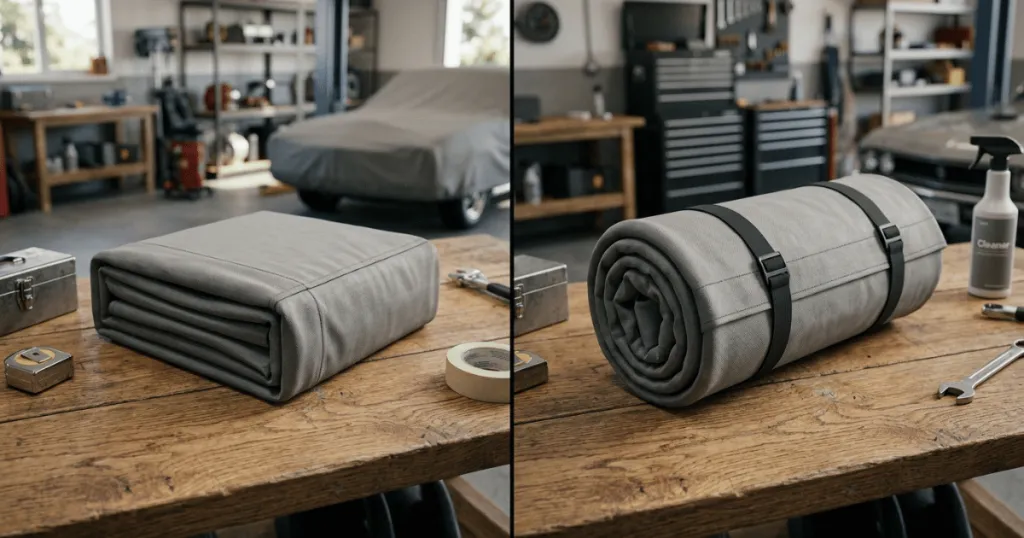
Comparison of Storage Methods
Understanding the fundamental trade-offs between these two techniques helps you decide which fits your workflow. The following table outlines the primary differences in effort, space requirements, and surface safety.
| Feature | Rolling Method | Folding Method |
|---|---|---|
| Surface Safety | High (keeps exterior out) | Moderate (risks debris transfer) |
| Storage Space | Requires long, narrow area | Compact, fits in tight bins |
| Ease of Use | Best with two people | Easier for one person |
| Setup Speed | Fast once practiced | Slower due to alignment |
The Rolling Method for Car Covers
Rolling your car cover is widely considered the gold standard by professional detailers and collectors who want to minimize the risk of micro-scratches. By starting at the front bumper and rolling the fabric toward the rear, you create a tight cylinder that keeps the clean, interior side of the cover against the vehicle paint while the dirty exterior remains on the outside of the roll.
Why Rolling Protects Paint
The primary advantage of rolling is the reduction of friction. When you pull a cover off a vehicle, it naturally collects dust and atmospheric pollutants. If you fold the cover, these particles can be pressed into the fabric or, worse, dragged across the clear coat as you manipulate the material. Rolling keeps the exterior side of the fabric facing outward, effectively sealing the dust inside the roll until the next cleaning cycle.
The Physical Requirements of Rolling
Rolling is most effective when you have enough clearance around the vehicle to walk the length of the car. If you are parked in a tight garage or a narrow parking spot, you may find it difficult to maintain a consistent roll. This method also works best with lightweight or medium-weight fabrics, as heavy canvas or multi-layer covers can become cumbersome to roll into a tight, manageable tube.
The Folding Method for Car Covers
Folding is the most common approach for owners who lack the floor space to roll a cover or who use heavy, multi-layered outdoor covers that are difficult to manage. While it requires more attention to detail, folding can be just as safe for your vehicle if you follow a consistent, disciplined process that avoids dragging the material on the ground.
Managing Large or Heavy Covers
For large trucks, SUVs, or heavy-duty outdoor covers, folding is often the only practical solution. These covers are frequently too bulky to roll into a neat cylinder. By folding the sides toward the center and then accordion-folding the length, you can create a compact square that fits easily into a storage bag or a shelf in your garage.
Techniques to Prevent Surface Damage
The biggest risk with folding is the tendency to let the fabric touch the floor. To mitigate this, always fold the cover on a clean surface or use a dedicated mat. If you are working alone, start by folding the sides toward the center while the cover is still partially on the vehicle. This keeps the majority of the fabric off the ground until you are ready to make the final folds.
Feature-by-Feature Differences
When comparing the two, consider how your specific environment dictates your choice. The differences in material handling and storage efficiency are significant for long-term maintenance.
Material Compatibility
Lighter, synthetic fabrics like polyester or thin UV-resistant materials are excellent for rolling because they are pliable and hold a roll shape well. Heavier materials, such as thick cotton blends or multi-layer waterproof covers, are often too stiff to roll tightly. These heavier fabrics are almost always better suited for folding, as they naturally resist being rolled into a compact size.
Space and Storage Constraints
If you store your car in a tight garage, the rolling method might be physically impossible. Rolling requires you to move along the side of the vehicle, which is not feasible if you have less than two feet of clearance. Folding is much more forgiving in cramped quarters, as you can perform the task by standing in one spot and pulling the fabric toward you.
Long-Term Maintenance and Cleaning
Regardless of the method you choose, the cleanliness of your cover is the most important factor in preventing scratches. If you choose to fold, you must be more diligent about washing your cover regularly to remove trapped dust. If you choose to roll, you can go longer between washes because you are effectively containing the dust on the outside of the roll, keeping it away from your paint.
Best Use Cases for Each Method
Your choice should align with your vehicle type, your storage environment, and your physical ability to manage the cover material.
When to Choose Rolling
Rolling is ideal for owners of sports cars or sedans kept in spacious garages. If you have a high-quality, lightweight indoor cover and plenty of room to move around the vehicle, rolling is the best way to maintain a pristine finish. It is the preferred method for those who use their cover daily and want the fastest possible removal and installation process.
When to Choose Folding
Folding is the better choice for owners of large SUVs, trucks, or anyone using a heavy-duty, multi-layer outdoor cover. It is also the necessary choice for those with limited garage space. If you find that rolling your cover results in a bulky, unmanageable tube that is difficult to store, switching to a structured folding pattern will likely make your routine much more efficient.
Practical Considerations for Daily Handling
Beyond the basic mechanics, consider the physical effort required for each method. Rolling a cover requires a degree of coordination and steady movement to keep the cylinder tight. If you have a large vehicle, the roll can become quite heavy by the time you reach the rear bumper. Conversely, folding allows you to break the task into smaller, more manageable segments. You can fold the passenger side, then the driver side, and finally the length of the vehicle. This modular approach is often less physically taxing for those who find maneuvering a large, rolled bundle difficult.
Another factor is the impact of wind. If you are removing an outdoor cover on a breezy day, rolling can be a challenge. The wind can catch the edges of the roll, causing it to unspool or shift. Folding provides more control in windy conditions, as you can pin down sections of the cover as you work your way across the vehicle. This added control can prevent the cover from flapping against the paint, which is a common cause of surface marring during removal.
Which One Should You Choose?
Deciding between a folding vs rolling car cover is not about which is objectively better, but rather which is better for your specific situation. If your primary goal is the absolute preservation of your paint finish and you have the space to maneuver, rolling is the superior technique. It minimizes the movement of the cover across the paint and keeps contaminants contained.
However, do not feel pressured to roll your cover if it is heavy or if your space is limited. A well-executed fold is perfectly safe for your vehicle. The most important factor is consistency. Whichever method you choose, stick to it every time you remove the cover. A common mistake is alternating between methods, which can lead to confusion and increase the likelihood of dragging the cover on the ground. Choose the method that allows you to keep the cover off the floor and off the pavement, as that is the single biggest factor in preventing damage to your vehicle finish.
FAQ
Can I switch from folding to rolling if I have a heavy outdoor cover?
It is difficult to switch to rolling with heavy outdoor covers because the material is often too stiff to roll tightly. If your folding vs rolling car cover choice is dictated by weight, stick to folding for heavier fabrics.
Does rolling a car cover really prevent more scratches than folding?
Yes, rolling generally reduces the risk of scratches because it keeps the exterior, dust-covered side of the fabric facing outward, preventing it from rubbing against your paint during the removal process.
What is the best way to clean a cover before folding it?
Use a soft brush or a leaf blower to remove loose dust and debris before you begin folding. This prevents you from trapping dirt inside the folds of your cover.