When vehicle owners shop for exterior vehicle protection, they usually focus on fabric thickness, UV resistance, or waterproof ratings. They often ignore the microscopic points where different fabric panels meet. However, car cover seam quality serves as the true backbone of weather defense, determining whether a shield holds up against severe storms or fails prematurely.
A poorly constructed joint will allow rain, snowmelt, and condensation to seep straight through to clear coat finishes, regardless of how waterproof the main fabric panels might be. Understanding how manufacturers join these panels helps vehicle owners select protective gear that actually safeguards painted surfaces during long-term outdoor storage or garage parking.
Beyond basic weather deflection, examining the structural makeup of an automobile shield reveals why certain products survive multiple winters while others split at the stress points within months. Vehicle owners who park outdoors in variable climates must look beyond surface specifications and evaluate how panels are locked together.
The Core Mechanics of Car Cover Seam Quality
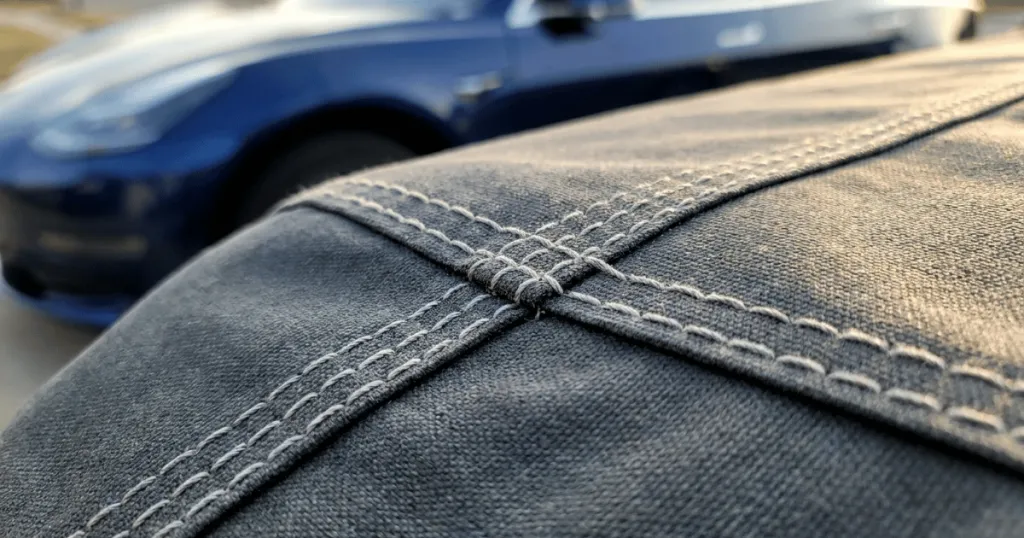
Every protective automobile shield relies on joining multiple patterned panels together to match the complex curves of a car, truck, or SUV. The intersection points experience the highest tension during installation and removal, making structural integrity paramount. If the thread strength, needle hole density, or bonding agent fails, the entire barrier breaks down long before the base textile degrades.
Evaluating this structural design requires looking closely at how fabric layers are manipulated during production. Standard single-needle stitching leaves exposed holes that wick moisture inward through capillary action. Superior manufacturing methods employ folded overlap techniques that hide raw edges and distance the needle holes from direct water paths, shielding the interior from pooling precipitation.
The underlying physics of textile stress mean that wind gusts exert incredible leverage against stitched junctions. When air moves across a loose-fitting or tight-fitting shell, the kinetic energy transfers directly to the thread lines. If the tensile strength of the thread is lower than the force of the wind, the junction begins to yawn, creating micro-tears that expand rapidly over time.
Single-Needle Versus Multi-Row Stitching Configurations
The number of rows of thread holding a panel together dictates how well the joint distributes physical stress. A single row of stitching might suffice for lightweight indoor dust covers, but outdoor vehicle shields demand multi-row construction. Double-stitch or triple-stitch layouts share the tension load across parallel thread lines, preventing localized tearing when harsh winds buffet the exterior shell against body panels.
Beyond raw strength, multi-row configurations allow builders to tuck raw fabric edges inside the fold. This enclosed design keeps loose threads from snagging on side mirrors, door handles, or trim pieces. When owners pull the protective shell on and off daily, robust multi-row joints resist fraying far better than minimal single-line alternatives.
When manufacturers utilize reinforced stitching techniques, they often incorporate lockstitch patterns rather than standard chain stitches. A lockstitch locks each loop of thread in place, meaning that if a localized section is punctured or cut, the entire seam does not unravel. This design choice prevents catastrophic failure when a cover brushes against sharp garage corners or low-hanging tree branches.
Thread Materials and UV Degradation Resistance
Even if the fabric remains intact, inferior sewing thread can disintegrate rapidly under constant sun exposure. High-performance automobile covers utilize UV-treated polyester or bonded nylon threads that resist breaking down under intense solar radiation. If cheap cotton-blend threads are used, outdoor heat cycles will rot the stitching within a single season, leaving gaps that split apart under light wind pressure.
Thread thickness also influences long-term durability. Heavier denier threads maintain tensile strength through years of temperature fluctuations, freezing rain, and summer heatwaves. Vehicle owners should verify that the thread material matches or exceeds the durability rating of the primary outer shell fabric.
Exposed threads face a double threat from solar rays and moisture. When ultraviolet radiation breaks down the polymer chains in substandard thread, microscopic fibers snap. Once these fibers weaken, even moderate tension from pulling the cover over a bulky rear spoiler or antenna will cause the joint to split wide open.
Advanced Sealing Methods and Moisture Defense
Stitching alone cannot stop water molecules from squeezing through tiny needle punctures under driving rain or melting snow. This physical reality makes secondary moisture barriers mandatory for any all-weather outdoor vehicle shield. Manufacturers use specialized treatments to block liquid ingress completely along every junction.
Heat sealing, tape application, and ultrasonic welding transform porous stitch lines into waterproof barriers. These secondary processes dictate whether an automobile cover protects against moisture accumulation or traps condensation against the clear coat, which can lead to mineral etching and paint hazing over time.
Without these secondary measures, water pooling on the roof or hood of a parked vehicle will find the path of least resistance. Needle holes act like funnels under hydrostatic pressure, directing moisture straight onto the protected surface and neutralizing the benefits of waterproof face fabrics.
Heat-Sealed Tape Versus Liquid Sealants
Applying a waterproof polyethylene or polyurethane tape over the interior stitch line remains the gold standard for heavy-duty outdoor covers. This adhesive tape melts under thermal pressure, embedding into the needle holes and locking out moisture completely. Liquid seam sealants offer another option, though they can crack or peel over years of flexing and temperature swings.
When inspecting an automobile shield, run a hand along the interior junctions to check for smooth, continuous sealing tape. Gaps, bubbles, or peeling edges indicate weak manufacturing controls that will allow water leaks during the first heavy downpour.
The application process requires exact temperature and pressure calibration. If the heat-sealed tape is applied too hastily, it lacks proper mechanical bond strength, causing it to delaminate after a few cycles of hot summer sun followed by cold evening temperatures.
Ultrasonic Seaming for Non-Woven Textiles
Modern non-woven breathable fabrics, such as multi-layer polypropylene composites, often use ultrasonic welding rather than traditional thread. High-frequency sound waves melt the synthetic fibers together at the microscopic level, creating a seamless bond without piercing the material with needles. This approach eliminates puncture holes entirely, offering superior moisture defense for breathable outdoor covers.
While ultrasonically welded joints look clean and perform exceptionally well against rain, they require precise manufacturing calibration. If the weld is too aggressive, the fabric thins out near the edge and tears easily under wind load. Finding the right balance between weld strength and material flexibility is critical for long-term reliability.
This welding technique works exceptionally well for engineered composites designed to let trapped interior vapor escape while blocking liquid water droplets from entering. Maintaining structural continuity without thread allows the material to flex uniformly across the entire surface of the car, truck, or SUV.
Real-World Context and Environmental Stressors
Different parking environments test protective equipment in distinct ways, directly impacting how long joints survive. An automobile parked in a coastal region faces high humidity, salt spray, and intense sun, which accelerate thread rot and adhesive breakdown. Conversely, vehicles stored in freezing northern climates subject their protective covers to heavy ice accumulation and rapid freeze-thaw cycles.
When ice freezes over a poorly sealed joint, expanding water crystals force the stitch lines apart. This mechanical expansion widens needle holes and accelerates fabric failure. Selecting a product with heavy-duty construction prevents weather-related degradation in harsh climates.
Daily handling habits also dictate lifespan. Tugging forcefully on a frozen or wind-snagged protective shell places immense shearing force on the seams nearest the bumper corners and mirror pockets. Proper installation techniques, such as walking the cover down rather than pulling from one corner, protect vulnerable joints from premature stress tears.
Owners must also consider biological environmental factors like tree sap, bird droppings, and falling leaves. If organic debris settles directly onto a stitched joint, acidic residues can degrade the thread material over time, making regular maintenance cleaning an essential part of preserving protective longevity.
Why Proper Construction Matters for Paint Protection
The primary purpose of any exterior vehicle shield is preserving clear coat integrity against environmental contaminants, bird droppings, tree sap, and ultraviolet rays. If moisture penetrates through defective junctions, it mixes with trapped pollutants and sits directly against the paint surface. Over time, this trapped moisture creates water spots, oxidation, and clear coat failure.
Furthermore, fraying stitch lines can expose raw thread ends or abrasive edges to the vehicle’s finish. As wind causes the protective shell to shift against the body panels, rough exposed joints act like fine sandpaper, marring gloss finishes and scratching clear coats. Prioritizing high car cover seam quality ensures that the interior lining remains soft and non-abrasive against sensitive painted surfaces.
Investing in superior construction also prevents premature replacement costs. A poorly made shield might fray within months, forcing vehicle owners to purchase replacements repeatedly. Robust manufacturing standards extend the functional lifespan of the protective gear, providing reliable defense across multiple seasons of outdoor exposure.
When paintwork remains shielded from both UV radiation and moisture intrusion, vehicle owners avoid costly exterior detailing, clear coat correction, and paint restoration services. The initial investment in superior junction construction pays dividends by safeguarding the aesthetic and resale value of the automobile over years of ownership.
Common Misconceptions About Protective Joints
Many vehicle owners assume that thick, heavy fabric guarantees complete waterproof protection, regardless of how the panels are joined. In reality, a heavy fabric with single-needle stitching will leak faster than a lighter, multi-layer material featuring heat-sealed tape. The barrier is only as strong as its weakest connection point.
Another frequent misunderstanding involves the belief that double-sided sewing makes a cover entirely waterproof without taped backing. Even tight stitching leaves microscopic channels for moisture ingress. Without a welded or taped inner barrier, water will eventually work its way through the thread paths during sustained storms.
Buyers also frequently mistake decorative outer piping for structural reinforcement. Some designs feature colored fabric piping along the edges to improve aesthetics or help align the cover during installation. While this piping can add minor stiffness, it does not replace the need for multi-row stitching and internal moisture sealing along the actual load-bearing junctions.
Recognizing these myths helps vehicle owners evaluate product specifications with a critical eye. Looking past marketing claims about fabric weight directs attention toward the actual engineering details that determine whether a protective cover succeeds or fails in real-world use.
FAQ
How can I tell if a vehicle cover has waterproof taped junctions?
Turn the cover inside out and inspect the interior intersection lines. You should see a clear or matching polymer strip melted directly over the thread paths, creating a smooth, sealed barrier against moisture.
Do indoor dust covers require heat-sealed stitch lines?
No. Indoor environments lack rain, snow, and severe UV exposure, meaning single-row or double-row stitching without waterproof tape is usually sufficient for dust and scratch defense in a garage.
Why do stitching lines fail before the main fabric panels?
Stitching creates physical punctures in the textile and concentrates physical tension when wind buffets the cover, making thread lines the most vulnerable structural areas on any automobile shield.
What maintenance steps help preserve stitch integrity over time?
Clean the cover periodically following manufacturer guidelines, avoid dragging it across rough pavement during removal, and ensure it is completely dry before storing it away to prevent mildew growth.