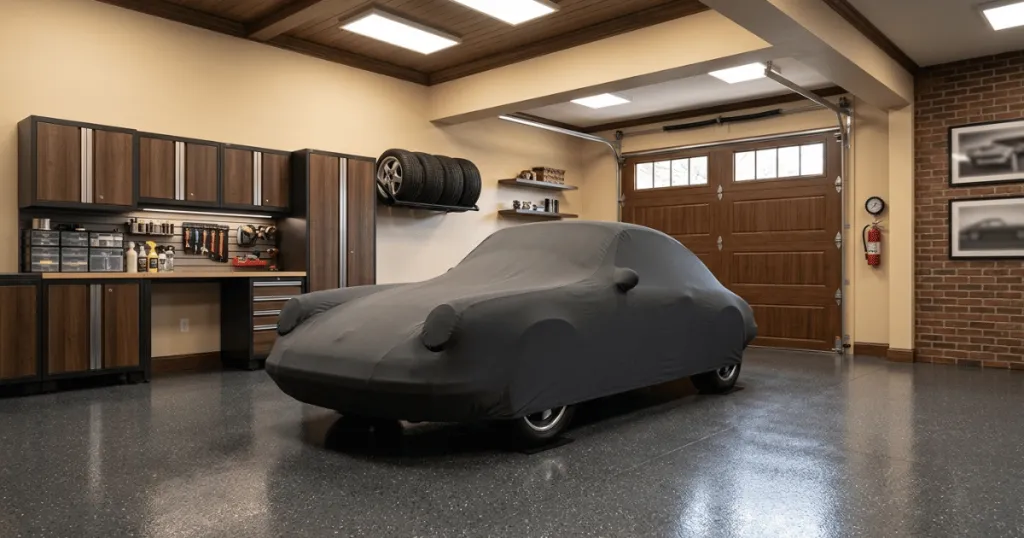
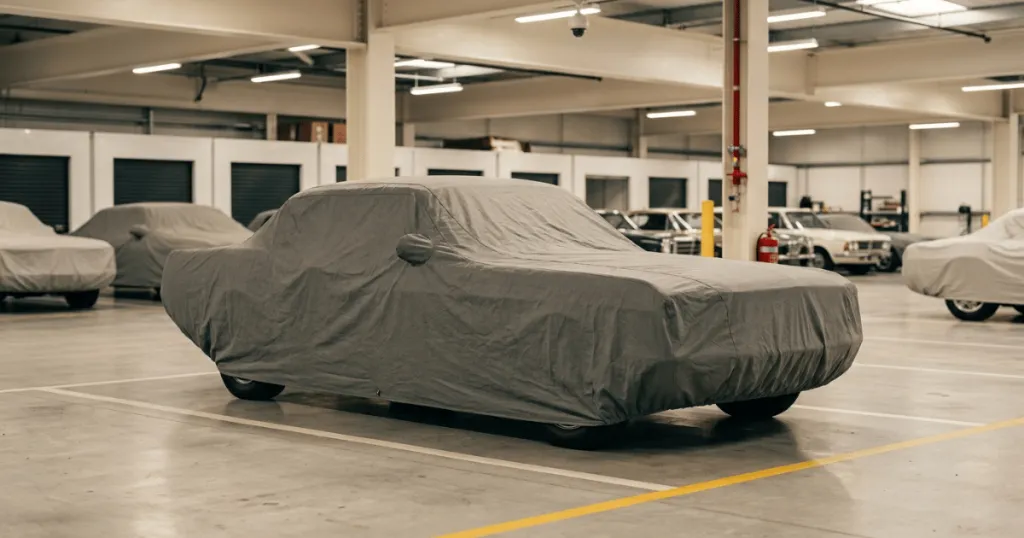
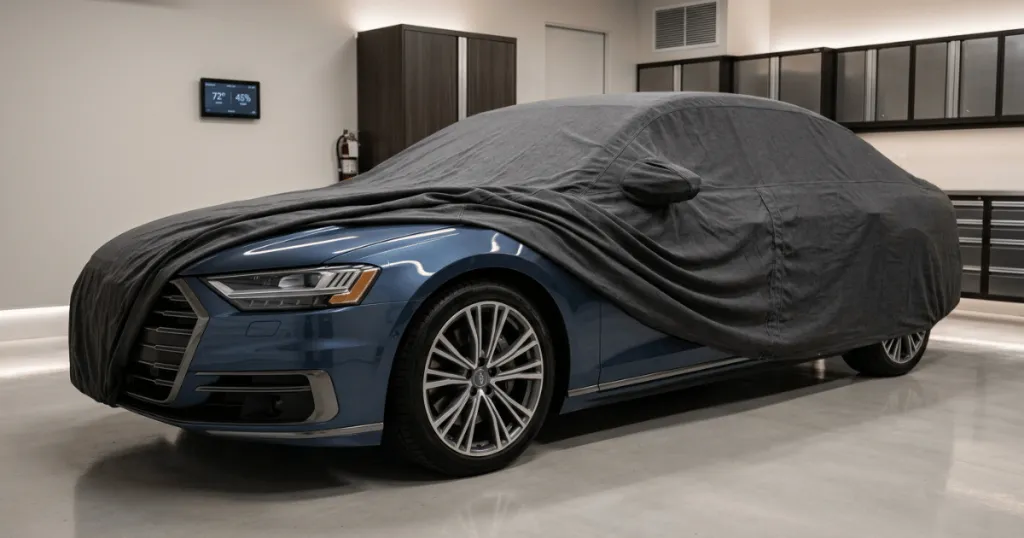
At a Glance: To store a car cover, first clean it by brushing off loose debris and hand-washing with mild soap if necessary. Ensure the cover is 100% dry before folding to prevent mold. Use a rolling technique to minimize creases, then place the cover in a breathable storage bag. Store the bag in a cool, dry, and elevated location, away from chemicals and direct sunlight.
Proper storage is the most overlooked aspect of vehicle protection. Many owners treat their car cover as a disposable item, yet a high-quality cover can last for years if handled with care during the off-season or while the vehicle is in use. Learning how to store a car cover correctly prevents material degradation, mold growth, and premature wear that often occurs when a cover is shoved into a trunk or left in a damp corner of a garage.
By following a consistent routine for cleaning, drying, and folding, you ensure your cover remains ready for deployment whenever you need it. This guide outlines the essential steps to prepare your cover for storage, the best methods for folding, and the ideal environments to keep the fabric in top condition for the long term.
Before You Start: Assessing Your Cover
Before you even think about putting your cover away, you must perform a thorough assessment of its current state. Storing a dirty or damp cover is the fastest way to ruin the fabric and potentially damage your vehicle’s paint finish the next time you use it. Take a few minutes to inspect the entire surface for debris, bird droppings, or signs of moisture trapped in the seams.
Cleaning and Debris Removal
If your cover has been sitting outside, it likely contains dust, pollen, or dried organic matter. Use a soft-bristled brush or a clean microfiber cloth to gently wipe away loose particles. If the cover is heavily soiled, a light rinse with cold water and a mild, non-detergent soap is usually sufficient. Never use harsh chemicals or pressure washers, as these can strip away water-repellent coatings or damage the integrity of the fabric weave.
The Importance of Complete Drying
Moisture is the primary enemy of stored car covers. If you fold a cover while it is even slightly damp, you create a breeding ground for mildew and mold. These organisms can cause permanent staining and unpleasant odors that are difficult to remove. Always hang the cover in a shaded, well-ventilated area until it is completely dry to the touch. Avoid direct, intense sunlight during the drying process, as prolonged UV exposure can weaken synthetic fibers over time.
Tools and Storage Prerequisites
You do not need specialized equipment to store your cover, but having the right supplies makes the process much easier. A dedicated storage bag is the most effective tool for keeping your cover organized and protected from dust while it is not in use. If your cover did not come with a bag, consider using a breathable fabric sack rather than a plastic container or a sealed bin.
Choosing the Right Environment
The location where you keep your cover matters just as much as the folding method. Avoid areas with extreme temperature fluctuations, such as an uninsulated attic or a shed that reaches high heat during the summer. Excessive heat can cause certain materials to become brittle or lose their protective properties. A cool, dry, and climate-controlled space like a closet or a shelf inside your garage is ideal.
Why Breathability Matters
Always prioritize breathability in your storage choice. Plastic bags or airtight containers trap residual moisture, which leads to the mold issues mentioned earlier. If you must use a container, ensure it has ventilation holes or is left slightly open to allow air circulation. A breathable cotton or synthetic bag allows the fabric to breathe, preventing the buildup of trapped humidity that can compromise the cover’s protective lifespan.
How to Store a Car Cover: Step-by-Step Instructions
Executing the storage process with care ensures your cover stays in good shape. Follow these steps to prepare your cover for short-term or long-term storage.
Step 1: The Initial Fold
Start by folding the cover in half lengthwise, bringing the driver-side edge to the passenger-side edge. This aligns the mirror pockets and makes the cover more manageable. Once you have a long, narrow strip, fold it again in the same direction. This creates a manageable width that fits easily into a storage bag.
Step 2: The Rolling Technique
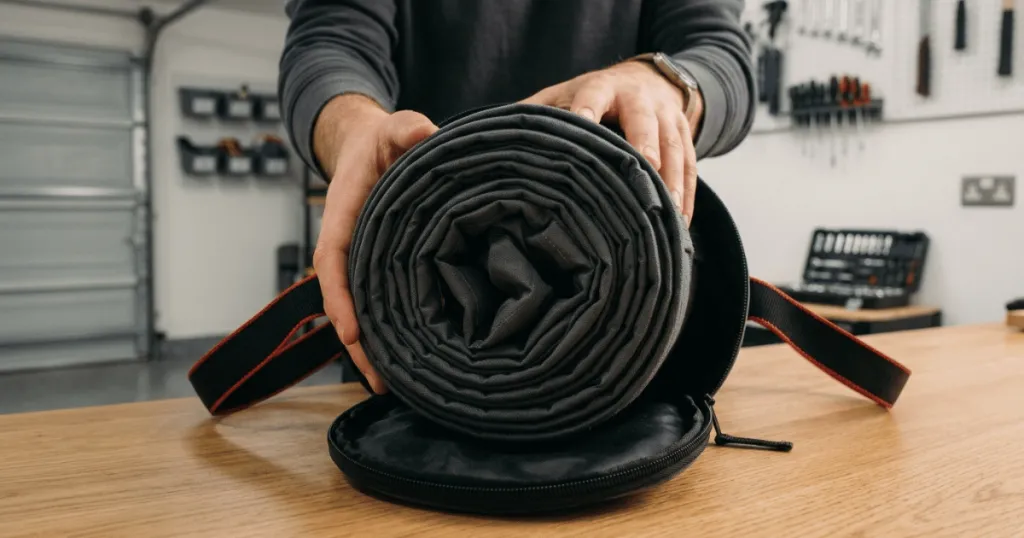
Instead of creating sharp creases by folding the cover into a small square, consider rolling it. Start from the front of the cover and roll it tightly toward the back. Rolling minimizes the stress on the fabric and prevents the formation of permanent creases that can eventually lead to tears or weak points in the material.
Step 3: Securing and Bagging
Once the cover is rolled or folded into a compact size, place it gently into your storage bag. Do not force it if it does not fit easily. If you are struggling to get the cover into the bag, it is better to re-fold it than to jam it in, which can damage the seams or the fabric itself. Pull the drawstring or close the zipper securely to keep dust and pests out.
Step 4: Proper Placement
Place the bag on a shelf or a clean, elevated surface. Avoid placing the bag directly on a concrete floor, as concrete can absorb moisture and transfer it to the cover over time. Keeping the bag off the ground also protects it from potential pests or accidental spills in your garage or storage area.
Advanced Considerations for Long-Term Storage
When you are preparing for extended periods of inactivity, such as winterizing a classic car or storing a vehicle in a long-term facility, your approach to car cover maintenance must be more rigorous. Long-term storage often exposes the cover to stagnant air, which increases the risk of dust accumulation and potential pest intrusion. If you are storing the cover in a garage that is not climate-controlled, consider placing the bagged cover inside a secondary, larger breathable container or a dedicated storage locker to provide an extra layer of defense against environmental factors.
Furthermore, inspect the storage bag itself. Over time, the bag can accumulate dust on its exterior. Wiping down the storage bag before you place it on a shelf ensures that you are not bringing contaminants into your clean storage environment. If you notice the bag has become frayed or the closure mechanism is failing, replace the bag immediately. A compromised storage bag is no better than leaving the cover exposed on a workbench.
Managing Different Fabric Types
Different materials require slightly different handling when being folded for storage. Heavier, multi-layer fabrics are more prone to creasing and can be bulky, making the rolling technique essential to prevent structural stress. Lighter, single-layer fabrics are easier to fold but may be more susceptible to snagging on rough surfaces. Regardless of the material, always ensure you are folding on a clean, smooth surface like a driveway or a clean garage floor. Avoid folding the cover on gravel or grass, as these surfaces can transfer debris directly onto the interior lining of the cover, which will then be pressed against your paint the next time you use it.
Common Mistakes to Avoid
Many owners inadvertently shorten the lifespan of their equipment through simple errors. One of the most common mistakes is folding a cover while it is still on the vehicle. While it might seem convenient, this often leads to dragging the cover across the paint, which can cause micro-scratches, especially if there is fine dust on the surface. Always remove the cover completely and lay it on a clean surface before folding.
Another frequent error is using harsh detergents or laundry machines. Most car cover materials, especially those with specialized coatings, are not designed for the agitation of a washing machine. The mechanical stress can tear the fabric or destroy the water-resistant finish. Stick to hand-washing whenever possible to maintain the structural integrity of the material.
Finally, avoid storing the cover in a location where it might be exposed to chemicals like gasoline, oil, or cleaning solvents. These substances can leach into the fabric and cause chemical degradation or leave residues that could damage your vehicle’s paint the next time the cover is installed. Keep your storage area clean and free of automotive fluids.
Troubleshooting Storage Issues
If you discover that your cover has developed a musty smell, do not panic. This is often a sign of trapped moisture. Take the cover out of storage and lay it out in a shaded, breezy area for several hours. The combination of fresh air and gentle sunlight can often neutralize mild odors. If the smell persists, you may need to perform a gentle hand-wash with a mild, pH-balanced soap.
If you notice wrinkles or stiff fabric after taking the cover out of long-term storage, simply install it on the vehicle on a warm, sunny day. The heat from the sun will naturally soften the fabric and allow it to relax, smoothing out the wrinkles. Avoid using an iron or a steamer, as the high heat can melt synthetic fibers or destroy the protective coating on the cover.
Should you find small tears or loose threads, address them before the next use. Small snags can be repaired with a fabric-safe adhesive or a simple needle and thread, provided the material is not too thick. If the damage is extensive, it may be time to consider the overall condition of the cover, as structural integrity is vital for effective protection. Knowing how to store a car cover properly is the best way to prevent these issues from occurring in the first place.
FAQ
Can I store my car cover in a plastic bin?
It is generally not recommended to store a car cover in a sealed plastic bin. Plastic containers trap moisture and prevent airflow, which can lead to mold and mildew growth. If you must use a container, ensure it is well-ventilated or use a breathable fabric storage bag instead.
How often should I clean my cover before storing it?
You should clean your cover whenever it becomes visibly dirty or before putting it away for an extended period. Storing a dirty cover allows dust and debris to become embedded in the fabric, which can cause abrasion against your vehicle’s paint the next time you use it.
Is it okay to use a washing machine for my car cover?
Most manufacturers advise against using a washing machine. The agitation and heat can damage the fabric weave and strip away water-repellent coatings. Hand-washing with a mild soap and cold water is the safest way to clean your cover before learning how to store a car cover for the season.
What should I do if my storage area is humid?
If your storage environment is humid, consider placing a desiccant pack or a moisture-absorbing product inside the storage area, but not directly inside the bag with the cover. Keeping the cover in a breathable bag in an elevated, well-ventilated space is the best defense against humidity.