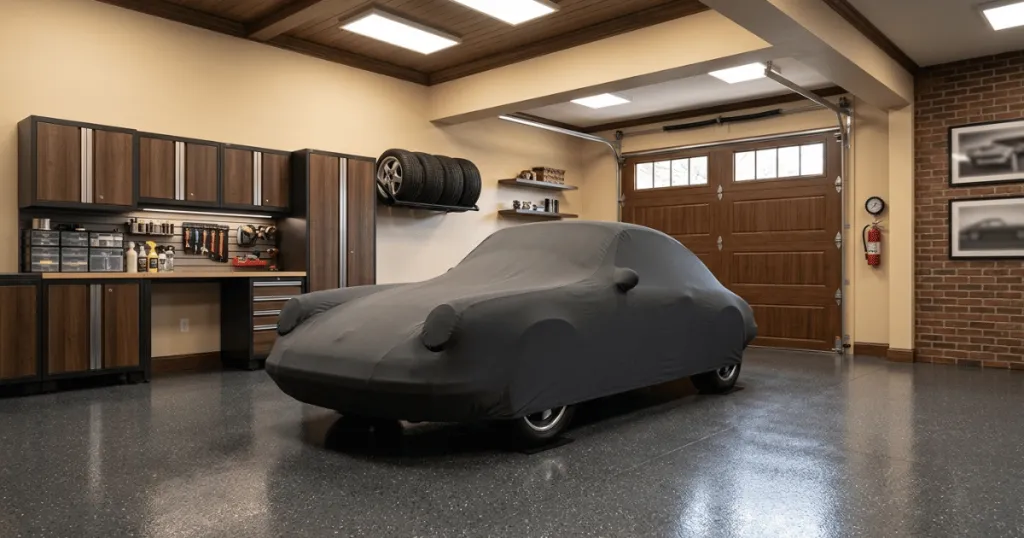
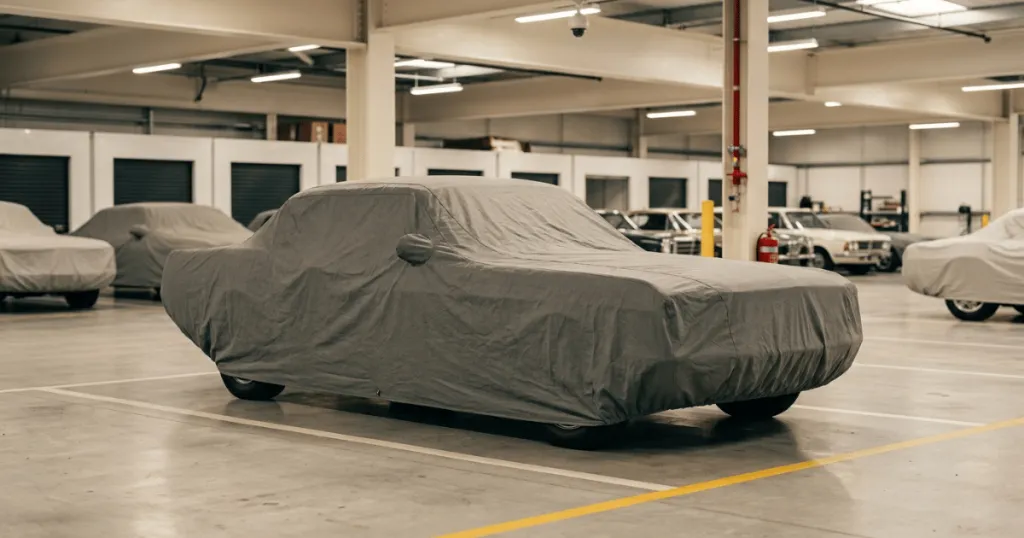
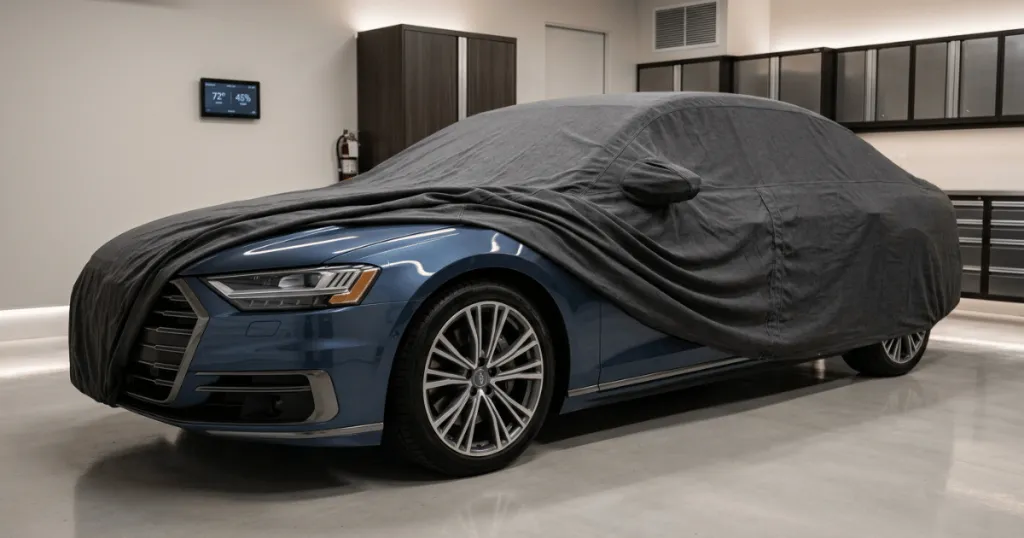
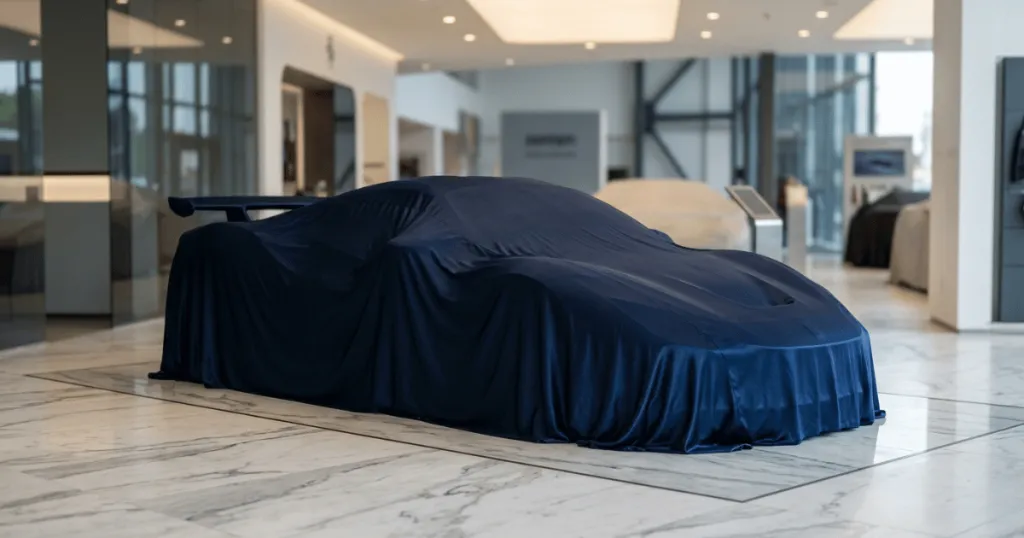
Many vehicle owners assume that parking a car inside a closed garage eliminates the need for any exterior protection. Dust, accidental bumps, and shifting humidity still pose silent risks to paint and trim during extended periods of inactivity. A seasonal storage car cover acts as a dedicated barrier, shielding the vehicle from environmental hazards that accumulate over months of non-use. Understanding how these covers function helps vehicle owners preserve their investment through winter freezes or summer storage phases.
Selecting the right protection requires looking beyond generic universal sheets and matching the fabric, fit, and ventilation to your specific parking environment. Whether the vehicle rests in a damp backyard shed or an open communal carport, the physical demands placed on the cover change dramatically. Evaluating these operational factors ensures the car emerges from storage in the exact condition it entered.
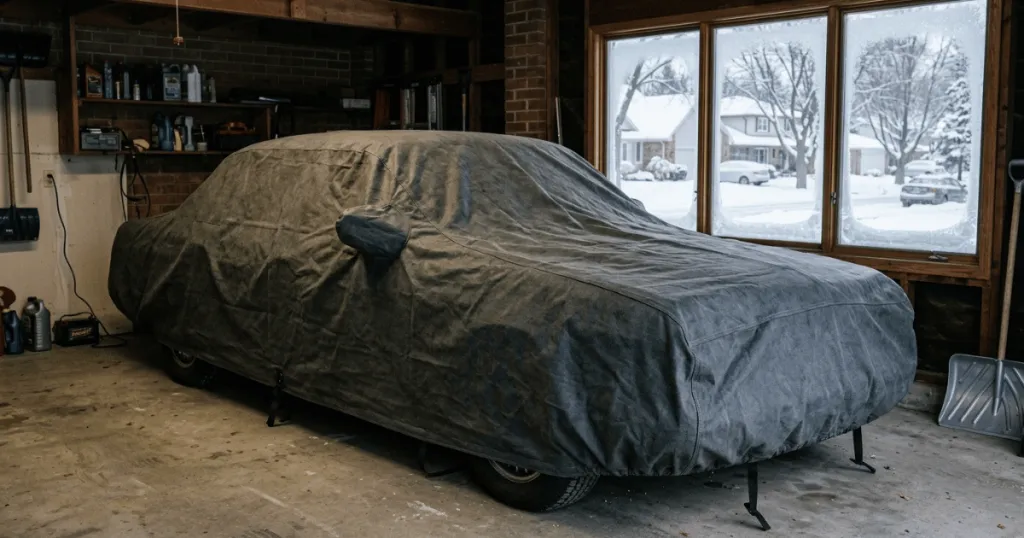
Why a Seasonal Storage Car Cover Matters for Long-Term Parking
Leaving a vehicle untouched for months invites a specific set of environmental stressors. Sunlight filtering through windows, circulating dust particles, and subtle shifts in ambient humidity all interact with painted surfaces and rubber seals. A specialized seasonal storage car cover addresses these hazards by maintaining a clean physical boundary between the car and its surroundings. Vehicle preservation depends heavily on mitigating these slow-acting environmental forces before permanent degradation occurs.
Dust accumulation is more than an aesthetic annoyance. Fine abrasive particles settle on clear coats, turning into microscopic sandpaper whenever the vehicle is touched or brushed against. Covering the vehicle prevents this gritty layer from building up. Furthermore, indoor storage environments frequently experience airborne particulate drift from nearby workshop activities, making physical shielding essential.
Ultraviolet radiation represents another hidden threat, even for vehicles parked near windows or under partially shaded outdoor structures. UV rays degrade rubber window trim, crack leather interiors exposed through glass, and oxidize exterior clear coats over time. A quality cover blocks direct sunlight entirely, preserving the structural integrity of exterior plastics and rubber gaskets during prolonged disuse.
Key Fabric Types for Indoor Versus Outdoor Storage Environments
The material composition of your protective shell dictates how well it handles moisture, temperature swings, and physical impacts. Choosing the wrong fabric often leads to trapped condensation or premature tearing. Evaluating your specific garage or driveway conditions clarifies which textile technology fits your application. Long-term vehicle storage demands careful attention to how fabrics interact with local atmospheric humidity.
Indoor Multilayer Polypropylene and Cotton Blends
Indoor storage environments prioritize softness and breathability over heavy weather resistance. Multilayer polypropylene and woven cotton blends provide a gentle interior lining that safeguards delicate clear coats against light bumps and workshop dust. These breathable fabrics allow any residual humidity trapped inside the garage to evaporate naturally rather than condensing against the cold metal body panels.
Choosing an indoor fabric with a non-abrasive fleece lining prevents micro-scratches during installation and removal. Because indoor covers do not need waterproof membranes, they remain lightweight and easy to fold or store away. This combination of softness and air permeability makes lightweight woven textiles the standard choice for garage-kept collector vehicles.
Outdoor Weather-Resistant Composites and Micro-Porous Films
Outdoor seasonal storage introduces rain, snow, tree sap, and intense solar radiation into the equation. Heavy-duty multi-layer composites featuring micro-porous films offer a balanced defense by shedding liquid water while permitting trapped moisture vapor to escape. This vapor permeability prevents the dangerous formation of paint-destroying mold beneath the fabric.
Water-resistant outer layers must be paired with reinforced anchor points to withstand high winds without flapping against the paint. A poorly secured outdoor cover can cause severe friction damage along high-point edges like roof lines and side mirrors. Selecting a multi-ply fabric with built-in UV inhibitors ensures the exterior shell maintains its structural strength through months of uninterrupted weather exposure.
Fit Categories and Their Impact on Long-Term Vehicle Preservation
The physical fit of a protective shell dictates how well it performs against wind, dust, and moisture infiltration. Ill-fitting designs create vulnerability points where environmental debris can work its way underneath the fabric.
Custom Fit Versus Universal Covers
Custom-patterned covers match the exact contours of specific make and model dimensions, including mirror pockets and antenna patches. This tailored approach eliminates loose fabric folds that catch the wind and rub against painted panels during outdoor storage. Custom options also provide a clean, professional aesthetic for showroom or garage displays.
Universal covers rely on generalized sizing charts based on overall vehicle length and height categories. While these options offer budget-friendly accessibility, they frequently require supplemental tie-down straps to manage excess material. In high-wind outdoor scenarios, loose universal fits can billow and shift, risking surface abrasion along the vehicle flanks.
Semi-custom options bridge the gap by offering tiered sizing categories for specific vehicle silhouettes, such as sedans, sports cars, and SUVs. These designs offer a tighter fit than universal models without the custom price tag. Assessing your local weather conditions helps determine whether a universal fit is sufficient or if a tailored contour is necessary.
Common Mistakes to Avoid When Using a Seasonal Storage Car Cover
Improper installation and maintenance habits frequently undermine the benefits of high-end vehicle protection. Recognizing these pitfalls prevents unintended damage to your car paint and trim during storage.
One frequent error involves covering a vehicle while it is still dirty or wet. Trapping moisture or road grime beneath a tight fabric creates an incubator for corrosion and paint etching. Always wash and thoroughly dry the vehicle before installing any protective shell for long-term dormancy.
Another overlooked detail is failing to secure the cover against shifting winds or animal nesting. Neglecting to use belly straps or cable locks can cause the cover to slip off entirely during severe weather events. Checking the fit periodically throughout the storage season ensures the vehicle remains fully enclosed and safeguarded.
Best Practices for Maintaining and Storing Your Protective Cover
A seasonal storage car cover requires its own routine maintenance to remain effective across multiple years of use. Storing a damp or dirty cover ruins the fabric integrity and transfers contaminants back onto the vehicle during the next installation.
Cleaning the fabric involves gentle hand washing with mild automotive soap and warm water, followed by complete air drying. Never machine wash or machine dry protective covers, as the mechanical agitation and heat can destroy waterproof membranes and elastic hems. Once completely dry, fold the cover loosely and store it in a breathable storage bag away from direct sunlight and chemical fumes.
Inspection before reinstallation is equally vital. Check for small tears, degraded elastic bands, or compromised seams caused by rodents or UV exposure. Addressing minor wear early extends the lifespan of the equipment and guarantees reliable protection for your vehicle year after year.
Conclusion: Making the Right Choice for Your Storage Scenario
Selecting and utilizing a seasonal storage car cover requires balancing your specific parking environment with the right material and fit. Prioritizing breathability for indoor spaces or weather resistance for outdoor lots prevents costly damage to paint and trim. By following proper preparation and maintenance steps, vehicle owners ensure their prized automobiles remain pristine throughout extended periods of inactivity.
FAQ
Should I wash my car before putting on a seasonal storage car cover?
Yes. Trapping dust, pollen, or road grime beneath the fabric creates abrasive friction against the clear coat during temperature shifts. Always wash and completely dry the vehicle before sealing it away.
Can I use an indoor fabric outdoors if the car is under a carport?
Indoor fabrics lack waterproof membranes and UV-stabilized outer layers. Using them under an open carport exposes the material to moisture, wind-driven debris, and solar degradation, which quickly ruins the fabric.
How do I prevent mold and mildew growth under my car cover during long-term storage?
Choose a breathable fabric that allows moisture vapor to escape, and ensure the car is 100 percent dry before covering. Avoid plastic tarps, which trap condensation against the metal body panels.