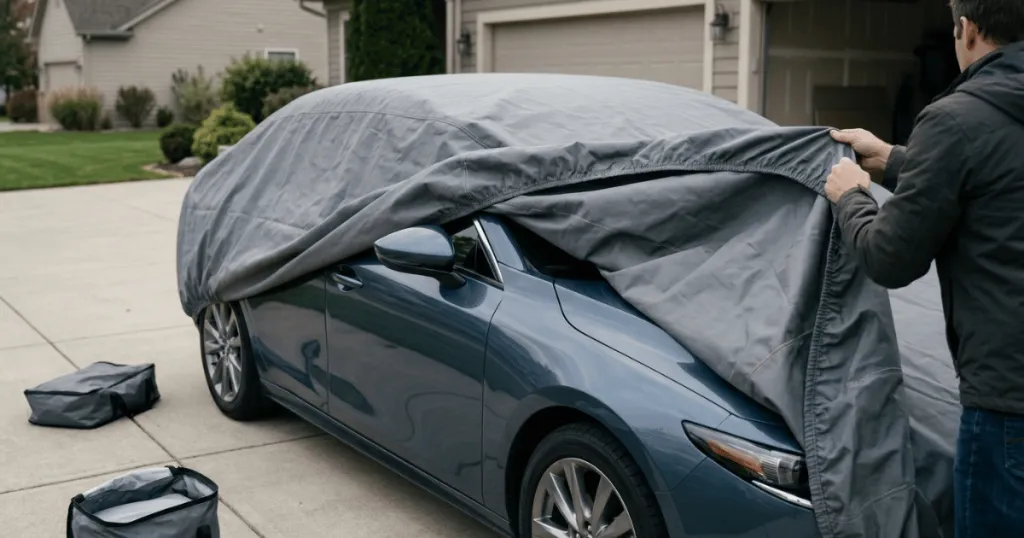
Using a proper car cover rolling technique transforms a frustrating daily chore into a quick, paint-safe routine. When vehicle owners remove a protective shield, the instinct is often to pull it off and stuff it haphazardly into a storage bag. This shortcut invites abrasive dirt particles to scratch clear coats and creates bulky, tangled fabric that resists next-time installation. Mastering a systematic roll keeps the exterior side of the fabric facing outward while containing collected dust on the inside, preserving both your paint and the lifespan of the material.
Proper handling routines matter just as much as fabric selection or custom tailoring when protecting an investment. An intentional rolling method ensures your outdoor shield remains clean on the side touching the vehicle body, while trapping environmental fallout securely within the folds until laundry day arrives. By focusing on mechanical efficiency, vehicle owners can eliminate the physical friction that leads to micro-abrasions on delicate painted surfaces.
Establishing this habit streamlines vehicle maintenance whether you park in a dusty driveway or a tightly enclosed garage. When you unpack your protective cover, the symmetry of a well-rolled cylinder allows for rapid deployment without snagging on side mirrors or door handles. Understanding the physics behind how fabric interacts with automotive paint unlocks long-term preservation benefits that casual storage methods simply cannot match.
Understanding the Car Cover Rolling Technique
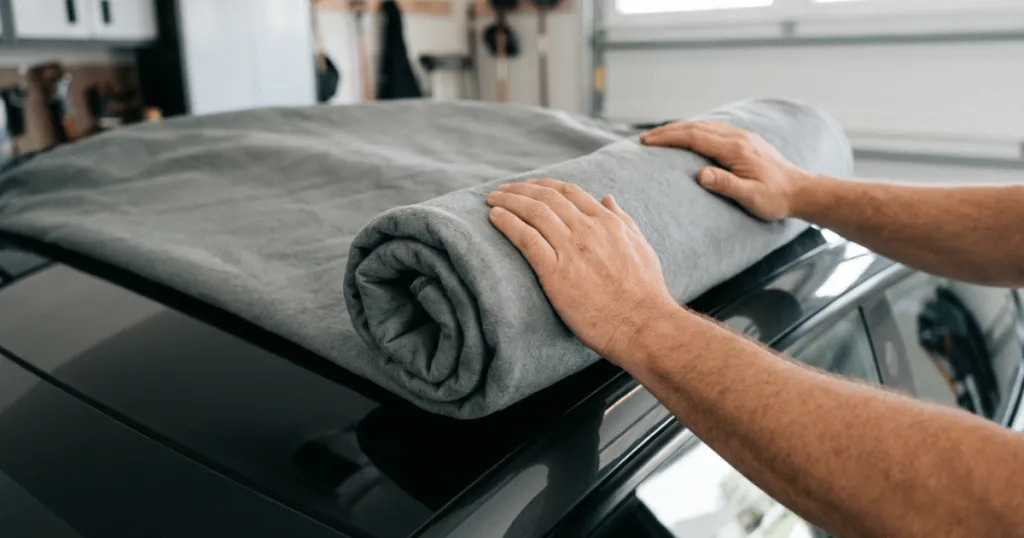
The core principle behind any effective car cover rolling technique is mirroring the removal process with the eventual reinstallation steps. Instead of bunching the material from all sides simultaneously, you systematically work from the sides toward the center of the roof or trunk deck. This creates a clean cylinder that unrolls effortlessly across the centerline of the vehicle during the next setup.
Vehicle owners often neglect this mechanical aspect of vehicle care, assuming that storage bags solve all organizational problems. In practice, stuffing a large multi-layer fabric introduces creases, strains the seams, and transfers accumulated garage dust or pollen directly back onto the paint surface during the next deployment. A deliberate roll prevents these issues entirely.
Furthermore, relying on a dedicated car cover storage method keeps your garage organized and prevents the fabric from absorbing floor moisture or harboring pests. When you handle the material with consistent geometry, you reduce the physical strain on your arms and shoulders, making daily use much more appealing.
Core Steps for Executing the Roll
Executing a reliable fold requires a predictable sequence of motions from both sides of the vehicle. By breaking the removal into manageable physical stages, you eliminate guesswork and keep the clean interior lining protected from ground contact.
Releasing and Folding the Sides
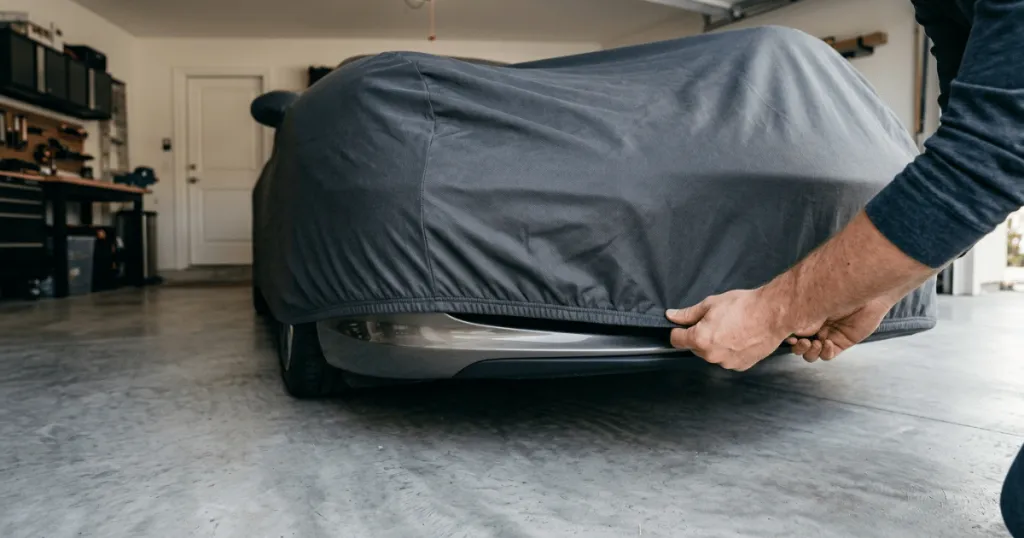
Begin by releasing the elastic hem from both the front and rear bumpers, letting the corners hang free from tension. Walk to one side of the car and fold the lower half of the fabric upward toward the beltline or windows. Repeat this exact action on the opposite side, creating two neat longitudinal panels running the length of the vehicle.
This initial staging step keeps the dirty exterior surface from dragging across the rocker panels or wheels while you work. It also establishes a uniform width for the final cylinder, ensuring the rolled bundle fits neatly into your trunk or storage tote without awkward overhangs. Practicing how to fold a car cover in this structured sequence guarantees that your material stays off the pavement entirely.
Rolling from Front and Rear Toward the Center
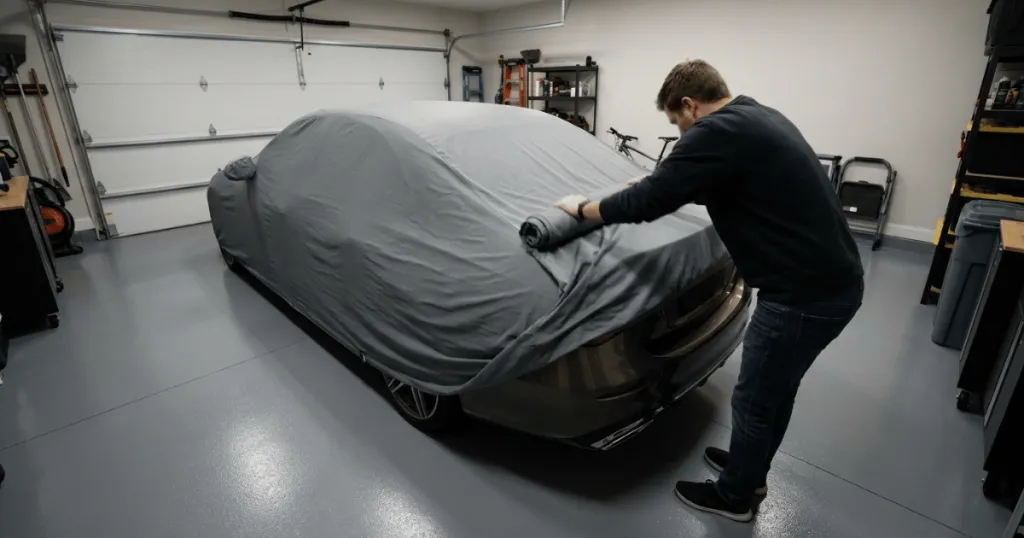
Stand at the front bumper and fold the nose section inward by roughly twelve to eighteen inches. Continue rolling the fabric tightly toward the middle of the hood, keeping constant tension to force trapped air out of the folds. Repeat this identical rolling action from the rear bumper toward the center of the trunk deck.
You will finish with two distinct, neat cylinders meeting near the middle of the vehicle roof or glass area. This dual-roll method makes the final lift much lighter and more balanced, preventing the awkward sagging that causes the fabric to slip and touch the dirty ground. Integrating these systematic car cover removal steps into your routine prevents accidental drops and fabric tears.
Lifting and Staging the Final Bundle
Once you have compressed both ends into balanced cylinders, gently lift the assembly off the vehicle roof. Support the weight across your forearms rather than grabbing a single handful of fabric, which stresses individual anchor seams. Place the finished bundle directly into a breathable storage bag or onto a clean garage shelf.
If you store the cover in a dedicated wall rack or trunk bin, position the cylinder so the unrolling direction matches your next installation path. This small habit saves precious minutes and prevents accidental twisting when you return to cover the car.
Real-World Context and Environmental Factors
Environmental conditions heavily influence how and when you should execute your car cover rolling technique. If your vehicle sits outdoors under heavy tree cover, morning dew and falling debris create a sticky layer on top of the fabric. Rolling a damp or debris-laden cover requires extra caution to prevent grit from migrating inward.
In high-wind coastal environments or dusty desert regions, ambient particulate matter settles onto exterior surfaces within minutes. Owners in these climates must inspect the inner lining before starting the roll. If fine silt has bypassed the breathable membrane, shake or rinse the fabric before storage to avoid grinding contaminants into the clear coat.
Garage-kept vehicles present a different set of priorities, where dust and accidental contact from foot traffic are the primary concerns. For indoor storage, the rolling process is faster and cleaner, but maintaining a consistent fold pattern still prevents premature wear along high-stress seams and elastic hems.
Why Proper Handling Matters for Paint Preservation
Clear coat scratching is rarely caused by the fabric material itself, but rather by the abrasive debris trapped between the cover and the paint. When an owner scrunches a dusty cover into a ball, grit transfers to the interior surface that rests against the car body next time. The car cover rolling technique isolates that contamination.
Beyond paint protection, systematic rolling extends the structural integrity of custom and semi-custom covers. Random pulling and twisting places severe, uneven stress on stitched seams, mirror pockets, and antenna reinforcements. Distributing tension evenly across the weave prevents seam failure and preserves water-repellent treatments.
Investing a few extra minutes in proper removal habits also dramatically improves daily usability. A cover that deploys in under sixty seconds encourages consistent use, whereas a tangled, frustrating bundle often stays left behind in the corner of the garage.
Common Misconceptions About Cover Storage
A widespread myth suggests that stuffing a cover into a stuff sack saves space compared to rolling or folding. While stuffing might create a compact shape, it forces sharp, random creases into multi-layer composite fabrics, degrading their flexibility and wind-resistance over time.
Another frequent misunderstanding is that interior cleanliness does not matter if the car looks clean. Micro-abrasions accumulate slowly over months of improper handling, eventually dulling the gloss of dark paint finishes. Treating the inside of the cover with the same care as the exterior prevents this gradual degradation.
Some vehicle owners believe that special rolling methods are only necessary for high-end custom covers. In reality, universal-fit covers with loose, billowing excess material benefit even more from a controlled rolling technique to manage the sheer volume of extra fabric safely.
Applying the car cover rolling technique consistently protects your vehicle finish and makes storage effortless.
FAQ
Should I roll a car cover if it is wet from rain or dew?
It is best to let the car cover dry completely while on the vehicle before using the car cover rolling technique. Storing a wet cover traps moisture, which encourages mold, mildew, and fabric degradation, especially on multi-layer composite materials.
How do mirror pockets affect the car cover rolling technique?
Mirror pockets require careful alignment before you start rolling the sides inward. Tuck the mirror fabric flat against the main body panels first so the finished cylinder remains uniform and easy to manage without awkward bulges.
Can I use this rolling technique for universal-fit covers?
Yes, universal-fit covers benefit significantly from a structured rolling technique because their extra slack makes them harder to handle. Folding the excess material inward before rolling prevents the loose fabric from dragging on the ground.