Mastering a reliable car cover folding technique turns a frustrating wrestling match into a simple, two-minute routine. Many vehicle owners treat outdoor or indoor protection as a temporary inconvenience, pulling the material off hastily and stuffing it into a trunk. That chaotic removal creates a tangled mess of fabric that picks up garage dust, debris, and microscopic abrasive particles from the ground. When you go to reinstall that same cover later, those trapped contaminants press directly against your clear coat, introducing swirl marks and micro-scratches.
By learning how to fold an automotive shield methodically, you protect both the vehicle finish and the fabric itself. A clean folding method keeps the interior lining free from floor dirt while ensuring the exterior shell remains dry and properly aligned for the next deployment. Whether you are dealing with a heavyweight multi-layer weather shield or a lightweight satin indoor dust cover, the fundamental mechanics of handling large expanses of fabric remain remarkably consistent.

Why the Right Car Cover Folding Technique Matters
Protecting your car paint requires more than just buying a high-end fabric with a soft fleece lining. The physical interaction between the cover and your paint surface during removal and storage plays a massive role in maintaining an unblemished finish. When you drag a dirty exterior surface across your hood, you risk grinding trapped grit against the clear coat. A structured folding habit eliminates that dragging motion entirely.
Furthermore, haphazard bundling creates deep creases that can weaken specific textiles over time, particularly multi-layer polypropylene or woven polyester blends. Proper folding distributes stress evenly across the seams and hem elastic. This practice also prevents moisture pockets from forming inside a rolled-up bundle, reducing the likelihood of mold or mildew growth during long-term garage storage. A clean fold makes one-person installation significantly easier because the leading edges align naturally with your hood and rooflines.
Step-by-Step Breakdown of the Proper Folding Process
Executing an efficient car cover folding technique requires a methodical approach starting from the roof and working outward. Rather than pulling the entire sheet off at once and letting it collapse onto the ground, you systematically lift and fold the sides toward the center line. This keeps the clean interior lining facing inward while trapping any exterior dirt safely on the outside of the bundle.
Step 1: Release and Clear the Tension Points
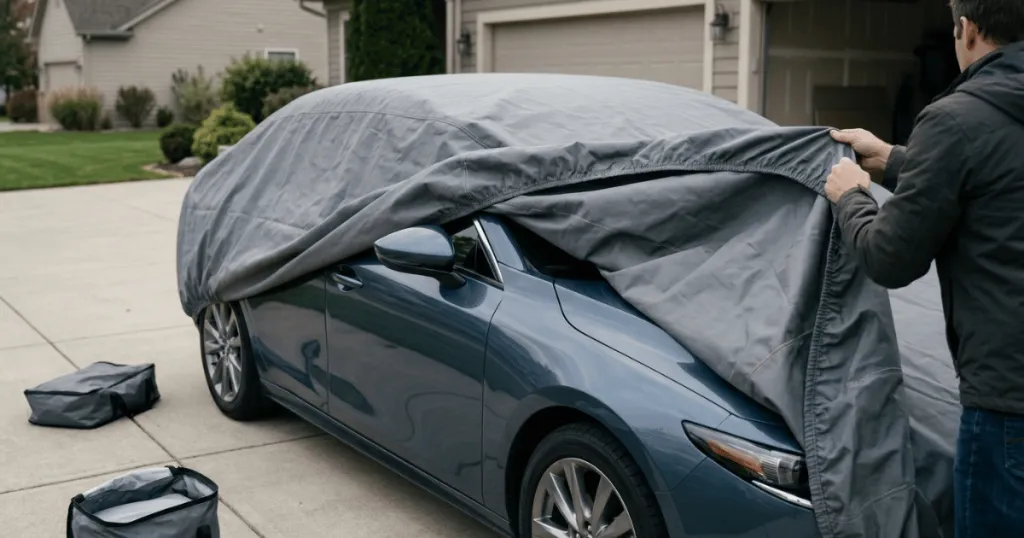
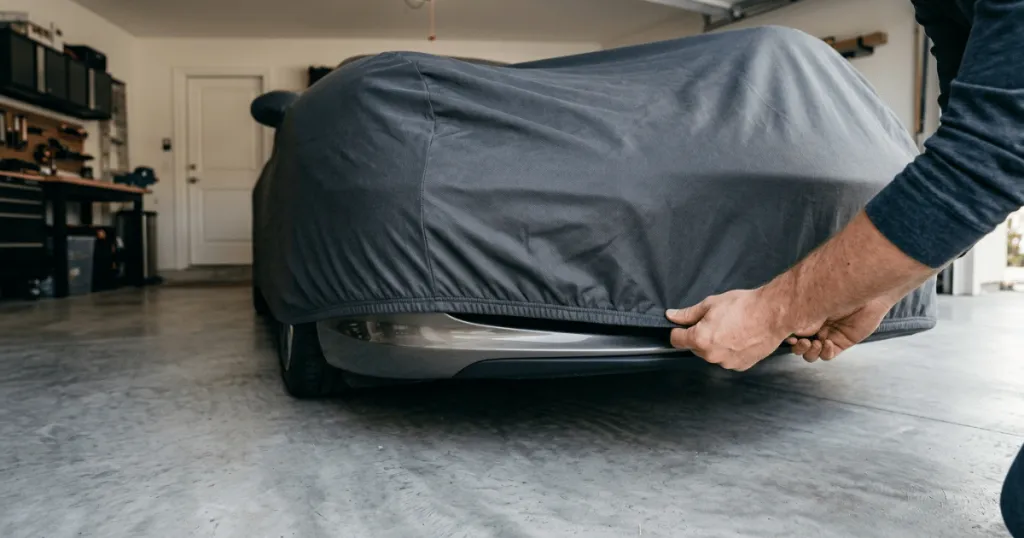
Begin by releasing all security straps, cable locks, and wheel weights attached to your vehicle. Walk around the car and gently pull the bottom hem upward so it clears the bumpers, side mirrors, and rocker panels. This initial slack prevents the fabric from catching on license plate frames or sharp body lines during the removal phase.
Step 2: Fold the Sides Up to the Center
Stand on one side of the vehicle and reach across the roof to grab the edge of the cover. Fold the entire side of the fabric up and over onto the roof or hood, bringing it toward the centerline running from the front bumper to the rear trunk. Repeat this exact action from the opposite side of the vehicle, creating two neat, parallel folds that run the full length of the car with the clean interior lining exposed upward.
Step 3: Roll or Accordion Fold From Front to Back
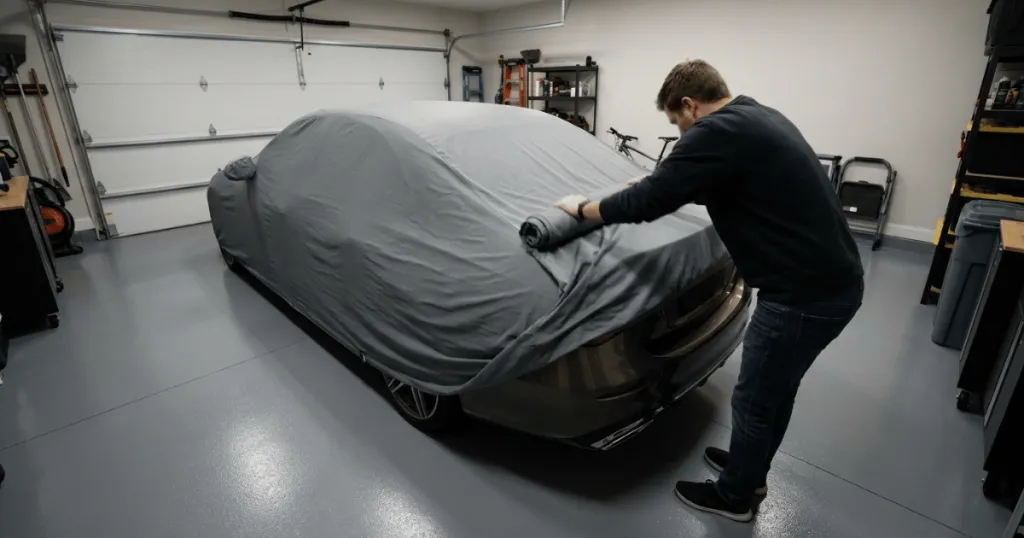
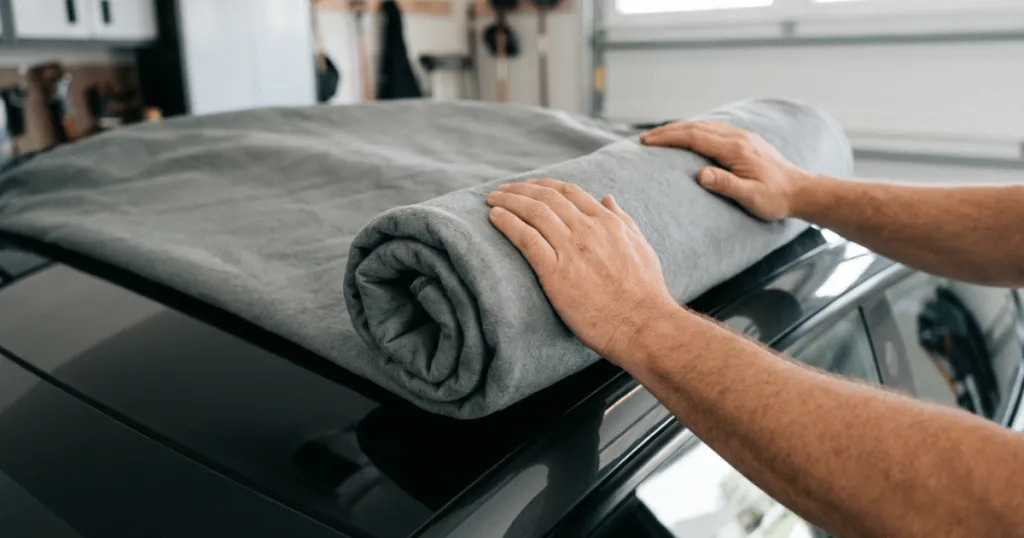
Once both sides rest neatly along the spine of the vehicle, begin folding the fabric from the front bumper backward toward the rear, or vice versa, using an accordion style. Fold the material in uniform sections roughly two feet wide. Alternatively, you can roll the fabric tightly like a sleeping bag, pressing out trapped air as you move toward the opposite end.
Real-World Scenarios and Handling Difficult Fabrics
Different environments and material weights change how your chosen car cover folding technique performs in practice. A heavy, multi-layer winter cover behaves very differently in freezing temperatures than a lightweight silk or satin indoor dust cover used in a climate-controlled garage. Recognizing these physical properties helps you adapt your physical routine to prevent fabric damage and physical fatigue.
Managing Heavy Outdoor Weather Shields
Heavy-duty outdoor shields featuring reflective aluminum coatings or thick fleece backings trap air and resist easy bending. When working with these rigid materials in cold weather, avoid sharp creases that can crack waterproof membranes. Instead, use wider accordion folds and rely on a helper if the vehicle is a large SUV or full-size truck. Laying the folded bundle across the roof temporarily before placing it into its storage bag can save your back from unnecessary strain.
Handling Lightweight Indoor Dust Covers
Indoor stretch covers hug the vehicle contours tightly and often feature spandex or elastane blends. These fabrics slide smoothly over paint but can easily snag on sharp garage objects like tool chests or wall anchors. When packing an indoor cover, roll it gently rather than accordion folding it to prevent deep wrinkles from forming in the stretchy knit material. Keep the storage bag close by to slide the rolled bundle inside immediately before it can touch a dusty floor.
Common Mistakes to Avoid During Removal and Storage
Even experienced vehicle owners sometimes fall into bad habits that undermine their vehicle protection routine. Recognizing these frequent pitfalls allows you to refine your car cover folding technique and extend the lifespan of your investment. Small adjustments in your physical handling prevent premature wear on seams, elastic hems, and waterproof coatings.
The single most destructive mistake is letting the cover touch the ground during removal. Once the exterior shell picks up gravel, sand, or asphalt grit, folding it packs those abrasive particles directly against the soft inner lining. Always lift the material cleanly away from the body panels. Another frequent error is storing a damp cover inside a sealed plastic or heavy canvas bag. Trapped moisture quickly breeds mildew and degrades breathable membranes. Always let your shield air-dry completely on the vehicle before packing it away for extended periods.
Advanced Habits for Long-Term Fabric Preservation
Adopting an advanced approach to fabric care requires looking beyond the immediate removal process. Over several seasons of exposure to ultraviolet radiation, wind, and airborne pollutants, automotive textiles degrade structurally. By maintaining a clean folding routine, you prevent localized stress fatigue along the seams where tearing most often begins. Furthermore, keeping your storage area organized ensures that your storage bag remains off concrete garage floors where humidity collects.
When handling larger vehicles, such as a full-size truck or a luxury SUV, standard removal methods often cause the fabric to billow and catch the wind. A proper folding technique mitigates this wind resistance by breaking the removal into manageable segments. Instead of wrestling the entire perimeter at once, secure one side before addressing the other. This discipline reduces physical strain, prevents accidental snagging on exterior antennas or custom body kits, and ensures your vehicle protection investment delivers reliable performance year after year.
Conclusion and Best Practices for Longevity
Establishing a consistent car cover folding technique transforms routine vehicle maintenance into a seamless habit that safeguards your paintwork for years. By keeping the interior lining clean, avoiding ground contact, and rolling the material with care, you eliminate the risk of introducing swirl marks during installation. Pay attention to environmental factors like moisture and temperature, and always allow wet fabrics to dry thoroughly before storage. Adopting these disciplined habits ensures your protection shield remains functional, clean, and easy to deploy whenever your vehicle is parked.
FAQ
How do I prevent my car cover from touching the ground while folding it?
To keep the fabric clean, work with a partner on larger vehicles or fold the sides inward toward the center line of the roof before pulling the cover off the front and rear bumpers. This keeps the material elevated and prevents it from dragging across garage floors or driveway grit.
Can I fold a car cover while it is still wet from rain?
You should avoid packing a wet or damp shield into a storage bag. Trapped moisture creates an ideal environment for mold, mildew, and foul odors to develop. Always let the material dry completely while fitted on the vehicle or draped over a clean fence before storage.
Is rolling better than folding for car cover storage?
Rolling is generally better for lightweight indoor stretch covers because it prevents sharp creases in flexible fabrics. Heavy-duty outdoor covers are usually easier to manage using wide accordion folds that make sliding the material back into its storage bag much simpler.