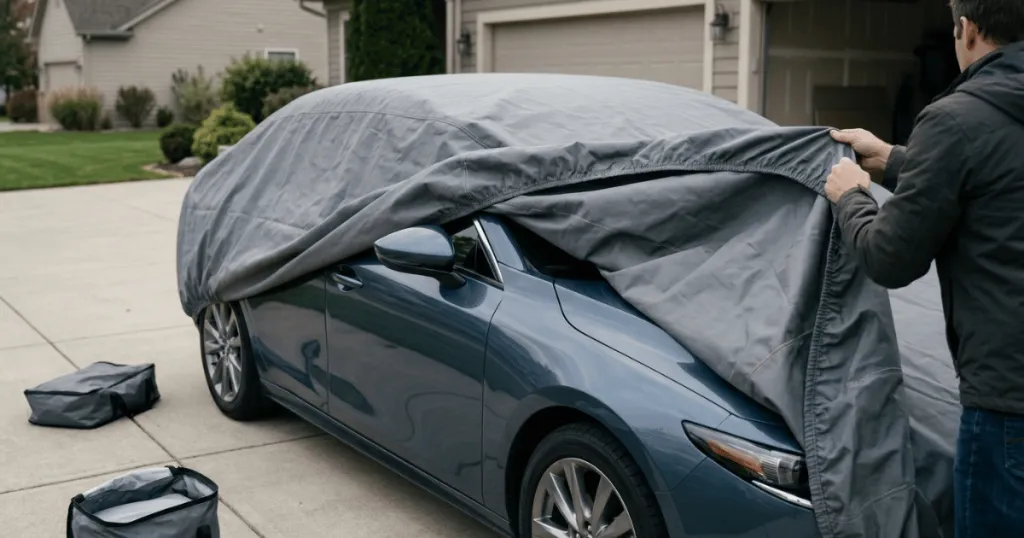
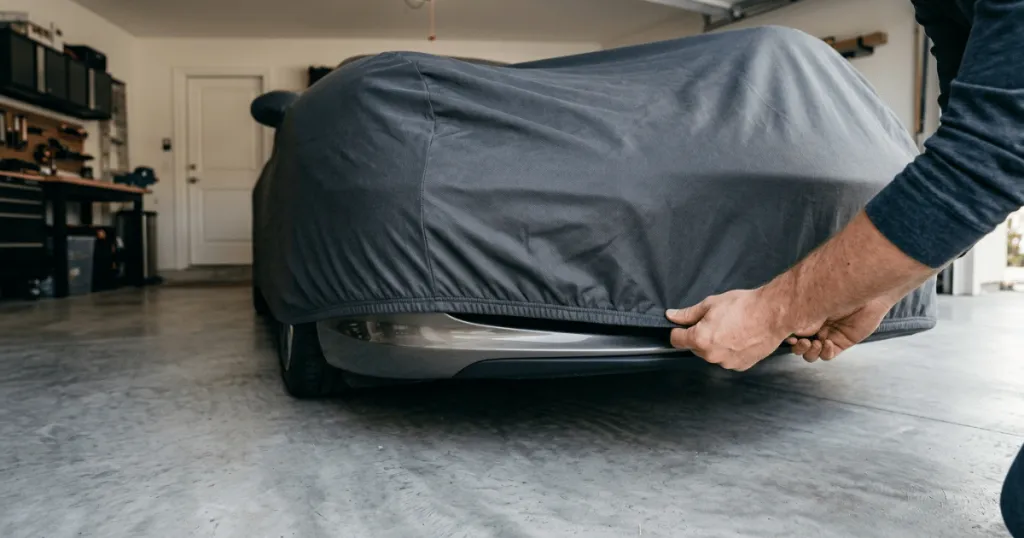
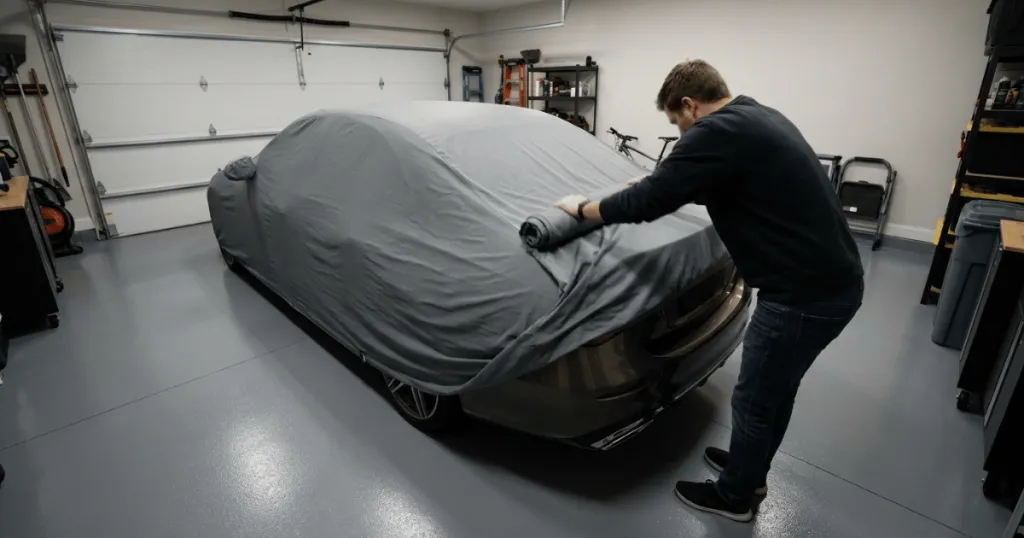
When high winds sweep across an open driveway or coastal parking area, a standard elastic hem is often not enough to keep your vehicle protection in place. A tie down strap car cover uses integrated securing straps, belly bands, or grommet-anchored lines to lock the fabric firmly against the chassis. Understanding how these mechanical fasteners alter wind dynamics helps you choose the right setup for open-air storage.
Many vehicle owners assume that any snug cover will survive a severe weather event, only to find their paintwork exposed after a sudden squall. Mechanical straps change the physics of outdoor storage by preventing air from lifting the fabric from underneath. Evaluating your local weather patterns and parking conditions clarifies whether a strapped model is necessary for your vehicle.
Preparing your car for storm season requires looking closely at how aerodynamic forces interact with loose fabric panels. When a sudden gale hits an unsheltered vehicle, the air pressure differentials create immense upward lift. Without dedicated outdoor car cover straps to anchor the canopy securely, even multi-ply fabrics can easily pull free and turn into destructive sails.
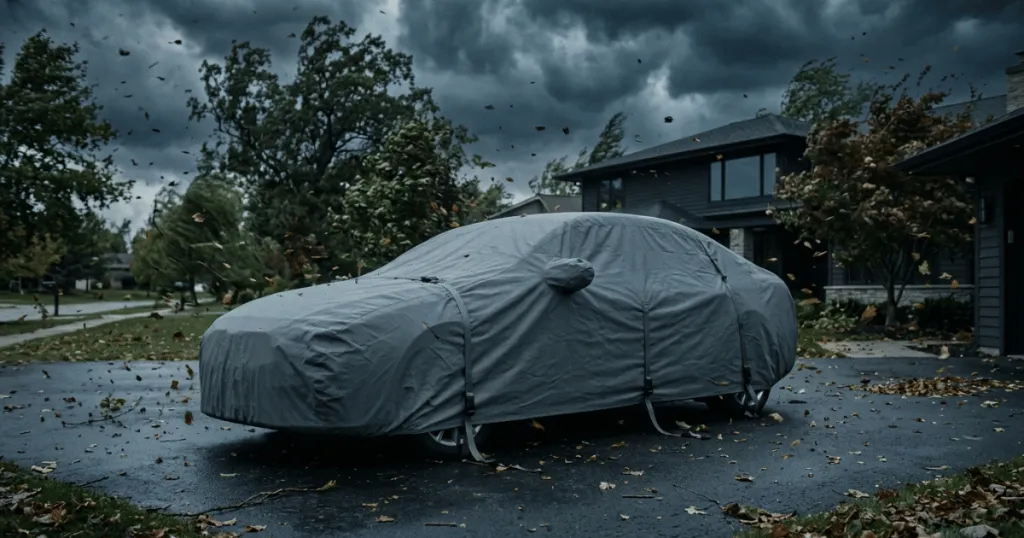
How a Tie Down Strap Car Cover Resists High Winds
Wind is the primary enemy of outdoor vehicle protection. When gusts hit a parked car, they try to slip underneath the hem and inflate the fabric like a hot air balloon. Once air gets trapped inside, the upward lift can snap elastic cords, pull fabric over side mirrors, and slam loose material against the clear coat.
A secure tie down strap car cover solves this issue by bridging the gap from one side of the vehicle to the other. Running a heavy-duty strap underneath the floor pan anchors the entire canopy against downward pressure. This mechanical connection ensures that even sustained gales cannot create the lift needed to balloon the fabric.
The placement of these anchors determines how well the system performs in real-world gusts. Central belly straps cross directly under the middle of the chassis, while front and rear cinches prevent the ends from peeling back. Without these lines, severe winds quickly turn a standard barrier into a flapping sail that abrades the vehicle’s finish.
Achieving true windproof car cover performance relies heavily on this mechanical cinching action. When the fabric is held tightly against the body contours, the air passes smoothly over the vehicle profile instead of rushing underneath the hem. This limits the internal pressurization that usually causes standard elastic covers to lift and tear loose during violent storms.
Key Factors to Evaluate Before Using a Strapped Cover
Selecting and deploying a strapped vehicle protector involves more than simply pulling a buckle tight. Several structural and environmental factors dictate how well the system protects the underlying paint and body panels.
Underbody Clearance and Routing Ease
Routing a strap beneath a modern vehicle requires sufficient ground clearance and a clear path from side to side. Low-slung sports cars and vehicles with aerodynamic ground effects make it difficult to toss a weighted strap underneath without crawling on the pavement. Before purchasing, consider whether your vehicle’s stance allows for easy underbody routing.
If crawling under a dirty chassis is impractical, look for models that include a weighted toss-strap or a long guidance rod. These accessories let you feed the strap across the vehicle without fully lying down in wet or muddy conditions. Ensuring your setup matches your physical comfort level encourages consistent daily use.
Strap Material and Buckle Durability
The hardware securing your cover takes the brunt of continuous tension and weather exposure. Cheap plastic buckles become brittle under intense UV radiation and snap during the first winter freeze. High-quality systems use UV-treated polypropylene webbing combined with corrosion-resistant metal or reinforced composite buckles.
Protective sleeves around the buckles are another critical detail for preventing accidental scratches. When a loose buckle swings in the wind, it can repeatedly strike your fender or door panel. Soft fabric guards or rubberized housings cushion these contact points and protect the paint from impact damage.
Grommet Reinforcement and Pull Strength
Some designs rely on side grommets rather than a full belly band to anchor the tie down strap car cover. While this reduces the need to reach under the car, the stress concentrates entirely on the fabric eyelets. If the grommets lack multi-layer reinforcement or heavy stitching, high winds will tear them right out of the material.
Check the stress points where the straps meet the main body of the fabric. Double-stitched webbing loops distribute tension across a wider area rather than putting all the force on a single metal ring. This reinforcement is especially vital if you live in an area prone to sudden, violent thunderstorms.
Real-World Context and Storage Scenarios
The need for mechanical fastening depends heavily on where and how you park your vehicle. An urban apartment dweller dealing with wind tunnels between high-rise buildings faces entirely different challenges than someone parking in a suburban driveway sheltered by fences and trees.
In open coastal zones, salt spray and relentless sea breezes test every seam of a vehicle cover. Here, a tie down strap car cover prevents salt-laden air from pumping in and out underneath the hem. The straps keep the protective barrier tight against the body, minimizing the abrasive micro-movements that ruin clear coats.
Conversely, if your car stays inside a protected garage or a fully enclosed barn, complex strapping systems are usually unnecessary. Indoor storage only requires basic dust defense, making a lightweight, fitted elastic hem much faster to put on and take off every day.
When evaluating heavy duty car cover protection options for year-round outdoor exposure, consider how seasonal temperature swings affect your chosen fabric. Freezing winter rain followed by intense summer sun can degrade cheap materials quickly if the cover is constantly shifting in the breeze. Keeping the canopy locked down firmly preserves both the vehicle paint and the structural integrity of the protective textile.
Why Proper Tension Matters for Paint Protection
A common misconception is that tighter is always better when securing a vehicle. Cranking down straps until the fabric bows the sheet metal or puts excessive pressure on trim pieces causes structural and cosmetic issues. The goal is to eliminate loose fabric flaps, not to squeeze the car like a package.
When wind forces a loose cover to flap against the paint, trapped dust acts like fine-grit sandpaper. Over a single windy week, that friction creates fine swirl marks and dull patches on clear coats. Using a proper tie down strap car cover keeps the material completely stationary, stopping abrasive friction at the source.
Balancing tension means adjusting the cinches so the fabric remains taut without stretching the seams. Most quality straps feature quick-release clips with adjustable slides, allowing you to find the sweet spot between security and ease of removal.
Maintaining correct webbing tension ensures your car cover belly strap does not slip out of place during extended weather events. If the strap is too loose, wind vibrations will slowly loosen the buckle teeth. Checking and re-adjusting the tension periodically guarantees continuous, reliable defense for your vehicle exterior.
Common Misconceptions About Windproof Vehicle Covers
Many drivers believe that buying a heavier multi-layer fabric automatically eliminates the need for physical tie-downs. While heavy canvas or multi-ply materials resist tearing better than thin satin, their sheer weight also catches more wind. A heavy cover without a belly strap simply acts as a larger sail, potentially lifting the entire vehicle profile during a severe gust.
Another frequent error is relying on makeshift bungee cords or rubber tie-downs purchased separately. Hardware store bungees lack the precise length and soft webbing profile needed for automotive paint. They can stretch too far, snap back against the body panels, or leave rubber residue on the clear coat.
Making the Right Choice for Your Vehicle Storage
Choosing to use a tie down strap car cover comes down to an honest assessment of your parking environment and weather exposure. If your car sits outdoors in an unsheltered area where strong winds occur regularly, investing in a model with integrated belly straps and reinforced grommets is a practical necessity.
Prioritize hardware quality, ease of underbody routing, and proper tension adjustment over mere fabric thickness. By eliminating wind-driven flap and securing the canopy against sudden gusts, you protect your vehicle’s finish and extend the operational lifespan of the cover itself.
FAQ
Are tie down strap car covers safe for custom paint jobs?
Yes, provided the straps feature protective sleeves and the fabric rests against a clean surface. A quality tie down strap car cover prevents abrasive flapping that ruins delicate finishes during high winds.
Can I install a belly strap without crawling under the car?
Many modern designs include a weighted toss-strap or flexible guide rod that allows you to pass the webbing underneath the chassis while standing upright.
What is the difference between a belly band and side grommets?
A belly band wraps completely underneath the floor pan for maximum wind resistance, while side grommets allow you to hook cords along the lower edges without reaching under the vehicle.