Protecting a high-performance vehicle requires more than a standard universal tarp, especially when dealing with unique body lines, scoops, and spoilers. A dedicated muscle car cover safeguards the vehicle’s paint, chrome, and custom finishes from environmental hazards. Whether sheltering a classic big-block classic in a garage or keeping a modern supercharged coupe safe from harsh sunlight outdoors, selecting the right cover depends on fabric breathability, physical fit, and local climate exposure.
Owners of performance automobiles often invest substantial time and money into maintaining flawless paint, pristine chrome trim, and distinct body contours. Because performance platforms feature aggressive styling queues, such as high-rise rear wings, bulky hood scoops, and flared fenders, standard protective gear falls short. Understanding the relationship between fabric science and vehicle geometry ensures that your investment remains shielded against environmental degradation without introducing secondary risks like abrasion or moisture damage.
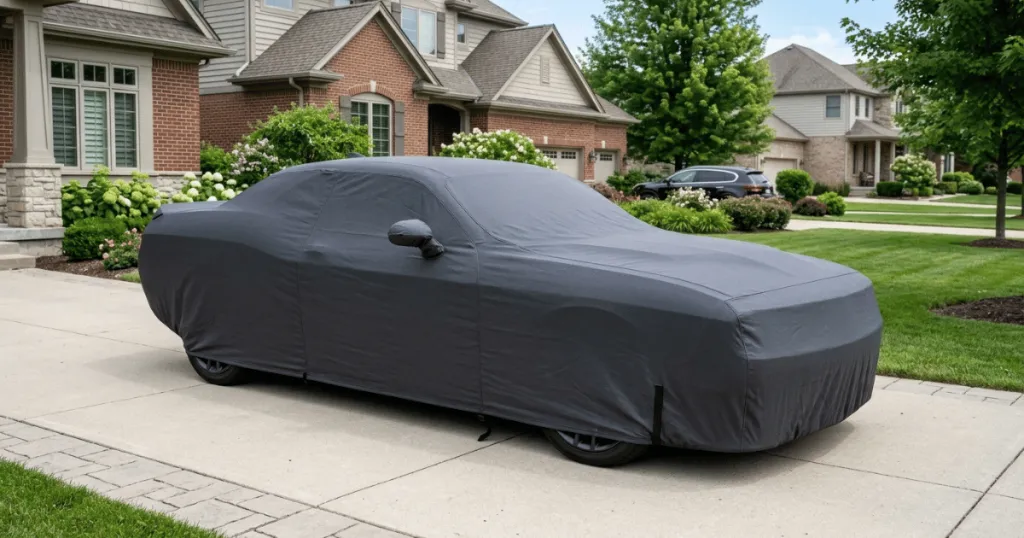
Why Standard Universal Tarp Covers Fail Performance Vehicles
Universal car covers are manufactured to fit broad dimensional ranges rather than specific vehicle contours. On a performance coupe with prominent rear quarters or aggressive hood styling, a loose, generic cover catches wind and acts like a sail. This constant shifting creates abrasive friction against clear coats and polished trim.
Furthermore, generic materials frequently lack adequate breathability. When ambient temperatures fluctuate, moisture trapped underneath cannot escape, leading to condensation build-up. For vintage platforms with older sheet metal or restored paint, moisture retention accelerates corrosion and oxidation. Investing in a properly designed muscle car cover eliminates these risks by matching the precise physical silhouette of the automobile.
Beyond physical fit issues, cheap universal tarps frequently rely on low-grade polyethylene that breaks down rapidly under ultraviolet exposure. As the material degrades, it sheds microscopic plastic fibers onto the vehicle surface. These particles mix with dust, creating a gritty paste that mars the clear coat during even modest wind movements. A quality classic car cover avoids these breakdown issues by utilizing engineered performance textiles rated for extended exterior or interior deployment.
Key Factors in Selecting a Muscle Car Cover
Fabric Material and Layer Construction
Fabric composition dictates how well a cover handles UV rays, moisture, and dust. Multi-layer polypropylene and woven polyester fabrics offer an effective balance of weather resistance and breathability. For outdoor storage, UV-inhibiting treatments prevent the sun from degrading the fabric fibers while shielding the vehicle’s interior dashboard and upholstery from fading.
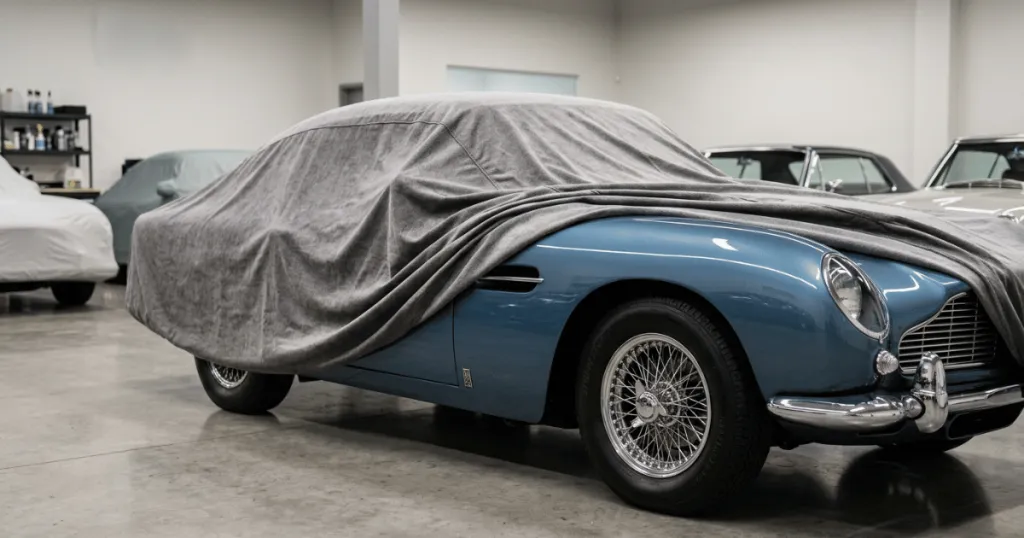
Indoor storage calls for softer, fleece-lined flannel or woven cotton blends. These lightweight textiles prevent minor scuffs from dust particles settling on the paint. Waterproof materials are rarely recommended for long-term outdoor storage unless they are fully breathable, as trapped humidity causes more damage than occasional rain.
Evaluating fabric construction also means looking at how the inner layers interact with vulnerable exterior surfaces. A proper indoor car cover utilizes a gentle napped interior that glides smoothly over polished paintwork. Conversely, outdoor variants incorporate robust outer shells designed to shed rain, tree sap, and bird droppings while maintaining internal air exchange.
Custom Fit versus Universal Sizing
Custom-tailored vehicle covers mirror the exact body dimensions of specific model years, incorporating mirror pockets, antenna patches, and contouring for rear spoilers. This snug fit prevents billowing during high wind events. Semi-custom options offer a tiered sizing structure based on length, width, and height, providing a reasonable alternative when exact custom patterns are unavailable.
In practice, a tailored fit eliminates loose fabric folds that flap against the car body. Minimizing fabric movement preserves high-gloss paint finishes and prevents premature wear on sharp body lines. Always verify whether aftermarket modifications like tall rear wings or front splitters require a modified or custom pattern.
Choosing a custom fit car cover guarantees that specialized design elements on vintage and modern muscle cars receive proper contouring. When a cover accommodates factory mirrors and spoilers naturally, it avoids putting excessive tension on specific seams. This precise draping ensures uniform pressure distribution across the entire body.
Climate and Environmental Exposure
Environmental conditions dictate whether the vehicle needs heavy storm shielding or simple dust deflection. Owners in arid, high-sun regions require strong ultraviolet defense and heat reflection properties. Conversely, humid or coastal environments demand marine-grade corrosion resistance and mildew-resistant fibers.
Tree sap, bird droppings, and industrial fallout present persistent chemical threats to automotive finishes. A tightly woven, multi-layer textile prevents these contaminants from reaching the clear coat. Selecting a cover rated for specific regional challenges ensures the vehicle remains pristine between drives.
Weather dynamics play a massive role in long-term vehicle preservation. In regions with dramatic temperature swings, a breathable car cover prevents thermal shock condensation from forming on cold sheet metal. Ignoring local climate factors often results in accelerated clear coat failure or surface rust in hidden panel crevices.
Real-World Storage Scenarios and Practical Applications
Indoor Garage Storage
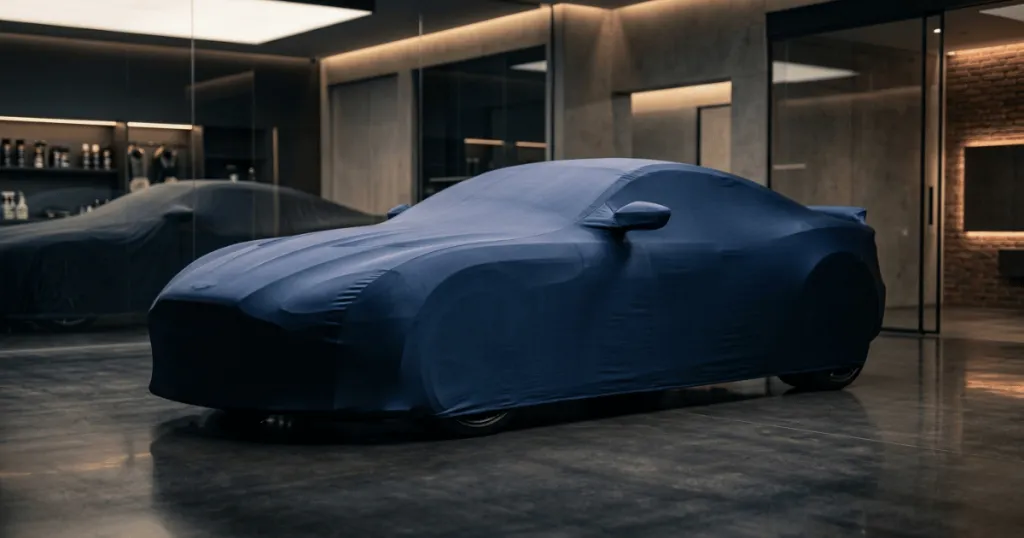
Garages protect vehicles from precipitation and direct sunlight, but they do not eliminate dust, minor bumps, or moisture from concrete floors. A lightweight dust cover constructed from breathable woven polyester prevents airborne particles from settling on the finish. This approach keeps the vehicle clean while allowing natural air circulation to dissipate humidity.
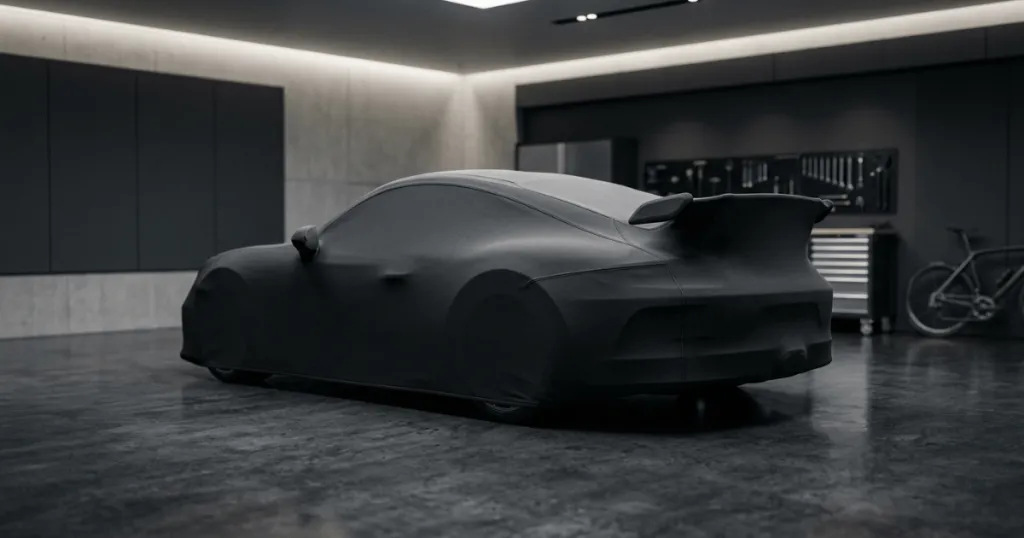
Even within a climate-controlled environment, garage settings harbor microscopic dust and foot-traffic debris. A soft indoor barrier keeps these contaminants away from delicate chrome bumpers and glass seals. It also protects the vehicle from accidental bumps caused by bicycles, tools, or household storage items.
Outdoor Parking and Driveway Storage
Outdoor storage exposes performance automobiles to severe weather cycles, intense thermal radiation, and wind-blown debris. A heavy-duty multi-layer cover with elastic hem cords and built-in tie-down grommets remains secure during storms. Secure anchoring prevents the cover from lifting and exposing the finish to abrasive grit.
When parking a muscle car outdoors in an uncovered driveway, managing moisture accumulation becomes paramount. A heavy-duty outdoor car cover acts as a robust shield against torrential downpours while actively releasing trapped vapor. Incorporating security cables through the built-in grommets also deters casual tampering in open parking areas.
Car Shows and Transport Protection
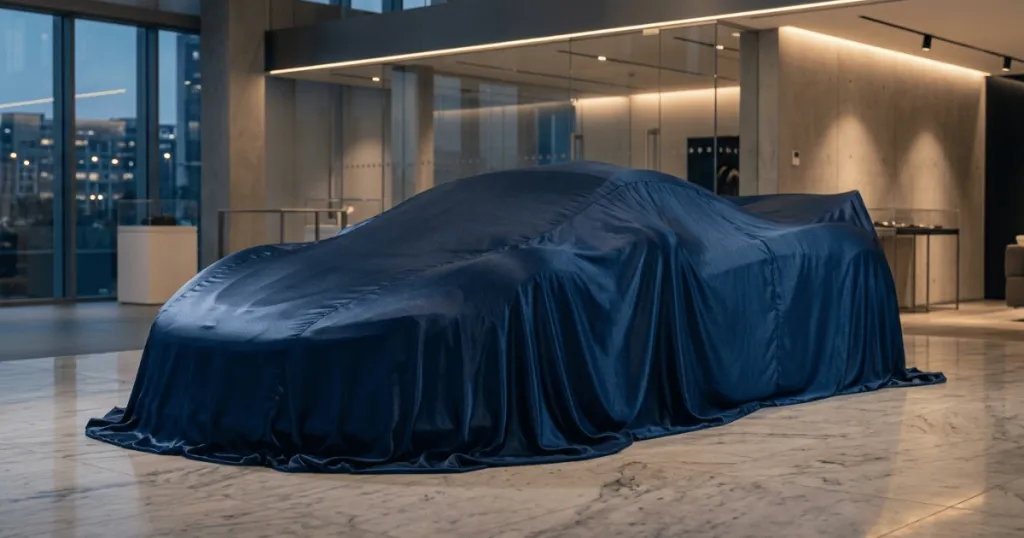
Trailers and exhibition spaces present unique challenges, ranging from stone chips during transit to handling fingerprints at crowded events. Satin stretch fabrics conform tightly to the vehicle body, highlighting muscle car styling cues while providing a clean barrier against casual contact. These stretch materials work exceptionally well inside trailers or climate-controlled display halls.
Transporting a restored performance vehicle on an open or enclosed trailer subjects the bodywork to high-velocity wind streams. Standard loose covers will shred instantly under trailer speeds. Specialized stretch covers designed for transport hug every curve tightly, preventing high-speed buffeting and safeguarding the finish during transit.
Why Proper Vehicle Cover Selection Matters
Preserving a performance vehicle involves protecting both its aesthetic appeal and its structural integrity. Clear coat damage, rust development, and interior degradation diminish the vehicle’s condition over time. Utilizing a specialized muscle car cover mitigates these environmental risks, reducing the frequency of extensive paint correction and detailing.
Beyond surface protection, maintaining the exterior finish safeguards the investment value of classic and modern performance builds alike. Paint restoration is costly and irreversible to a degree, making prevention far more efficient than repair. Selecting the correct protective barrier ensures the vehicle remains ready for the road at a moment’s notice.
Vehicle preservation also extends to cabin components exposed to intense sunlight through glass. High-performance interiors featuring vintage leather, custom gauges, or modern synthetic upholstery suffer from UV-induced cracking and fading. A quality exterior cover indirectly protects the interior by blocking solar heat buildup through the windshield and side windows.
Common Misconceptions About Vehicle Protection
Heavyweight Equals Better Protection
Many owners assume that a thick, heavy cover provides superior defense against all hazards. In reality, extremely heavy covers are cumbersome to handle, increasing the likelihood of dropping them onto the ground and picking up abrasive dirt before installation. Breathability and layer engineering matter far more than raw physical weight.
Heavier textiles also hold onto moisture longer after a storm. If an owner pulls a heavy, damp cover over a vehicle before it has fully dried, trapped water creates an ideal environment for mold growth. Modern textile engineering focuses on multi-layer composite structures that provide high tear resistance and weather shielding without excessive physical bulk.
Waterproof Fabrics Keep Cars Completely Dry
Absolute waterproofing often traps ambient ground moisture beneath the fabric, creating a humid microclimate that harms metal and paint. True weather protection relies on breathable membranes that shed external liquid water while allowing internal moisture vapor to escape freely.
Understanding these material dynamics helps owners avoid common pitfalls that lead to paint damage. Evaluating local weather patterns and storage conditions ensures the chosen protective investment performs as expected over its operational lifespan.
When selecting protective gear, recognizing the difference between water-resistant and waterproof designs prevents costly mistakes. True breathability ensures that any humidity rising from concrete garage floors or damp outdoor ground escapes harmlessly into the atmosphere rather than condensing against the sheet metal.
Final Recommendations for Vehicle Owners
Choosing the right muscle car cover requires balancing your storage environment with the specific material properties of the textile. Prioritize a custom or semi-custom fit to eliminate damaging wind flap, and select breathable multi-layer fabrics for outdoor parking or soft fleece linings for indoor garages. By matching the cover construction to your actual climate and usage patterns, you maintain your vehicle’s finish and ensure reliable long-term protection.
Take time to assess whether your car spends its nights in a secure garage, under a carport, or exposed directly to the elements. Inspect your paint condition and identify any specific environmental threats in your region, such as heavy pollen, coastal salt air, or intense desert sun. Investing in the correct vehicle-specific protective barrier preserves the striking visual appeal and structural integrity of your performance ride for years of driving enjoyment.
FAQ
How do I clean my muscle car cover safely?
Most covers can be washed while draped over the car using mild automotive soap and lukewarm water, followed by air drying. Avoid machine washing and drying unless explicitly permitted by the manufacturer, as heat can melt synthetic fibers or degrade waterproof membranes.
Should I use a cable lock with my cover?
Yes, if you park outdoors or in a shared garage, a reinforced cable lock threaded through the built-in security grommets prevents theft and keeps the cover secured during high wind conditions.
Can I put a car cover on a dirty vehicle?
Never install a muscle car cover over a dirty vehicle. Trapped dust and grit act like sandpaper when the fabric shifts in the wind, creating micro-scratches and swirl marks on the clear coat.