Leaving a vehicle parked outdoors on open pavement exposes the paintwork, glass, and rubber seals to constant environmental pressure. A dedicated driveway parking car cover acts as the primary defense line against daily debris, harsh sunlight, and moisture accumulation. Without this layer, exterior surfaces face accelerated wear that routine washing alone cannot prevent.
Selecting and using an exterior shield correctly requires understanding local weather patterns, proper anchoring techniques, and the distinct behaviors of multi-layer fabrics. Vehicle owners frequently misjudge how wind load and thermal expansion interact with a loose-fitting shell. Proper selection prevents both finish degradation and physical damage to the vehicle body.
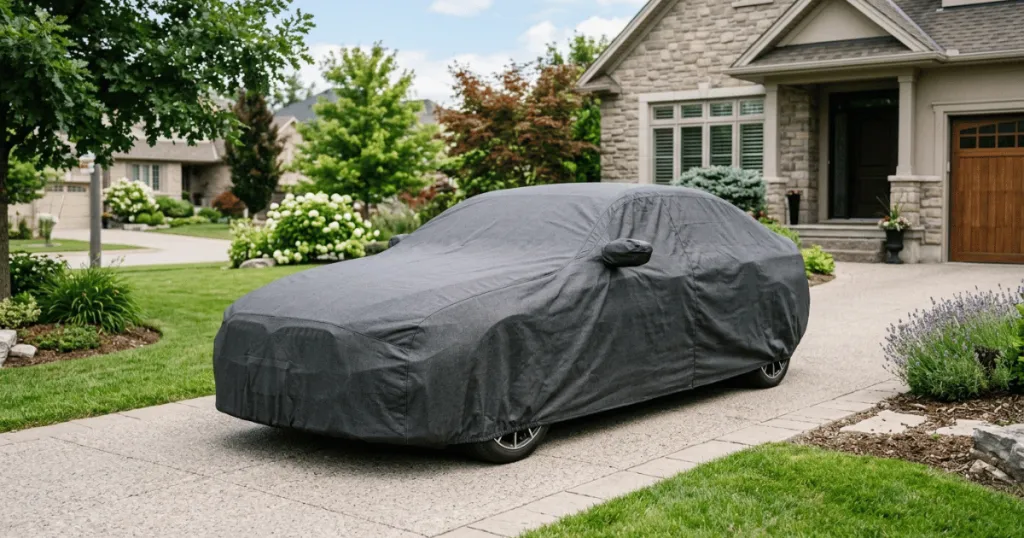
Evaluating Environmental Hazards for Open-Air Vehicle Storage
Open-air storage subjects automotive finishes to a compounding mix of physical and chemical stressors. Ultraviolet radiation breaks down clear coats and oxidizes rubber window trim over time. Tree sap, bird droppings, and wind-blown industrial fallout settle directly onto horizontal panels, etching into clear coats if left undisturbed. Moisture from morning dew or persistent rain combines with atmospheric pollutants, creating mild acidic films that dull paint luster.
Wind creates another major hazard by shifting loosely draped fabric across the paint surface. Even microscopic dust particles trapped underneath can act as an abrasive sanding medium when gusts push the material back and forth. Managing these risks demands more than a basic sheet. It requires a specialized outdoor shell engineered for stability and environmental resistance. Furthermore, temperature fluctuations cause metal body panels to expand and contract, which interacts with tight or ill-fitting covers. If the fabric lacks sufficient give or breathability, this thermal cycle traps humidity against the paint, leading to water spotting or cloudy clear coats. Understanding these climatic pressures helps vehicle owners appreciate why indoor dust sheets fail miserably when exposed to the open sky.
Selecting the Right Fabric and Construction for Open-Air Protection
Multi-Layer Polypropylene and Polyester Fabrics
Composite fabrics utilize bonded layers to balance breathability and weather resistance. Outer layers typically repel rain and block UV rays, while inner fleece layers cushion the paint surface. These breathable textiles allow trapped moisture vapor to escape rather than condensing underneath the paneling. This breathability prevents the clouding or blistering that can occur when cheap vinyl sheets trap condensation.
Heavy-Duty Woven Canvas and Acrylic Materials
Woven acrylics and heavy canvas options provide superior tear resistance and long-term durability in regions with intense solar radiation. These materials resist fiber degradation under prolonged sun exposure much better than standard lightweight polymers. While heavier to handle, they maintain their structural integrity through seasonal storms and resist sagging under minor snow loads. When evaluating material weights, owners should weigh the trade-off between everyday handling effort and maximum storm endurance. Lighter multi-layer polyester blends are easier to remove and install daily, whereas heavy woven acrylics suit regions with brutal year-round sun and frequent hail threats.
Securing Methods and Wind Management for Exterior Vehicle Shields
Wind is the primary enemy of any outdoor car cover installation. A poorly anchored shield can billow, lift, or completely detach during sudden storm front arrivals. Utilizing built-in hem cords helps cinch the front and rear bumpers tightly, but high-wind zones require additional mechanical restraint.
Center-securing grommets and weighted underbody straps prevent the fabric from lifting off the vehicle flanks. Securing straps should be pulled snug without creating severe tension points that could chafe painted rocker panels. Positioning the vehicle away from direct wind tunnels or overhangs also reduces the kinetic force acting on the secured fabric. For open suburban driveways exposed to crosswinds, adding a heavy-duty strap that runs completely underneath the chassis prevents the cover from turning into a parachute during severe thunderstorms.
Preventing Common Mistakes with Open-Air Vehicle Covers
A frequent error among vehicle owners involves installing a protective shell over a dirty car. Accumulated road grit trapped between the fabric interior and the clear coat acts like sandpaper during breezy days. Always wash or at least rinse heavy dust off the vehicle before pulling the cover into place.
Another common misstep is storing a damp cover inside a trunk or storage bag. Trapped moisture fosters mold and mildew growth within the fabric fibers, which can ruin the material and transfer unpleasant odors back to the vehicle. Always allow the exterior shield to air-dry completely before folding it for storage. Additionally, owners should avoid dragging the fabric across the ground during removal, as picking up driveway gravel or asphalt grit guarantees paint damage during the next installation.
Practical Guidelines for Maintaining Your Exterior Vehicle Shield
Routine maintenance extends the operational lifespan of any driveway parking car cover. Periodic washing with mild liquid soap and lukewarm water removes accumulated airborne pollutants and bird residue from the outer shell. Never use harsh detergents, bleach, or pressure washers, as these agents strip water-repellent treatments and weaken fabric seams.
Inspect the elastic hems and strap attachment points seasonally for signs of fraying or fatigue. Addressing small wear spots early prevents catastrophic failure during severe weather events. Proper folding techniques, starting from the sides and rolling toward the center, also reduce snagging risks during removal and reinstallation. Storing the clean, dry cover in a breathable canvas bag rather than a sealed plastic bin ensures residual humidity does not spawn mildew during extended periods of non-use.
Long-Term Benefits of Using a Driveway Parking Car Cover
Investing time in proper exterior protection preserves the resale value and aesthetic appeal of cars, trucks, and SUVs alike. Minimizing ultraviolet degradation saves vehicle owners from expensive clear-coat restoration and paint correction services down the road. Furthermore, keeping the exterior clean reduces the frequency of car washes, conserving water and minimizing manual wash-induced swirl marks.
A well-fitted driveway parking car cover transforms an exposed outdoor parking space into a controlled micro-environment. While no outdoor cover matches the absolute protection of a sealed indoor garage, choosing the right material and securing it properly neutralizes most environmental threats. Consistent maintenance and disciplined daily use ensure the vehicle remains protected through every changing season, shielding vulnerable trim, glass seals, and painted panels from premature aging.
FAQ
Can I use an indoor car cover for outdoor driveway parking?
No, indoor covers lack weather-resistant coatings and UV inhibitors. Using an indoor cover outdoors leaves the vehicle vulnerable to rain, sun damage, and moisture retention.
How do I keep my driveway parking car cover from blowing away in high winds?
Use built-in elastic hem cords, reinforced grommets, and a properly adjusted underbody strap kit to secure the cover securely around the vehicle’s base.
Should I wash my car before putting on a cover?
Yes, always remove loose dust, dirt, and debris before installation to prevent abrasive scratching caused by trapped particles rubbing against the paint.