Protecting a specialty vehicle during long periods of inactivity requires more than tossing a generic tarp over the hood. A dedicated collector car storage cover serves as the primary barrier against airborne dust, shifting humidity, accidental garage contact, and minor environmental hazards that can quietly degrade vintage paint, exposed chrome, and soft rubber seals over time. Understanding what makes storage protection unique helps vehicle owners avoid common preservation mistakes and maintain vehicle finish integrity.
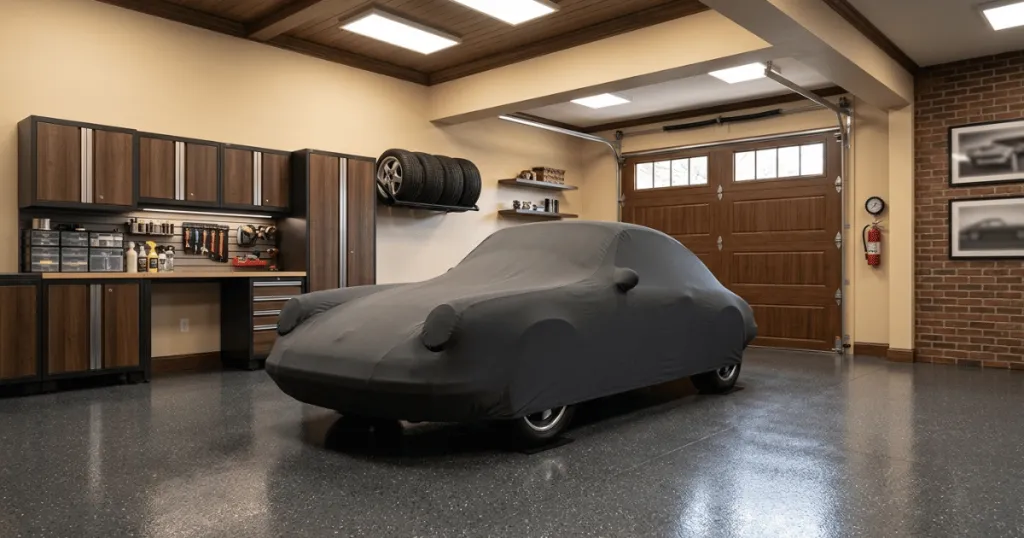
Unlike daily driver protectors built to shed driving rain and baking sunlight on an exposed driveway, storage shields focus primarily on interior garage dynamics. Garages introduce unique risks such as settling abrasive dust, localized moisture fluctuations, falling tools, and rubbing from passing foot traffic. Evaluating fabric breathability, soft inner linings, and secure fit specifications ensures that long-term vehicle preservation yields the desired results without introducing new risks to delicate finishes.
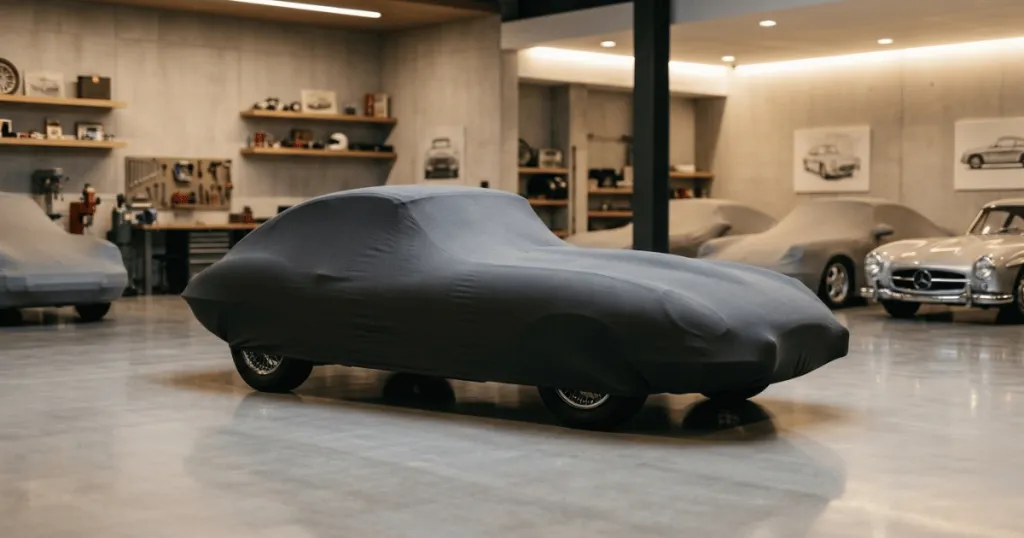
Core Factors in Selecting a Collector Car Storage Cover
Selecting an effective protective shell demands a careful look at how fabric properties interact with static vehicle environments. A common oversight involves treating indoor storage as completely benign, assuming any lightweight barrier is adequate for the job. In reality, garage environments concentrate fine particulate dust that settles on paint and turns into micro-abrasions the moment anything brushes against the vehicle surface.
Evaluating Breathability and Moisture Control
Breathability stands as the most critical fabric attribute for long-term vehicle preservation. When garage temperatures fluctuate, microscopic condensation can form on cold metal body panels beneath a non-porous shield. If a barrier lacks vapor-permeable properties, trapped moisture stays against the clear coat and accelerates oxidation or chemical staining. High-grade woven fabrics allow trapped vapor to escape naturally while blocking settling dust particles from reaching the paint.
Many vehicle owners assume that indoor storage eliminates all weather-related concerns, yet humidity changes inside a detached outbuilding or a residential garage can be quite extreme. As seasons change, moisture levels rise and fall, causing metal surfaces to breathe. An effective indoor car cover acts as a regulator rather than a sealed plastic bubble. It permits moisture vapor to dissipate before it condenses into liquid water droplets against vulnerable vintage sheet metal, chrome bumpers, and interior components.
Prioritizing Soft Interior Linings
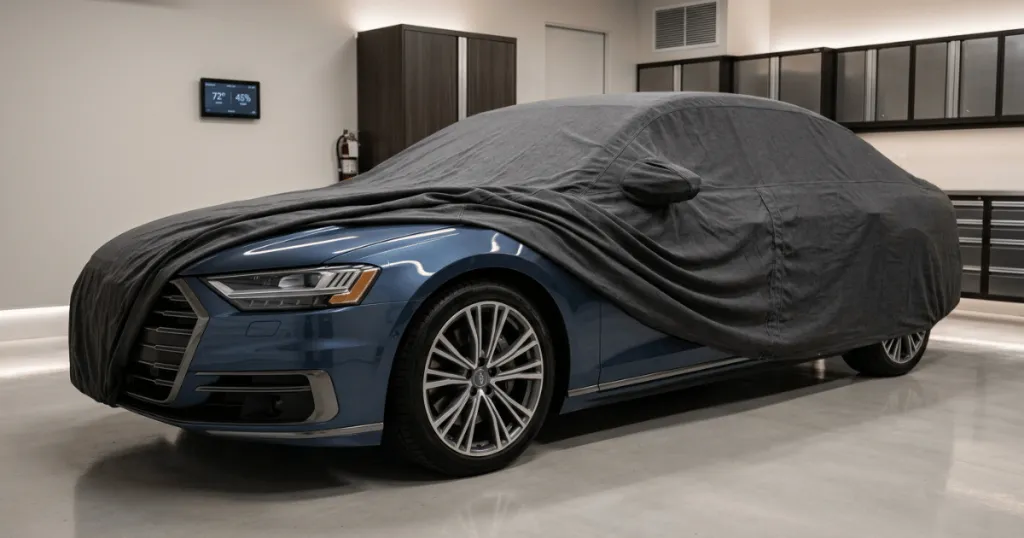
The interior fleece or napped lining of a protective enclosure directly contacts delicate vintage paintwork. Rough or synthetic non-woven backing materials can catch microscopic grit and drag it across the surface during installation or removal. A plush, non-abrasive inner fleece cushions the body panels and prevents friction damage. Owners of restored classics with soft nitrocellulose or lacquer finishes must verify that the inner fibers remain completely inert and chemically non-reactive.
When searching for classic car protection, scrutinizing the texture of the inner material is just as important as evaluating the outer shell. Single-layer unlined fabrics lack the necessary loft to safely lift microscopic airborne particles away from the car body. A quality flannel or micro-fiber fleece lining provides a gentle buffer, ensuring that even if a small amount of settling dust bypasses the primary weave, it rests harmlessly within the pile of the fabric instead of grinding directly into the vehicle finish.
Managing Weight and Bulk for Easy Handling
Fabric weight directly influences how often an owner actually uses the protective shield. Extremely heavy multi-layer canvas options offer robust impact resistance against garage mishaps, but they can prove difficult to fold and maneuver around low-clearance garage walls. Lightweight multi-layer composite fabrics strike a practical balance by providing excellent dust protection and cushioning while remaining manageable for a single person to install and remove.
If a protective barrier is cumbersome to handle, the temptation to leave it off increases significantly. Selecting a custom fit car cover manufactured from advanced, lightweight engineered materials ensures effortless deployment during routine garage visits. Owners should consider how much physical effort is required to pull the material over high-wing spoilers, tall mirrors, and delicate antique hood ornaments without snagging or dropping the fabric onto a concrete floor.
Real-World Storage Scenarios and Practical Adaptation
Real-world vehicle storage conditions vary widely based on whether a classic sits in a climate-controlled showroom, a dusty pole barn, or a tightly packed urban multi-car garage. Adapting protection choices to the specific storage environment prevents premature wear and keeps the underlying restoration pristine. Each setting presents distinct challenges that demand specific protective responses from the chosen material.
Tightly Packed Multi-Car Residential Garages
In crowded residential parking spaces, the primary threat shifts from weather to accidental contact from bicycles, lawn equipment, or household members walking past the vehicle. A multi-layer custom-fit shield with padded dent-resistance zones offers essential physical protection against bumps and scrapes. The snug tailoring ensures loose fabric does not snag on protruding items or trap dirt against the quarter panels.
Using a vintage car storage preservation strategy in a shared family garage also requires accounting for chemical fumes, airborne sawdust from nearby workbench projects, and frequent temperature shifts caused by opening the main garage door. A tightly woven barrier acts as a physical shield against accidental splashes, overspray, and shifting tools, safeguarding irreplaceable body lines from costly dings and blemishes.
Dust-Heavy Outbuildings and Pole Barns
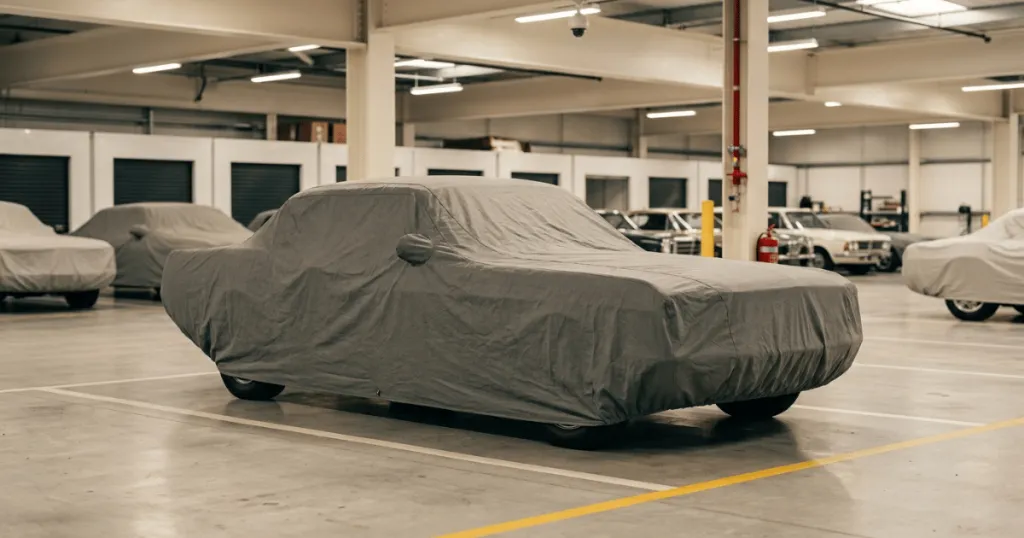
Rustic or semi-enclosed outbuildings expose stored vehicles to continuous particulate fallout, rodent activity, and dramatic humidity swings. Here, a dense multi-layer woven fabric with high dust-filtration capability is mandatory. Owners must pair this with physical deterrents and inspect the vehicle regularly to ensure that airborne debris has not filtered through the weave over extended months of stillness.
Pole barns and unpaved storage sheds present unique obstacles because fine dirt can drift upward from gaps in the floorboards or settle through roof rafters. A specialized breathable garage cover designed to block fine silt while maintaining maximum airflow is essential in these environments. Without this targeted protection, a thick layer of abrasive grit accumulates on the vehicle within days, turning routine maintenance into a tedious polishing chore.
Climate-Controlled Display and Showroom Spaces
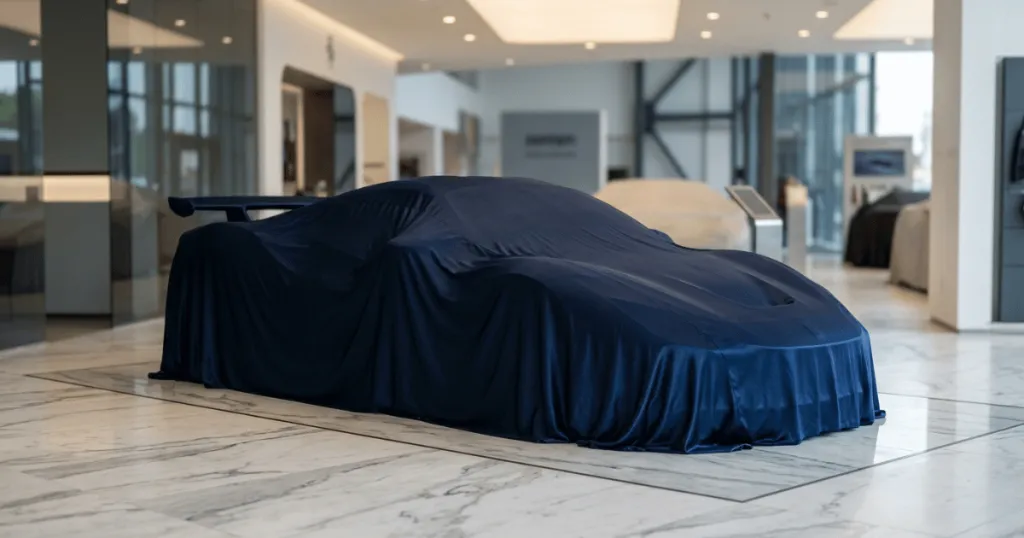
Showroom environments maintain stable temperatures and low humidity, meaning heavy weather-resistant barriers are unnecessary and often counterproductive. A lightweight satin or stretch-knit dust cover works best in these settings. These breathable, form-fitting enclosures hug every body line gracefully while keeping ambient showroom dust off the finish without adding trapped heat or bulk.
In controlled museum or display settings, the primary objective is aesthetic presentation combined with minimal dust accumulation. A soft, form-fitting drape enhances the visual appeal of the vehicle while it rests, allowing enthusiasts to admire the contours without fully unrobing the car. This approach eliminates unnecessary handling and reduces the risk of accidental zipper scratches or fabric snags.
Why Proper Material Selection Matters for Vehicle Preservation
The financial and emotional investment in a vintage automobile makes the choice of preservation materials a high-stakes decision. Inferior synthetic materials can trap humidity, leach chemical plasticizers, or scratch delicate single-stage paint under slight pressure. Investing in a purpose-built collector car storage cover safeguards historical authenticity and reduces the need for expensive paint correction after months of storage.
Beyond surface protection, maintaining clean paint and chrome preserves structural integrity. Trapped moisture leads to blistering, rust blooming around trim fasteners, and pitting on vintage pot metal. By controlling the micro-climate immediately surrounding the vehicle body, owners retain factory finishes and original patinas that define a true collector vehicle.
Furthermore, evaluating how different textiles interact with environmental elements ensures that the vehicle remains ready for exhibition or weekend driving at a moment’s notice. A thoughtful approach to vehicle preservation prevents chemical breakdown of rubber weatherstripping and stops airborne contaminants from etching into fragile clear coats over long periods of inactivity.
Common Misconceptions About Long-Term Vehicle Covers
Several persistent myths surround long-term preservation products, often leading owners to choose incorrect materials. One frequent misconception is that thicker materials always provide better protection. In reality, a heavy plasticized tarp creates a destructive moisture trap inside an enclosed garage, ruining paint far faster than ambient dust ever would.
Another widespread myth suggests that universal-fit products work just as well as tailored options for indoor storage. Loose-fitting enclosures shift constantly with air currents, rubbing paint edges and creating dull spots on prominent body lines. A proper collector car storage cover requires precise contouring to eliminate friction points and ensure uniform surface tension across the entire chassis.
Finally, many assume that indoor vehicles never require cleaning before the shield goes on. Even invisible dust layers act as grinding paste when compressed by fabric. Establishing a routine of cleaning the car thoroughly before application remains essential regardless of where the vehicle rests.
Choosing the correct preservation shield requires balancing breathability, lining softness, and environmental fit. By focusing on these core elements and avoiding common material mistakes, vehicle owners can ensure their prized automobiles remain immaculate through every off-season.
FAQ
Can I use an outdoor car cover for indoor storage?
Outdoor covers feature heavy waterproof membranes and UV coatings that restrict breathability. Using them indoors can trap humidity against the paint, making a dedicated collector car storage cover the safer choice for garage environments.
How often should I remove the cover during long-term storage?
It is best to remove the shield every few weeks to inspect the vehicle, check for moisture buildup, and allow fresh air to circulate around the chassis.
Are custom-fit covers necessary for garage storage?
Custom-fit enclosures prevent loose fabric from flapping or rubbing against the paint, making them much safer than universal options in tight garage spaces.