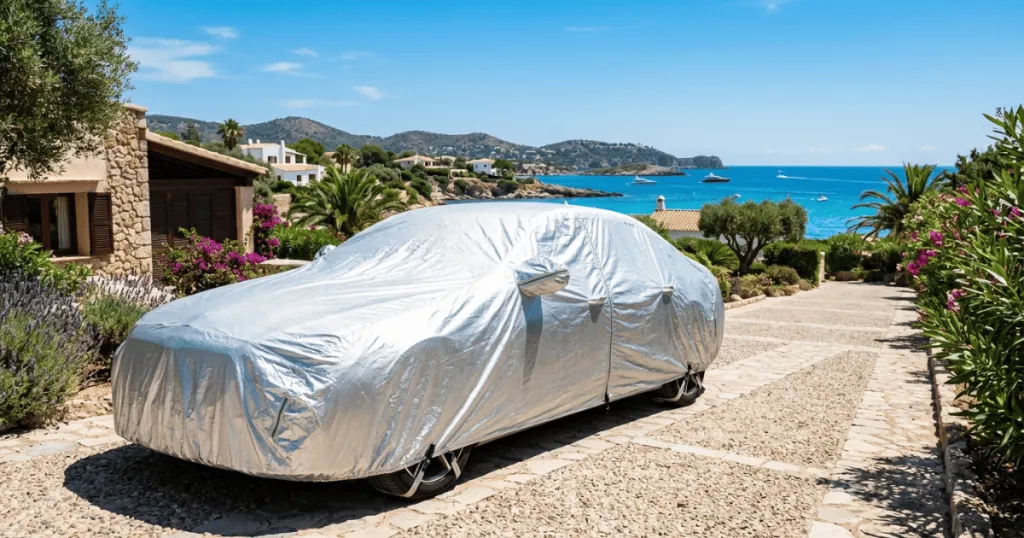
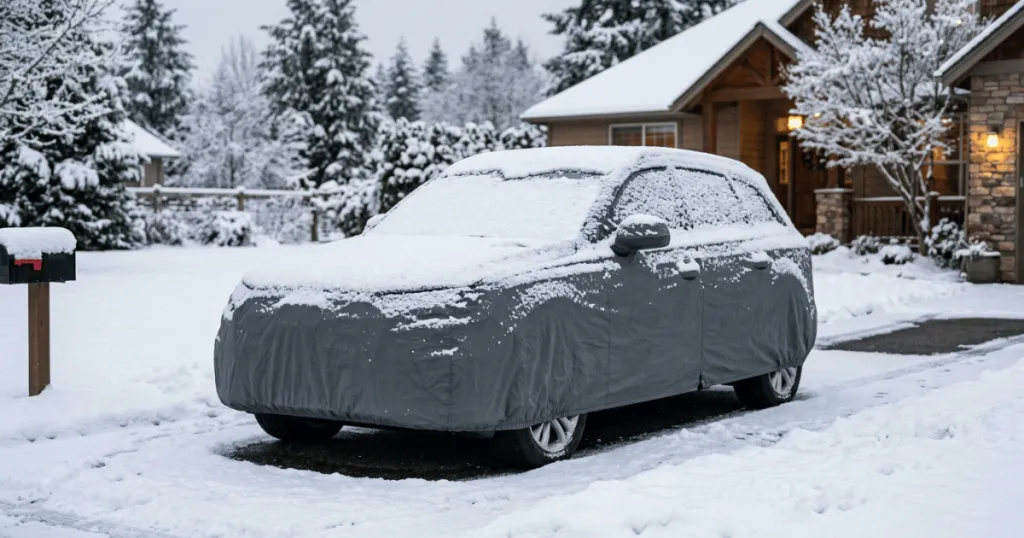
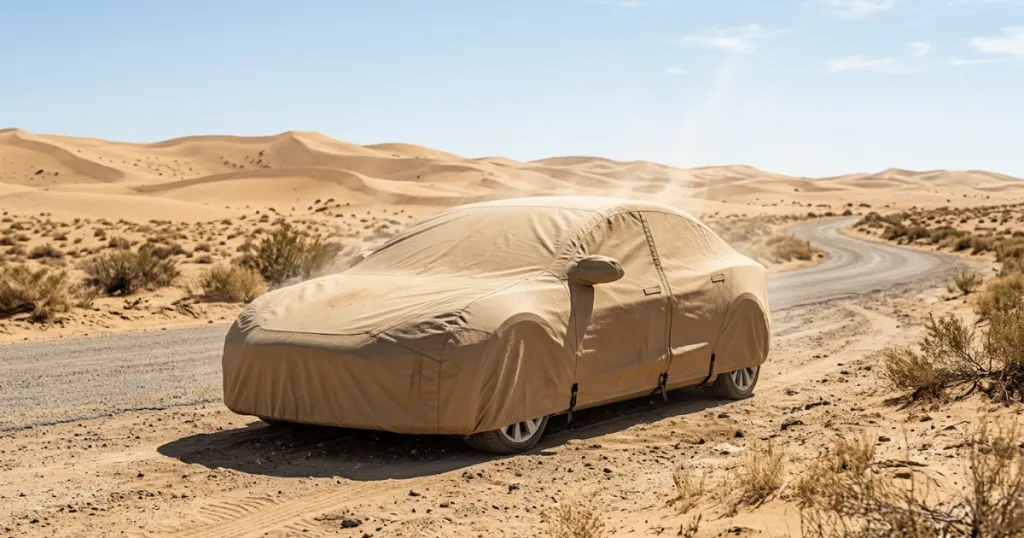
Many vehicle owners assume that simply throwing any standard car cover over their automobile offers adequate protection when a severe weather event approaches. In practice, standard dust covers or thin indoor sheets often fail under intense wind shear, heavy downpours, or flying debris, leaving the paint and body panels vulnerable to severe damage. Choosing and deploying a storm preparation car cover requires understanding how specialized exterior materials, heavy-duty tie-down straps, and multi-layer fabric construction interact to withstand severe environmental stress.
When severe weather forecasts arrive, car owners frequently scramble to safeguard their investments, often relying on makeshift solutions that create more hazards than they prevent. Understanding the mechanics of a specialized outdoor car cover for severe weather helps vehicle owners make informed choices before meteorological disturbances reach their peak intensity.
Why Standard Car Covers Fail During Severe Weather
Standard indoor or lightweight outdoor covers are designed primarily to block dust, light dew, and minor garage scratches. When high winds and violent storms strike, these lightweight options lack the structural integrity and anchoring weight required to stay in place. A loose cover turns into a dangerous sail, whipping violently against the vehicle body and abrading clear coats down to the bare primer in a matter of hours. This constant friction causes extensive paint abrasion across vulnerable exterior surfaces, transforming a minor storm into an expensive cosmetic restoration project. Vehicle storage outdoors demands materials that can handle mechanical stress without transferring abrasive forces to the underlying paint.
Furthermore, standard fabrics often lack the waterproofing depth needed for prolonged downpours. Moisture breaches the weave, gets trapped against the paint, and accelerates corrosion if the sun beats down immediately after the storm passes. True weatherproofing requires engineered multi-layer fabrics that balance waterproof membranes with breathable ventilation layers. Without a reliable moisture barrier, trapped humidity creates a greenhouse effect under the fabric, leading to oxidation and water spots on chrome trim, side mirrors, and painted body panels.
Key Factors in Selecting a Storm Preparation Car Cover
Multi-Layer Fabric Construction
The foundation of any weather-resistant shield lies in its textile engineering. Look for multi-layer composite fabrics featuring an outer shell designed to shed heavy rain, a middle cushioning core to absorb minor impacts from windblown twigs or gravel, and a soft fleece lining to protect delicate automotive finishes. Single-layer sheets tear easily under stress, making multi-layer density non-negotiable for serious weather mitigation. A heavy duty car cover utilizing multilayer composite architecture provides the necessary tensile strength to resist tearing while maintaining sufficient flexibility during rapid temperature drops.
Custom Fit Versus Universal Design
Loose fabric catches wind much more aggressively than a tailored outline. Universal covers leave excess material that billows and snaps in high gusts, creating immense friction against the side mirrors and bumper corners. A custom or semi-custom fit hugs the body contours of your specific vehicle make and model, minimizing loose fabric pockets and keeping the shield tightly anchored during heavy meteorological disturbances. Snug tailoring ensures that gale force gusts slide smoothly over the exterior profile rather than catching underneath loose folds and lifting the cover entirely off the floorboards.
Secure Anchoring Systems
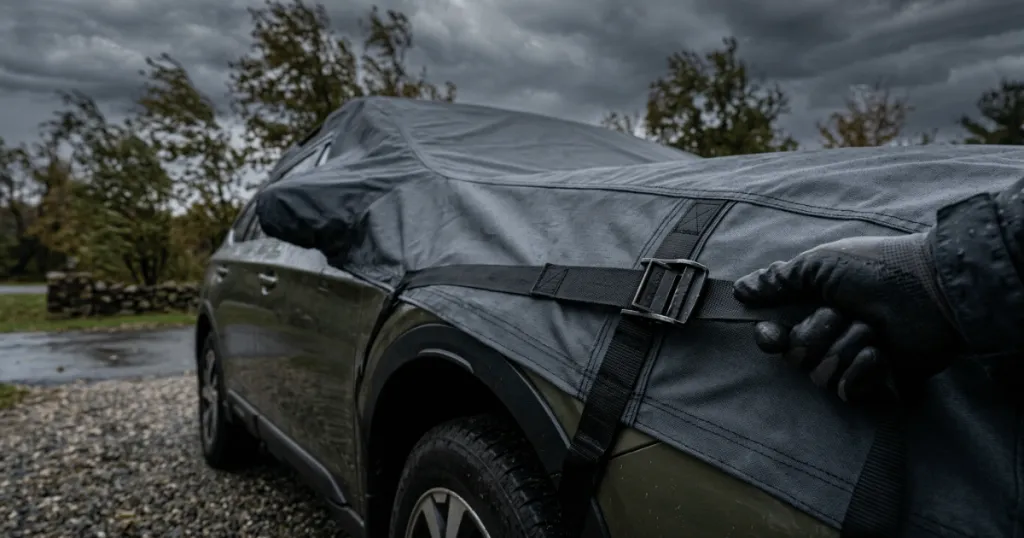
Wind is the primary enemy of exterior protection during heavy weather events. An effective model must feature built-in grommets, reinforced anchor points, and a heavy-duty strap-and-buckle system that passes underneath the chassis. Elastic hems alone will fail when gale-force winds attempt to lift the material off the vehicle, making secure underbody strapping essential. A proper anchoring system locks the protective barrier in place, ensuring that intense air currents cannot exploit gaps between the wheels and body panels.
Real-World Scenarios and Practical Application
Dealing with Heavy Wind and Gale Force Gusts
In regions prone to sudden squalls or coastal hurricanes, securing the anchoring system correctly determines whether the vehicle stays protected or the cover disappears down the street. Threading heavy-duty security straps underneath the floorboards prevents air from getting underneath the hem. If wind speeds exceed local safe thresholds, additional weight bags designed for automotive covers can provide extra stability. When wind shear intensifies, monitoring how the fabric interacts with the antenna, side mirrors, and wheel arches prevents unexpected tearing.
Managing Prolonged Rain and Flood-Prone Areas
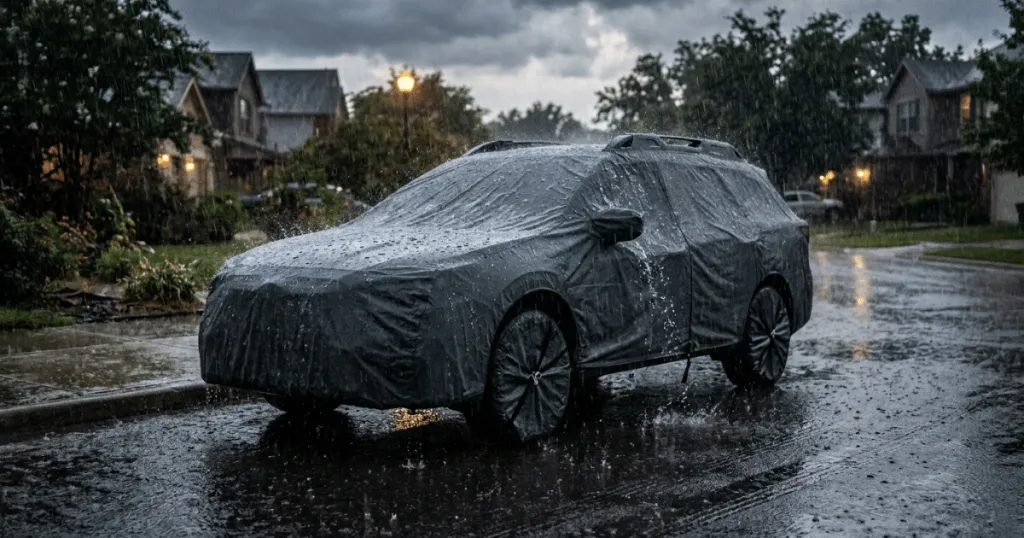
Continuous downpours test the waterproof rating of exterior fabrics. When water pools on the roof or hood, inferior materials allow seepage through stitched seams. Selecting a design with ultrasonically welded seams rather than traditional needle stitching prevents moisture migration. After the storm subsides, removing the shield to let the paint breathe prevents humidity pockets from forming under the sun. Utilizing a certified weatherproof car cover ensures that persistent precipitation drains away from rubber seals and door jambs effectively.
Why Proper Weather Shielding Matters for Long-Term Value
Investing time in proper vehicle safeguarding protects more than just the immediate exterior appearance. Paint repair, clear coat restoration, and dent removal resulting from unsecured wind-whipped covers or flying debris easily cost thousands of dollars at a professional body shop. By keeping airborne hazards, tree sap, and acid rain away from the body panels during a severe weather event, owners preserve both the structural integrity and the resale value of their automobile. Protecting clear coat finishes from aggressive environmental exposure ensures that factory paint retain its gloss and depth over years of seasonal weather shifts.
Beyond financial protection, proper preparation eliminates the stress that comes with watching a severe weather forecast. Knowing your car is wrapped in a secure shield allows you to focus on household safety instead of worrying about exterior paint scratches or shattered glass from falling yard debris. Integrating automotive maintenance habits around seasonal weather cycles prevents emergency repair bills and extends the operational lifespan of exterior trim components.
Common Misconceptions About Heavy-Duty Weather Protection
A frequent error among car owners is believing that heavier materials automatically guarantee better storm performance. Excessively heavy canvas sheets can trap humidity and become unmanageable to install safely when high winds are already beginning to pick up. Balance is critical, as modern technological textiles offer high tensile strength and weather resistance without excessive bulk. Understanding the actual physics of wind resistance helps drivers choose functional utility over cumbersome, overly dense fabrics that complicate manual installation.
Another widely held myth is that tying a rope loosely around the middle of the vehicle is enough to secure a loose-fitting cover. Makeshift ropes often slide off curved body panels or slice through fabric under high tension, leaving the vehicle completely exposed mid-storm. Always rely on integrated strap kits designed specifically for the anchor points of your chosen shield, ensuring force distribution remains balanced across the entire vehicle frame rather than concentrating tension on a single weak point.
Final Thoughts on Choosing the Right Storm Preparation Car Cover
Proper preparation before a severe weather event requires looking past basic marketing claims and focusing on tangible build qualities like multi-layer fabric density, reinforced underbody straps, and precision tailoring. By taking the time to fit a reliable storm preparation car cover correctly, you eliminate the risk of wind abrasion and moisture damage. Prioritize secure anchoring and breathable waterproof materials to keep your vehicle safe through every season. Thoughtful outdoor protection strategy combined with quality textile selection guarantees peace of mind when unpredictable weather threats emerge.
FAQ
Can I leave a storm preparation car cover on during a hurricane?
During extreme tropical storms or hurricanes with sustained winds over hurricane force, it is often safer to remove the cover entirely. High winds can catch even the tightest storm preparation car cover, potentially pulling off trim or damaging the vehicle if debris gets trapped underneath.
How do I clean my weather shield after a major storm?
Rinse off mud, dirt, and organic debris with a garden hose while the cover remains secured on the vehicle or laid flat on a clean driveway. Use mild automotive soap and a soft sponge, then let it air dry completely before folding it up for storage.
Do I need a special cover for hail protection?
Standard weather covers protect against rain and wind, but severe hail requires a specialized multi-layer design featuring thick foam padding or high-density EVA layers to absorb kinetic impacts from falling ice stones.