Maintaining a vehicle shield requires careful attention, especially when dirt, pollen, and environmental fallout accumulate over months of outdoor storage. Proper cleaning keeps the fabric breathable and prevents abrasive particles from scratching your car paint every time the shield goes on or comes off. If you are wondering about the right car cover washing instructions, the process depends heavily on your specific fabric type and whether your washing machine can handle the bulk safely.
Ignoring proper maintenance can ruin high-performance synthetic materials and strip away crucial water-repellent treatments. When you approach cleaning day with a clear plan, you protect your investment and ensure your vehicle stays clean beneath a truly protective barrier.
Executing a careful cleaning schedule preserves both the outer shell and the inner fleece layer, ensuring long-term vehicle health during extended garage or outdoor parking periods.
Understanding Car Cover Washing Instructions and Fabric Care
Different materials react poorly to harsh detergents, hot water, and aggressive machine cycles. Multi-layer fleece-lined covers, woven polyester, and heavy cotton blends each demand a specific cleaning approach to preserve their structural integrity. Knowing your fabric type before starting prevents permanent shrinkage, seam degradation, and the loss of UV-inhibiting properties.
Most manufacturers advise against standard laundry detergents because they leave chemical residues behind. These residues can attract moisture or break down specialized coatings over time. A mild, non-detergent soap designed for technical fabrics or automotive textiles remains the safest choice for keeping your protective shield functional.
Woven Polyester and Polypropylene Care
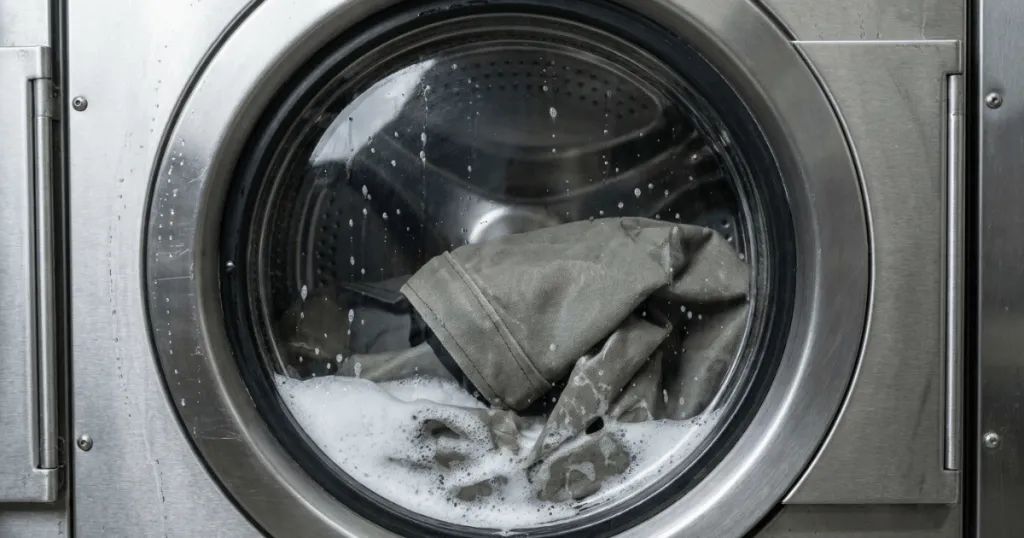
Lightweight synthetic materials dry quickly and resist moisture naturally, but they still collect fine grit in their pores. Wash these covers using cold or lukewarm water with a mild liquid soap on a gentle cycle. Avoid high-spin settings entirely, as strong centrifugal forces can pull seams apart or stretch the elastic hem prematurely.
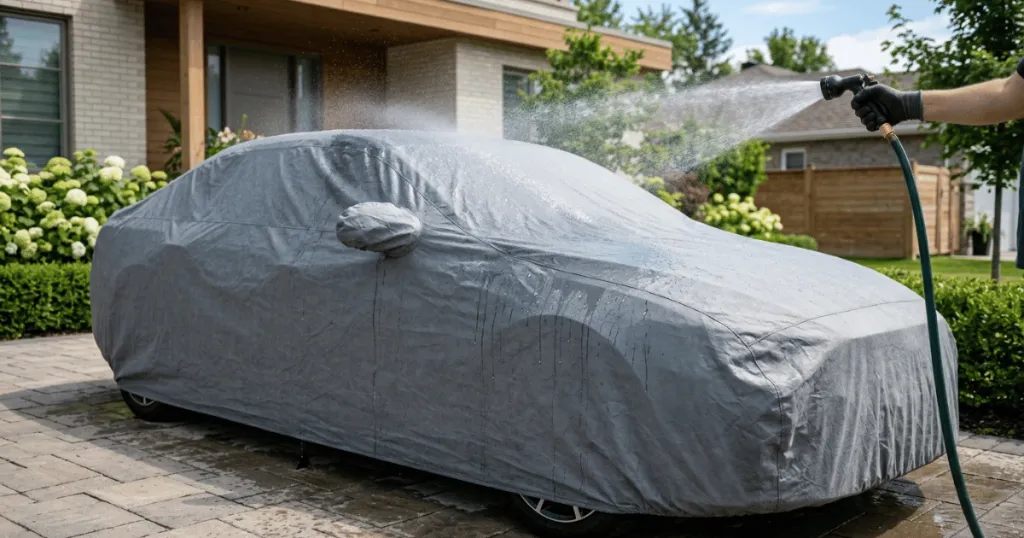
When machine washing is not an option due to drum size limits, laying the cover flat on a clean driveway works exceptionally well. Use a soft brush to work soapy water across the surface before rinsing thoroughly with a garden hose. Never twist or wring the fabric to remove excess water, because aggressive wringing stresses the stitched seams.
Multi-Layer Fleece-Lined Fabric Maintenance
Fleece-backed and multi-layer composite shields require extra caution because harsh agitation can delaminate the bonded layers. Always check whether your home washing machine features a center agitator, as agitators can rip large automotive fabrics. If your machine has an agitator, taking the shield to a commercial laundromat with front-load industrial drums is the smarter path.
Use the lowest spin speed available and limit the wash cycle to a short, delicate duration. Hot water is strictly off-limits for composite layers, as heat can melt waterproof membranes or cause the soft inner fleece to ball up and lose its paint-safe texture.
Step-by-Step Car Cover Washing Instructions for Driveway Cleaning
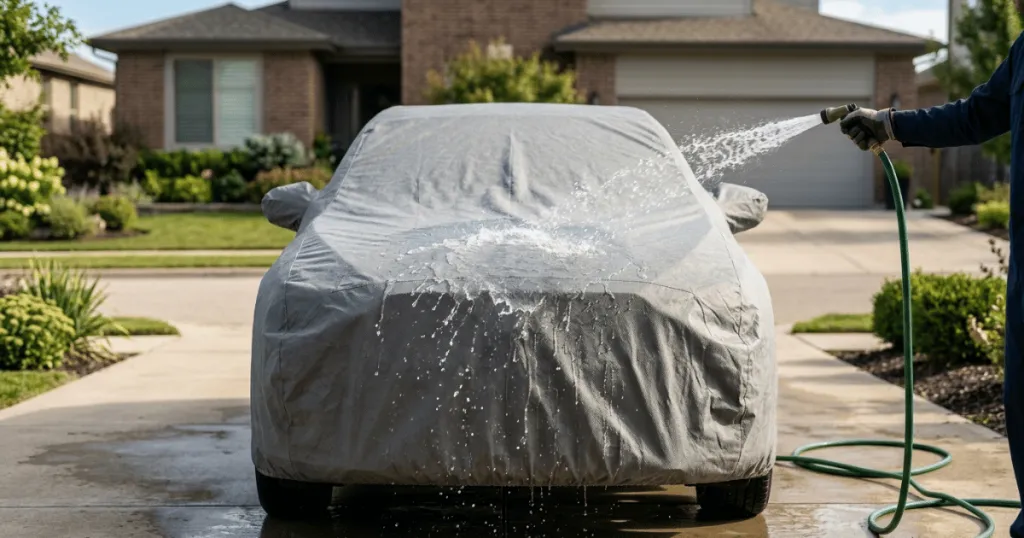
Washing your protective shield right on the vehicle or spread out across a clean outdoor surface gives you total control over water pressure and scrubbing intensity. This manual method eliminates the risk of washing machine damage and works wonders for heavily soiled outdoor covers.
Step 1: Prep and Dry Brush
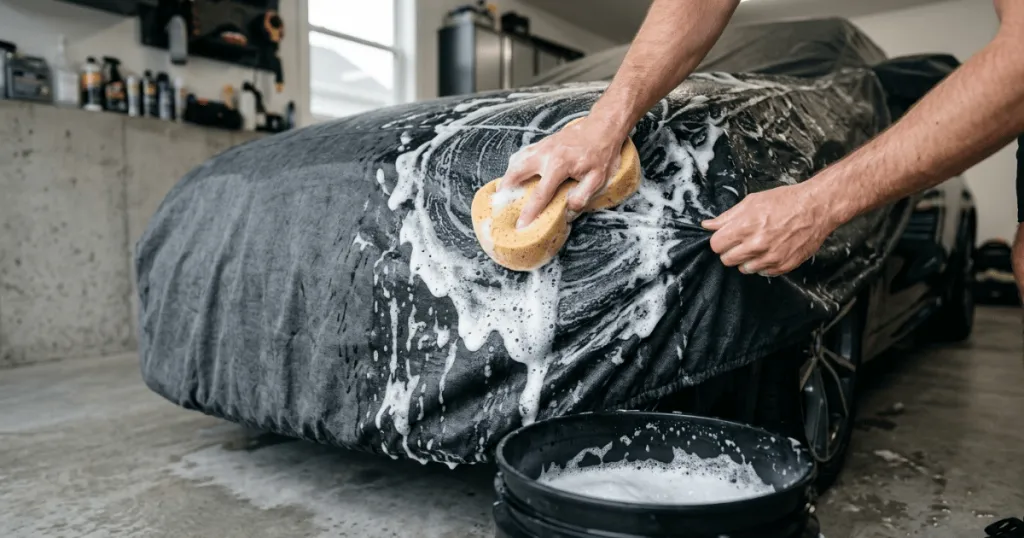
Spread the cover out on a clean driveway, patio, or directly over the vehicle if it is locked in place. Use a soft-bristled broom or a dry microfiber cloth to sweep away loose debris, dried leaves, and heavy surface dust. Removing loose dirt first stops you from rubbing abrasive particles deeper into the weave during the wet wash phase.
Step 2: Apply Mild Soap Solution
Fill a large bucket with cool water and mix in a cup of specialized automotive fabric cleaner or mild dish soap. Dip a large, soft sponge or wash mitt into the soapy mixture and start working from the top down. Move in straight lines rather than aggressive circles to protect the weave and avoid stretching the material.
Step 3: Rinse Thoroughly
Use a standard garden hose without a high-pressure nozzle to flush away all soap residue from the exterior surface. Pay close attention to pockets, mirror patches, and stitched seams where soap tends to pool and dry. Leftover soap residue acts as a magnet for new dust and pollen the moment the shield goes back outside.
Step 4: Flip and Clean the Inside
Once the exterior is completely rinsed, carefully flip the shield over to inspect and clean the inner lining. The inside collects body oils, dust from your car surface, and garage humidity residue over time. Gently wipe down the interior lining with the remaining soapy water and give it a thorough final rinse.
Drying Techniques and Storage Best Practices
Proper drying is just as important as the wash cycle itself when maintaining your vehicle protection gear. Never put a synthetic automotive shield into a standard electric or gas clothes dryer. The intense heat from a household dryer melts synthetic fibers, ruins waterproof coatings, and shrinks elastic hems beyond repair.
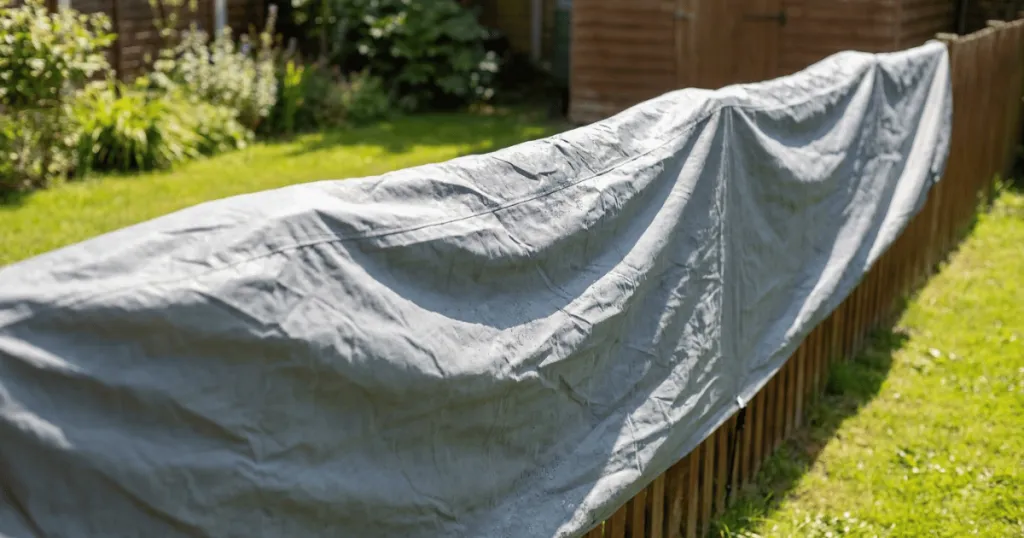
Instead, drape the clean cover over your vehicle while it is parked in a shaded, well-ventilated area, letting natural airflow dry both sides simultaneously. Alternatively, hang it securely over a clean patio railing or heavy-duty line until every square inch is completely dry. Storing a damp protective shield invites mold, mildew, and musty odors that can transfer directly to your car paint.
Real-World Scenarios and Seasonal Maintenance Timing
The frequency of your cleaning routine depends entirely on your local climate and where you park your vehicle. Vehicles parked beneath pine trees or heavy foliage accumulate sticky sap and organic acids that demand monthly attention. If left sitting, tree sap and bird droppings eat through surface treatments and stain the fabric permanently.
For vehicles stored inside a clean garage, an annual washing is usually more than enough to remove dust accumulation. However, outdoor vehicles facing harsh UV rays, heavy winter salt, and frequent rainstorms benefit from a seasonal refresh every three to four months. Staying proactive prevents environmental fallout from bonding permanently to the technical fibers of your shield.
Common Misconceptions About Cleaning Protective Vehicle Shields
Many vehicle owners assume that taking a dirty shield to a drive-through car wash while it is still on the car saves time. This shortcut is a major mistake, because automated car wash brushes trap gritty sand and pull violently at the fabric seams. The friction can scratch your vehicle paint and tear the cover instantly.
Another frequent error involves using bleach, stain removers, or fabric softeners to brighten old covers. Bleach destroys synthetic threads, while fabric softeners leave behind a waxy coating that ruins breathability. Stick exclusively to pH-balanced, non-detergent cleaners to keep your investment performing at its best.
Why Proper Maintenance Protects Your Vehicle Paint
Clean maintenance routines do more than keep your gear looking fresh; they directly safeguard your car finish. When a dirty shield traps grit against clear coat surfaces, wind movement turns that debris into micro-abrasions. Regular care ensures the fabric remains soft, breathable, and completely safe for long-term storage.
By following these structured car cover washing instructions, you extend the functional lifespan of your protective gear significantly. Taking twenty minutes to wash and dry your shield properly guarantees your vehicle stays pristine underneath.
FAQ
Can I put my car cover in a household clothes dryer?
No, you should never put a car cover in a clothes dryer. The high heat melts synthetic fibers, destroys waterproof membranes, and shrinks elastic hems. Always air-dry your cover by draping it over your vehicle in a shaded area or hanging it on a clean line.
How often should I clean my outdoor vehicle cover?
Outdoor covers typically require washing every three to four months, or more frequently if you park under trees that drop sap or heavy pollen. Regular cleaning prevents abrasive dust and organic acids from breaking down the fabric weave.
What kind of soap should I use for washing?
Use a mild, non-detergent soap or a specialized cleaner designed for technical outdoor fabrics. Avoid standard laundry detergents, bleach, and fabric softeners, as chemical residues can strip away water resistance and trap moisture against your paint.