At a Glance: You should wash an outdoor car cover every three to six months, or more frequently if you live in an area with high pollution, tree sap, or salt air. Indoor covers generally require cleaning once or twice a year to remove accumulated household dust.
When vehicle owners invest in an exterior protective shield, they usually assume the barrier takes all the abuse while keeping the paint pristine underneath. Over time, dust, pollen, bird droppings, and industrial fallout settle into the fabric pores, turning a protective layer into a source of abrasive friction. Figuring out how often to wash car cover fabrics depends largely on where you park and how heavily the local environment impacts your vehicle.
Ignoring routine maintenance lets grime accumulate on the inner lining, which can scratch clear coats every time the wind shifts the material. Establishing a realistic cleaning routine preserves the breathability and weather resistance of the fabric while protecting your investment from premature wear.
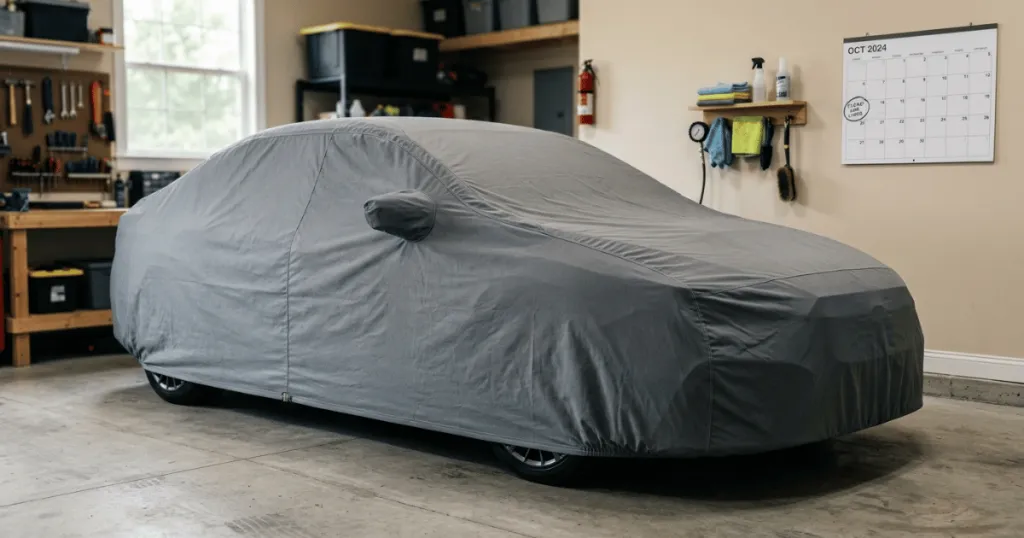
Establishing a Baseline Schedule for How Often to Wash Car Cover Materials
Most everyday drivers should aim to clean their vehicle shield every three to six months if it lives outdoors. Outdoor parking exposes the exterior to relentless UV rays, tree sap, and atmospheric pollutants that degrade both the fabric weave and any waterproof coatings. Leaving these contaminants undisturbed allows them to bond with the fibers, eventually weakening the material and reducing its shielding capability.
If your vehicle stays parked inside a garage or a workshop, you can stretch the maintenance interval out to once or twice a year. Indoor environments lack rain, bird droppings, and direct sunlight, but fine household dust and floating garage debris still settle into the threads. Even in a sheltered garage, an annual washing keeps the inner lining soft enough to glide smoothly over delicate automotive paint without leaving microscopic swirl marks.
Environmental Factors That Speed Up Washing Requirements
Tree Sap and Pollen Seasons
Heavy pollen loads and sticky tree resin require immediate attention rather than waiting for a scheduled wash. Springtime tree fallout creates a gummy residue that cakes onto the outer surface, trapping moisture and attracting more dirt. When sap hardens on the fabric, it stiffens the fibers and makes the material prone to cracking or tearing during installation and removal.
Coastal Salt Air and Industrial Pollution
Living near the ocean or in heavy industrial zones introduces corrosive elements that demand frequent maintenance. Airborne salt crystals and chemical smog settle into the weave and absorb ambient humidity, creating a damp, mildly acidic microclimate against your car paint. Rinsing and washing the material every two months in these harsh environments prevents salt buildup from degrading synthetic fibers.
Heavy Rain and Dirt Splashes
Puddles and passing traffic throw mud and road grime onto the lower skirts of a parked vehicle, soaking into the bottom hem of the fabric. Once muddy water dries, it leaves behind gritty soil particles that act like fine sandpaper against your rocker panels and bumpers. Spot cleaning the lower sections or running a full cycle helps neutralize this localized abrasive threat.
Recognizing the Physical Signs Your Shield Needs Attention
Visual cues often dictate maintenance intervals far better than a strict calendar. If you notice a dull, grayish film on the fabric or feel a stiff, gritty texture when handling the material, accumulated pollutants have already compromised the surface. Another clear warning sign is water behavior during a rainstorm or hose test; when droplets stop beading up and instead soak flatly into the fabric, the protective finish needs a thorough cleaning to restore its breathability.
Unpleasant odors or visible mold spores appearing on the inner lining signal that trapped moisture has begun feeding mildew growth. Storing a damp shield in a trunk or folding it up while wet accelerates this process, creating a musty interior that can transfer stains directly to your vehicle finish. Addressing these symptoms promptly prevents permanent fiber degradation and protects your car paint from contamination.
How Environmental Exposure Dictates Maintenance Frequency
Understanding how often to wash car cover surfaces requires looking at the specific climate and parking conditions surrounding your daily routine. Urban street parking introduces exhaust soot, brake dust, and pedestrian contact, which quickly soils light-colored fabrics. Suburban driveways surrounded by overhead foliage face a constant barrage of leaves, sap, and bird droppings that require monthly inspections to prevent localized fabric staining.
Arid desert climates present an entirely different set of challenges, as fine airborne dust and blowing sand fill the porous weave within weeks. While desert air lacks heavy moisture, abrasive sand particles accumulate rapidly and require frequent rinsing to prevent scratching during windy days. Matching your cleaning frequency to these real-world exposure levels ensures the barrier remains functional year-round.
Why Routine Cleaning Protects Your Vehicle Finish
A dirty protective layer defeats its own purpose by trapping abrasive grit directly against vulnerable clear coats. When wind causes the material to shift back and forth, embedded dust particles grind into the paint surface, creating stubborn haze and micro-scratches. Regular laundering flushes out these microscopic abrasives before they can damage the exterior finish.
Beyond scratch prevention, routine care maintains the breathable nature of modern automotive textiles. High-performance fabrics rely on microscopic pores to let trapped moisture evaporate away from the metal body, preventing oxidation and rust. When dirt and oils plug up these pores, moisture gets trapped underneath, turning the shield into a sweatbox that can ruin your paintwork.
Common Misconceptions About Maintenance and Washing
Many vehicle owners assume that rain acts as a natural cleaning cycle, but precipitation actually carries atmospheric pollutants and dust deep into the fabric weave. Waiting for a downpour to clean your shield only introduces more contaminants and leaves mineral water spots as the moisture evaporates under the sun.
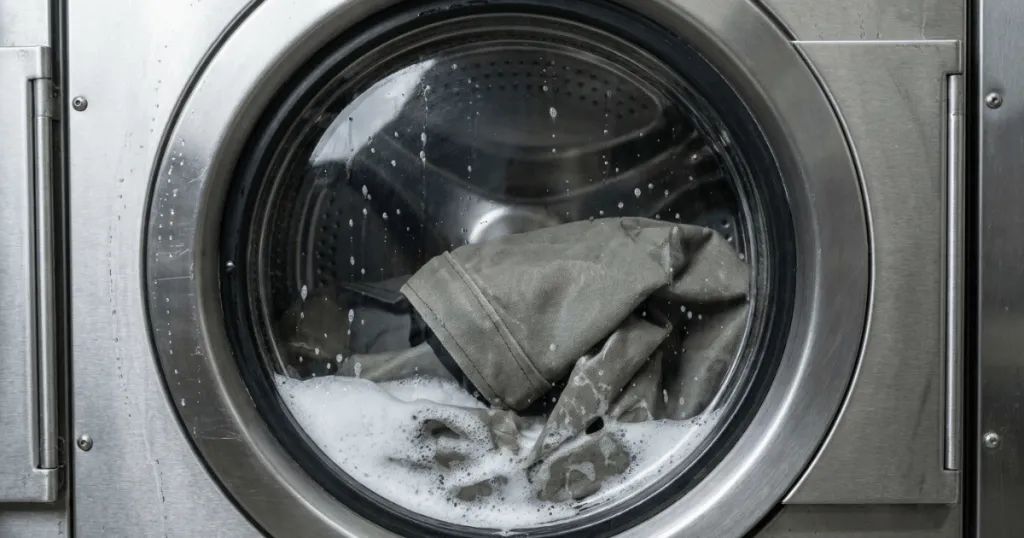
Another widespread myth is that you can toss any protective barrier into a standard household washing machine with regular laundry detergent. Most domestic agitator machines exert too much mechanical stress on large fabric panels, tearing seams and stripping away specialized weather-resistant treatments. Proper cleaning requires gentle, oversized commercial front-load drums or manual washing techniques to preserve structural integrity.
Practical Maintenance Steps for Car Owners
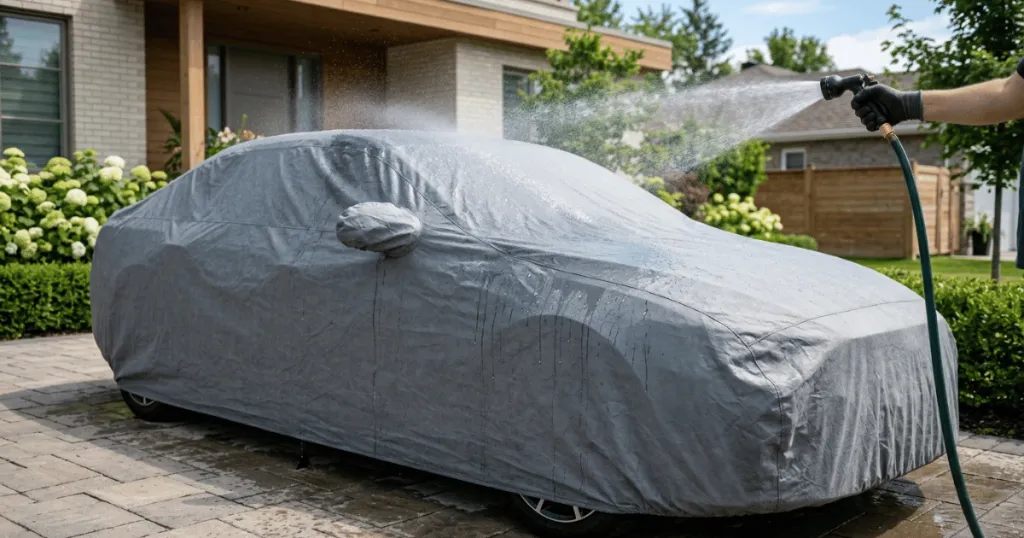
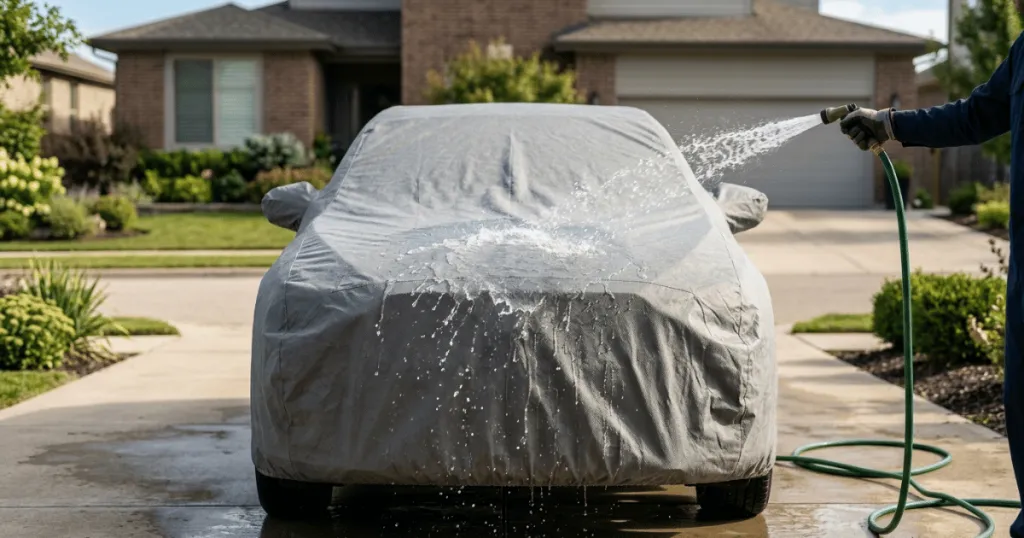
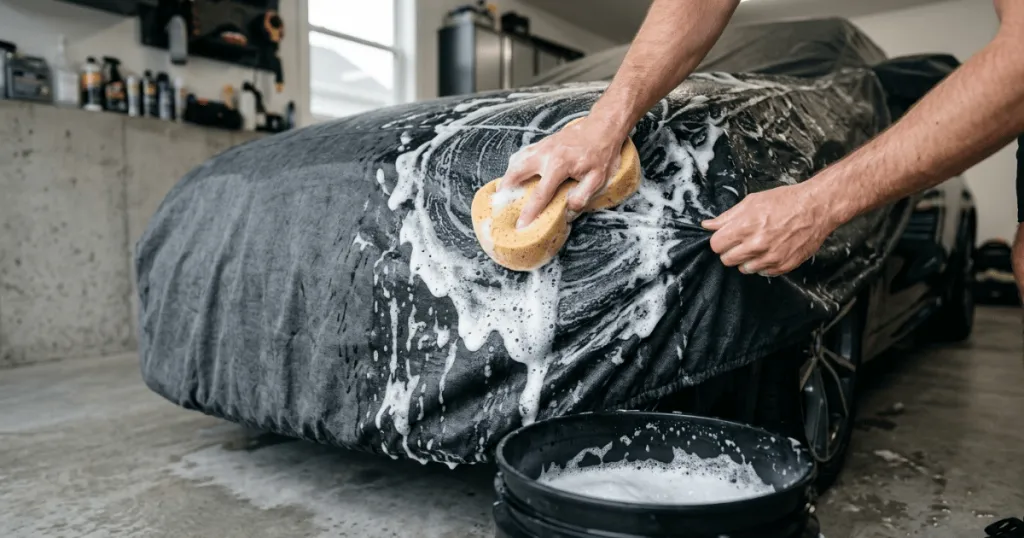
Keeping your vehicle shield in top condition does not require professional detailing equipment, but it does demand careful handling. Hose down the exterior while the material is spread across a clean driveway or draped securely over the vehicle to rinse away loose surface debris. Use a mild, non-detergent soap and a soft-bristle brush to gently work away stubborn grime without damaging delicate waterproof membranes.
Always allow the material to air dry completely in a shaded area before folding it up for storage. Never pack a damp shield into its storage bag, as residual moisture encourages rapid mold proliferation. Taking a few extra minutes to ensure complete dryness protects both the fabric longevity and your vehicle paint.
Advanced Care for Specialized Materials
Different materials require nuanced approaches to cleaning. Multi-layer composite fabrics often feature a soft inner lining designed to protect clear coats, while the outer layer handles weather resistance. If you use a heavy-duty multi-layer cover, ensure you are not using high-pressure water jets that could force dirt deeper into the middle layers. Instead, use a gentle mist setting to loosen debris before applying soap.
For owners of high-end custom-fit covers, the precision of the fit means that even minor shrinkage from improper drying can make the cover difficult to install. Always air dry in the shade to prevent heat-induced shrinkage. If your cover includes specific UV-blocking additives, avoid using any cleaners that contain harsh solvents, as these can strip the chemical treatments that prevent the fabric from becoming brittle under the sun.
The Role of Periodic Inspections in Long-Term Care
Beyond scheduled washing, perform a quick visual inspection every time you remove or install the cover. Look for signs of fraying at the seams, particularly around the mirror pockets and antenna openings. If you find small tears, address them immediately with a fabric repair kit before they expand. A small hole allows grit to migrate through to the paint, effectively creating a localized scratch zone.
Check the elastic hem or tie-down straps for signs of wear. If the elastic has lost its tension, the cover will flap in the wind, increasing the likelihood of abrasion against the paint. Tightening the securing mechanisms or replacing worn straps is as important as the washing itself. By integrating these quick checks into your routine, you ensure that the cover remains a protective asset rather than a liability.
Final Thoughts on Maintaining Your Vehicle Shield
Establishing a consistent routine for how often to wash car cover fabrics ultimately extends the lifespan of both the accessory and your vehicle finish. By matching your cleaning intervals to local weather patterns, parking conditions, and visible wear, you prevent abrasive grit and trapped moisture from causing costly paint damage. A clean protective barrier delivers reliable performance season after season.
FAQ
Can I put my car cover in a standard home washing machine?
Most standard home washing machines with center agitators are too harsh and can rip the seams or ruin waterproof coatings. It is much safer to wash the shield while it is draped over the car using a gentle soap and a soft brush, or take it to a laundromat with an oversized commercial front-load machine.
What kind of soap should I use to clean the fabric?
Always use a mild liquid soap or a specialized automotive fabric cleaner. Avoid harsh household laundry detergents, dish soaps, or bleach, as these chemicals strip away water-repellent treatments and break down synthetic fibers.
How can I tell if my cover has lost its water resistance?
Pour a small amount of water onto the surface of the fabric. If the water beads up and rolls off, the protective coating is still intact; if the water flattens out and soaks into the material, it is time for a thorough cleaning and potentially a fabric restorer treatment.