When you spot dark, fuzzy patches spreading across your vehicle shielding, acting quickly is essential to prevent permanent fabric degradation. Dealing with organic growth requires targeted washing solutions, careful mechanical agitation, and complete drying before the material goes back into storage. Leaving spores untreated will eventually weaken synthetic weaves and transfer unwanted contaminants right onto your vehicle paint finish.
Many vehicle owners assume a standard trip through a local laundromat will solve the problem. However, commercial agitators and harsh detergents often strip away specialized waterproof coatings, leaving the fabric porous and defenseless. This guide covers safe cleaning techniques, necessary washing supplies, and preventive habits that keep your vehicle protection investment functioning correctly season after season.
Why Mold Thrives on Car Covers
Organic growth on protective vehicle gear is rarely a random occurrence. Understanding the environmental triggers helps explain why spores take root so easily on certain textiles, and how you can prevent future outbreaks during humid seasons.
Moisture Trapping and Lack of Ventilation
Trapped moisture is the primary catalyst for fungal growth on outdoor vehicle protection. When morning dew, heavy rain, or melting frost gets trapped underneath a tight-fitting shield, the lack of air circulation creates an ideal breeding ground for spores. This is especially common when a wet shield is folded up and stored in a dark trunk for days at a time.
Organic Debris and Environmental Fallout
Tree sap, bird droppings, pollen, and airborne dust particles settle onto the outer surface every day. These organic particles serve as a nutrient source for microscopic spores carried by the wind. When humidity rises, these contaminants break down and feed active colonies, turning a dirty patch into a stubborn stain.
Incompatible Fabric Densities
Not all textiles react to moisture in the same way. Multi-layer composite materials and traditional woven cotton blends retain humidity differently than smooth, non-porous synthetic polymers. Fabrics that lack adequate breathability trap internal condensation far longer, increasing the likelihood of interior mildew development.
Safe Methods to Remove Mold From a Car Cover
Cleaning mildewed vehicle protection requires a careful balance of chemical action and material safety. Scrubbing too aggressively tears synthetic fibers, while using overly harsh chemicals dissolves waterproof membranes. When you set out to clean mold off a car cover, precision matters just as much as the cleaning agents you select.
Preparation and Outdoor Setup
Start your cleaning project outdoors on a dry, sunny day. Lay the protective sheet flat across a clean driveway or hang it securely over a sturdy fence. Shake the material vigorously to dislodge loose dirt, dried leaves, and surface dust before applying any liquid solutions.
Choosing the Right Cleaning Solution
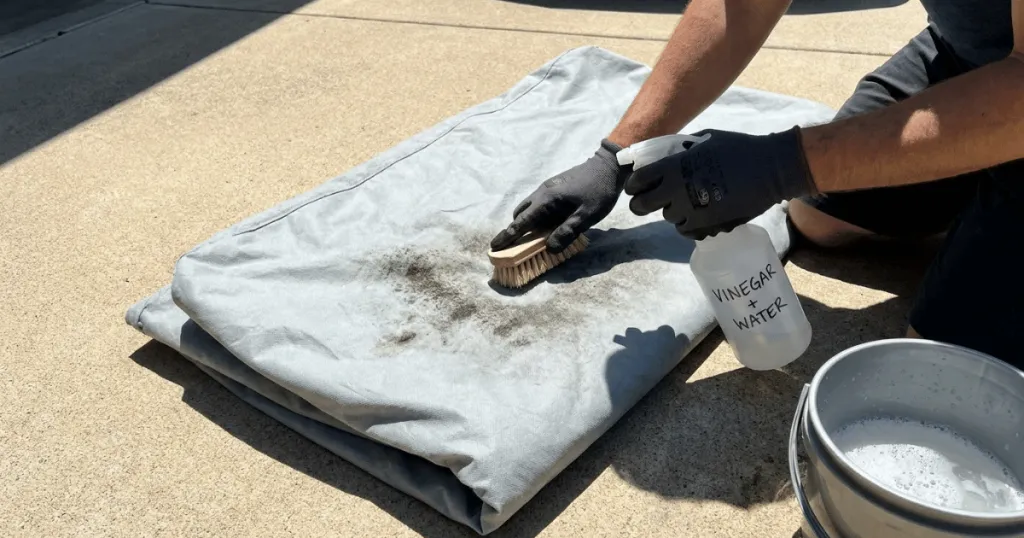
Avoid chlorine bleach at all costs because it degrades thread stitching and ruins waterproof laminates. Instead, mix a mild dish soap or a specialized automotive fabric cleaner with lukewarm water in a large bucket. For persistent mildew spots, a diluted mixture of white vinegar and water safely breaks down organic spores without harming synthetic weaves.
Scrubbing and Rinsing Techniques
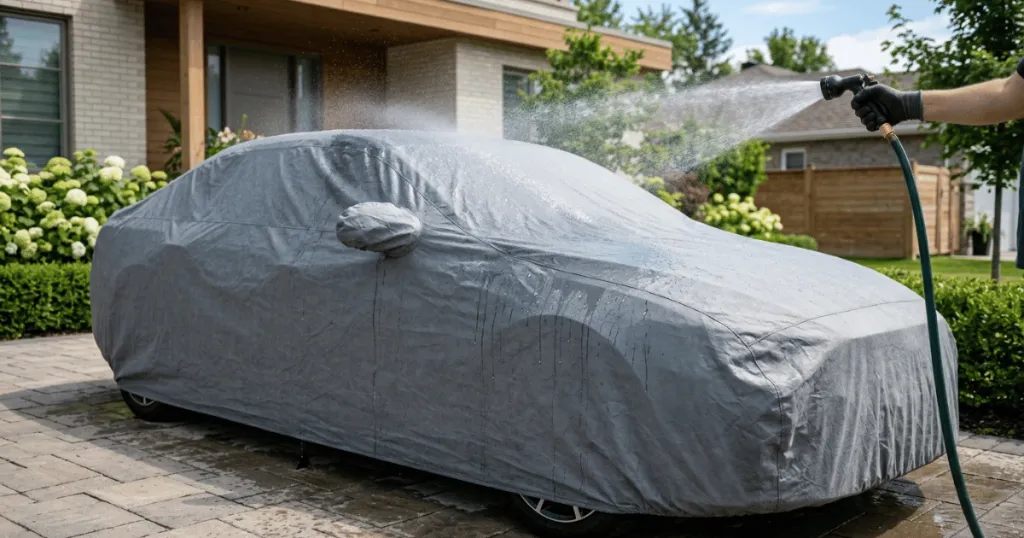
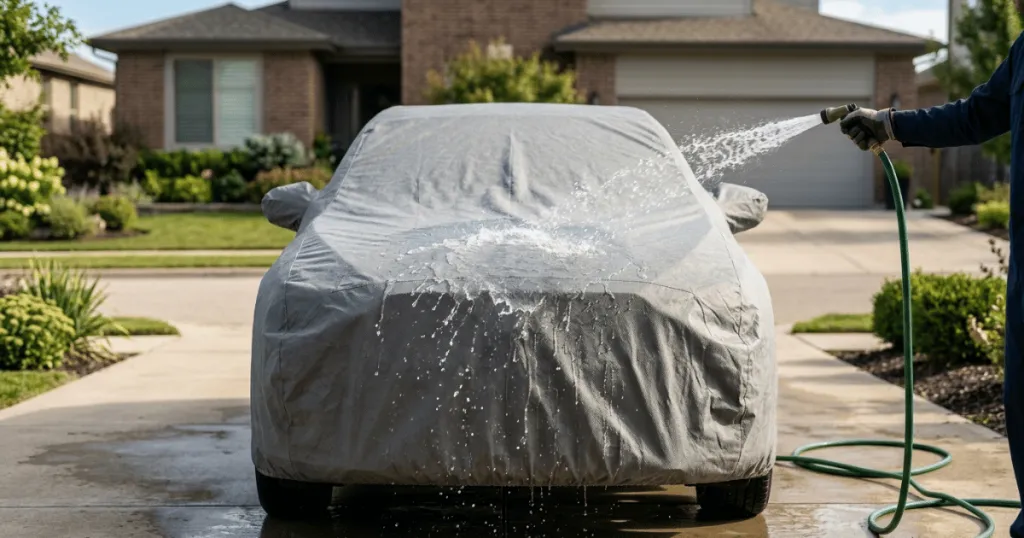
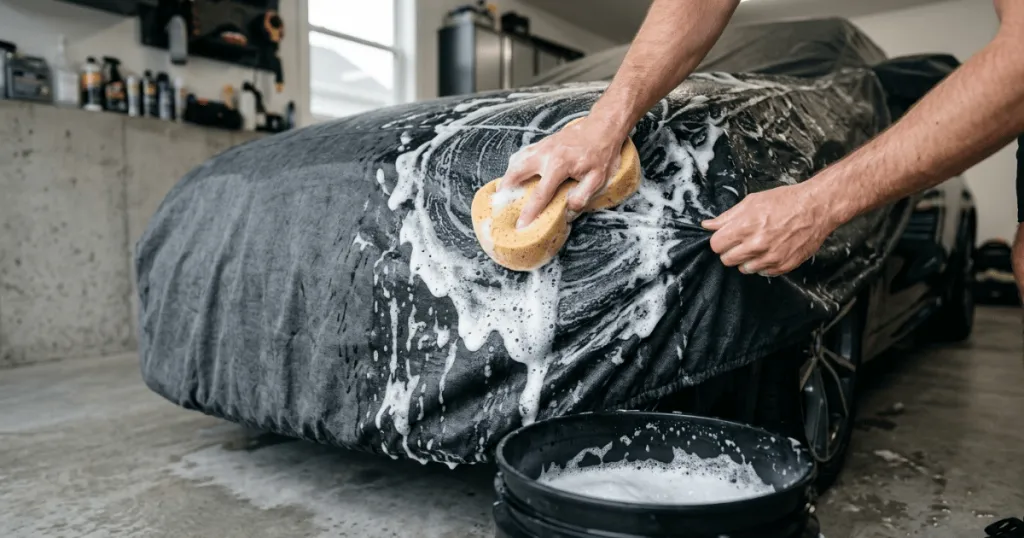
Dip a soft-bristled brush or a microfiber sponge into your cleaning solution and work across the fabric in gentle, circular motions. Pay close attention to seams, folded pockets, and elastic hems where spores tend to concentrate. Rinse the entire surface thoroughly with a garden hose, making sure no soapy residue or loosened debris remains in the weave.
Drying and Storage Best Practices
Getting the fabric completely dry is the most critical step in the entire cleaning process. Even a tiny trace of hidden moisture allows spores to regenerate within days of folding the material away. Whenever you wash a mildewed car cover, the drying phase dictates whether your efforts succeed or merely stall the fungal growth.
Air Drying in Direct Sunlight
Leave the clean shield hanging or spread flat under direct sunlight until every square inch is completely dry. Sunlight offers natural UV assistance that helps neutralize remaining microscopic spores. Check both the inner lining and the outer shell by hand to ensure no damp pockets remain.
Avoiding Premature Packing
A common mistake is packing the protective sheet away while it still feels slightly cool or damp to the touch. If you must store the material before it is bone dry, lay it out in a well-ventilated garage overnight. Taking shortcuts during the drying phase guarantees a quick return of stubborn mildew spots.
Real-World Scenarios and Material Considerations
Different storage environments create distinct maintenance challenges for vehicle owners. Evaluating your specific climate and material type helps determine how often you need to inspect and clean your gear. Following a structured car cover cleaning guide ensures you adapt your maintenance routine to local weather realities.
High-Humidity Coastal Environments
Owners living near coastal regions deal with constant moisture in the air that accelerates fungal growth. In these climates, you should remove the protective shield every few weeks on dry days to air out the vehicle and inspect the inner lining for early signs of discoloration.
Indoor Garage Storage Risks
Even indoor storage is not entirely immune to mildew if the garage lacks proper ventilation. Concrete floors often release ground moisture upward, which gets trapped underneath a tight-fitting shield. Elevating storage bins and ensuring cross-breeze airflow in your garage prevents unexpected mold blooms.
Why Timely Maintenance Matters for Your Vehicle
Allowing fungal growth to sit unchecked on your protective gear creates a cascading series of problems for your automobile. Spores do not stay contained to the fabric; they transfer easily onto exterior clear coats, glass panels, and rubber window seals whenever wind causes the material to shift against the car body.
Once transferred, these microscopic spores can etch into automotive paint or cause musty odors to seep through cabin ventilation systems. Routine maintenance preserves the structural integrity of the fabric while protecting your vehicle exterior from chemical contamination. Taking care of your protective gear ensures it continues to shield your car finish reliably for years.
Common Misconceptions About Fabric Care
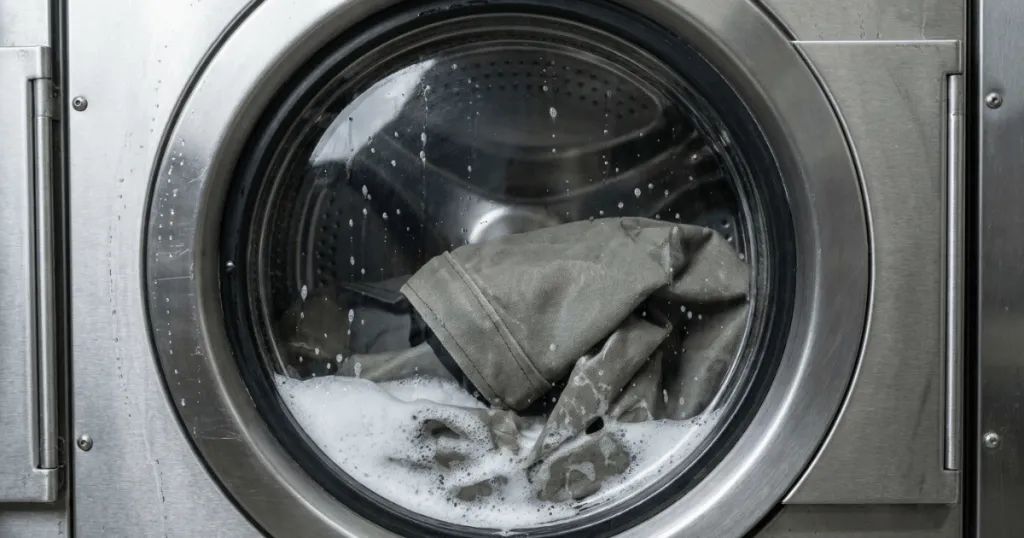
Many vehicle owners rely on outdated cleaning myths that ultimately ruin their protective gear. One widespread belief is that tossing a mildewed shield into a standard home washing machine is a quick fix. Standard agitators pull and stretch large vehicle covers, destroying elastic hems and tearing bonded seams apart.
Another common misunderstanding is that harsh chemical disinfectants work best on stubborn stains. While industrial cleaners kill spores quickly, they also dissolve the specialized water-repellent treatments applied by manufacturers. Keeping your cleaning process gentle and targeted preserves the functional lifespan of the material.
Final Thoughts on Keeping Protective Gear Clean
Maintaining a clean, functional vehicle shield requires consistent effort, proper washing solutions, and meticulous drying habits. When you remove mold from car cover surfaces promptly, you protect both the fabric investment and your vehicle exterior from lasting damage. Prioritize gentle cleaning agents, ensure complete sun drying, and store your gear in a breathable space to prevent future mold issues.
FAQ
Can I use chlorine bleach to remove mold from a car cover?
No, chlorine bleach destroys fabric stitching, weakens synthetic fibers, and strips away waterproof coatings. Use mild soap, white vinegar solutions, or specialized automotive fabric cleaners instead.
Why does mold keep returning to my vehicle shield?
Mold usually returns because the material was folded and stored while still holding residual moisture, or because environmental debris on the surface feeds new spore growth during humid weather.
Is it safe to wash a car cover in a household washing machine?
Most standard home washing machines feature agitators that can tear seams, stretch elastic hems, and ruin the structure of large vehicle covers. Hand washing outdoors or gentle surface rinsing is much safer.