Protecting a vehicle requires keeping the exterior shield itself clean, yet many owners find themselves confused about proper upkeep. When dust, pollen, and environmental grime build up on the fabric, the instinct to drop the shield into a home laundry drum is common. However, understanding whether you can safely machine wash car cover materials depends heavily on fabric construction, drum sizing, and hardware limitations that many standard appliances simply cannot handle.
Many vehicle owners assume that because a protective shell is made of flexible textile materials, it will endure a standard laundry cycle just like canvas garments or heavy blankets. In reality, modern automotive textiles are engineered with specialized layers, breathability membranes, and custom coatings that react very poorly to the intense mechanical forces found inside standard laundry tubs.
The Structural Reality of Fabric Shielding
Modern vehicle protection barriers rely on advanced textile engineering to keep moisture, UV rays, and abrasive particles away from clear coat paint. Traditional cotton blends, multi-layer polypropylene, and woven polyester each react differently to mechanical agitation, water temperature, and detergent chemistry. When evaluating whether a machine wash car cover approach is viable, looking at how the textile is bonded or woven is the first step.
Most outdoor protection shells feature specialized microporous films or water-repellent coatings bonded to base fibers. Aggressive tumbling in a central agitator machine can easily fracture these delicate waterproof membranes. Furthermore, heavy industrial or consumer washing units often subject seams to extreme tensile stress, which can snap reinforced stitching and unravel hems long before the dirt is fully extracted.
Understanding the interplay between fabric durability and cleaning methods helps preserve the investment you made in your vehicle protection gear. When a protective cover loses its structural integrity, it lets abrasive grit filter through to the paint surface, defeating the primary purpose of using a car cover in the first place. Therefore, evaluating the physical limits of your fabric care routine is just as important as washing your car’s exterior paint directly.
Why Home Washing Machines Struggle with Automotive Protection
Washing a large vehicle shield at home involves significant mechanical and spatial challenges. Most residential drums lack the volumetric capacity needed to let a heavy, water-logged cover move freely. This constraint leads directly to severe operational hazards during a cycle.
Drum Capacity and Weight Limits
A standard residential washing machine usually maxes out around three to five cubic feet of volume. A multi-layer custom vehicle shield can absorb gallons of water, easily exceeding standard dry weight parameters once saturated. Overloading the drum prevents proper water circulation and creates extreme imbalance during the spin cycle, risking mechanical failure or error shutdowns in your laundry appliance.
When a wet cover bunches up inside a constrained drum, it retains massive pockets of water that shift unpredictably during high-speed revolutions. This uneven load distribution causes violent shaking in top-loading and front-loading units alike, which can damage internal suspension springs, bearings, and drive shafts. Repairing or replacing a home appliance far outweighs the temporary convenience of automated washing.
Agitator Damage and Friction Risks
Central agitator posts found in many top-loading washers act as a severe hazard for automotive fabrics. The hard plastic fin can catch elastic hems, tie-down grommets, or security cable loops. Once caught, the agitator will tear holes through multi-layer composite materials, rendering the protective barrier completely useless against future weather exposure.
Even in agitator-free high-efficiency machines, the continuous sliding friction against plastic drum walls can wear down outer fabric layers. Over time, this abrasive contact strips away critical UV inhibitors built into the outer weave, leaving the material brittle and prone to sun-induced cracking when returned to outdoor storage duty.
Detergent Residue and Waterproofing Degradation
Standard laundry soaps and heavy commercial powders contain optical brighteners, harsh surfactants, and enzymes designed for clothing fibers. These chemical agents strip away factory-applied water-repellent treatments from automotive textiles. Once these coatings wash away, the fabric absorbs moisture like a sponge, trapping humidity directly against the vehicle paint surface.
Furthermore, standard laundry detergents are notoriously difficult to rinse completely out of dense, multi-layer synthetics without specialized industrial rinse cycles. When soap residue remains trapped within the fabric layers, it attracts atmospheric dust and creates a sticky film. When exposed to morning dew or rain, this leftover residue foams up and leaves unsightly streaks across your vehicle finish.
Safe Alternative Cleaning Methods for Vehicle Shields
Since putting your protection shield into an automated home appliance carries severe risks of tearing and coating failure, manual cleaning remains the gold standard. Cleaning the material while it is draped securely over the vehicle or laid flat on a clean driveway gives you complete control over water pressure and scrubbing intensity.
On-Vehicle Hand Washing Techniques
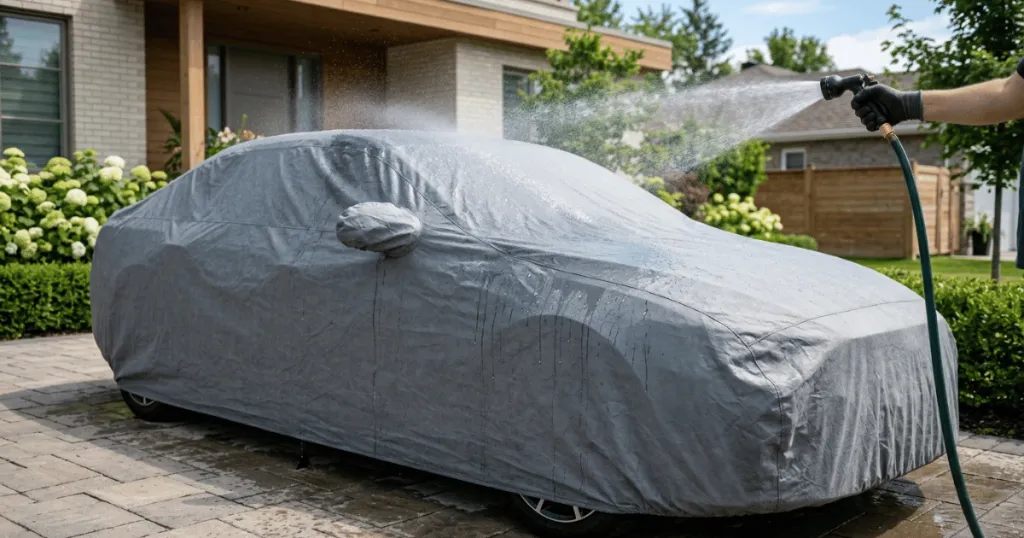
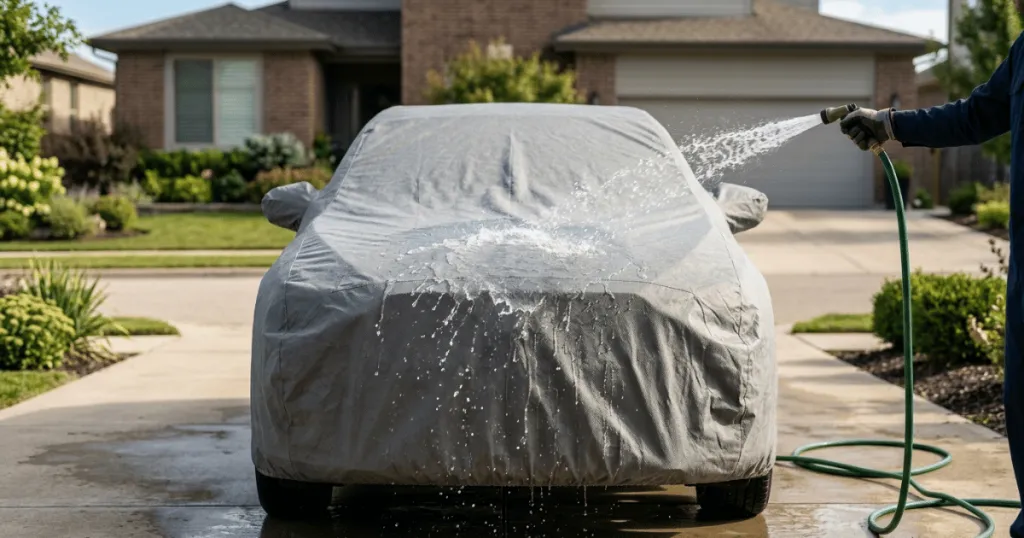
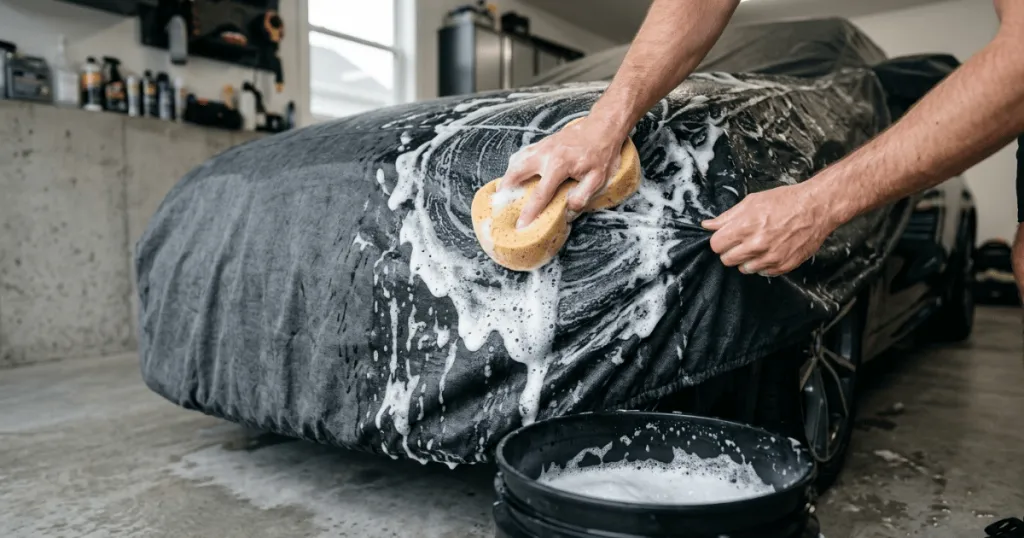
Leave the shield snapped and secured on the vehicle to provide a taut, stable surface for cleaning. Rinse the exterior thoroughly with a standard garden hose to loosen loose dirt and abrasive grit. Apply a mild, non-detergent automotive shampoo using a soft-bristled brush or microfiber sponge, working in gentle, overlapping sections from the roof down to the rocker panels.
This method prevents the fabric from folding over on itself and trapping abrasive particles against the inner fleece lining. By keeping the cover stretched taut over the body panels, you can apply even pressure without risking accidental tears or stretching the elastic hem out of shape.
Rinsing and Air Drying Protocols
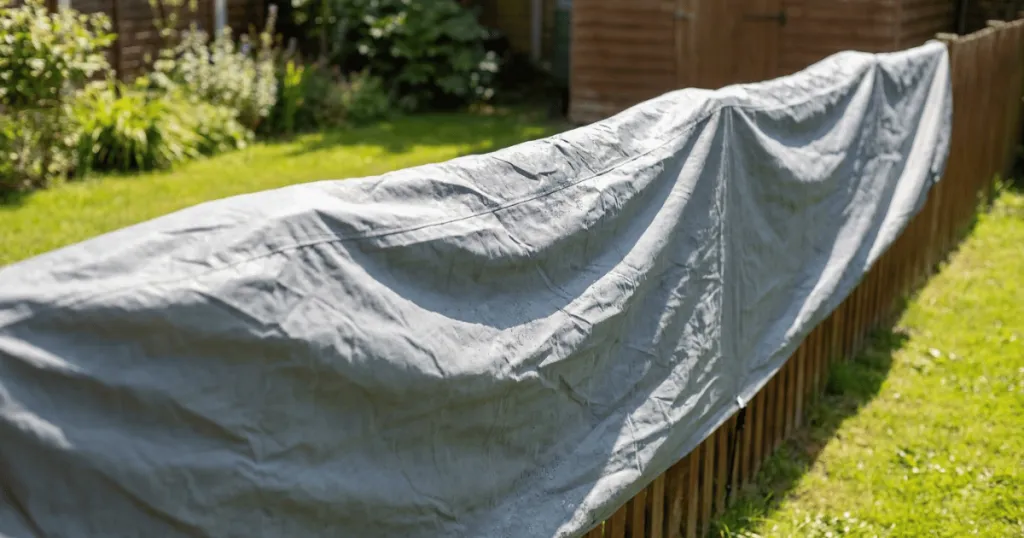
Flush all soap residue away with clean water, making sure no suds remain trapped in seams or pocket corners. Remove the shield from the vehicle and drape it over a clean fence, deck railing, or specialized drying rack to air dry completely. Never store a damp protective shell, as trapped moisture promotes rapid mold and mildew growth across the inner lining.
Allowing the material to dry naturally in a shaded, well-ventilated area prevents thermal shock or shrinkage that can happen with artificial heat sources. Ensuring complete dryness before folding and storing your cover protects both the fabric longevity and your car’s clear coat paint.
Evaluating When Replacement Outweighs Maintenance
Even with meticulous care, automotive textiles degrade over years of harsh sun exposure and environmental weathering. If your protective shield has already suffered structural tears, thinning fabric layers, or persistent interior mold, attempting a machine wash car cover cycle will only accelerate its total failure. Recognizing the natural lifespan limits of your vehicle cover helps prevent accidental paint damage caused by compromised barrier materials.
Ultimately, keeping your vehicle shield in top condition requires patience and gentle handling rather than high-speed mechanical laundering. By avoiding harsh washing machine cycles and opting for careful manual rinsing, you preserve the waterproof coatings and reinforced seams that keep your car safe from the elements.
When assessing your cover’s current condition, check for areas where the outer shell feels paper-thin or powdery to the touch. These symptoms indicate that UV degradation has compromised the polymer matrix of the threads. At this stage, no amount of cleaning will restore its protective qualities, and investing in a replacement cover is the safest path forward for your vehicle.
FAQ
Can I put a car cover in a commercial laundromat washing machine?
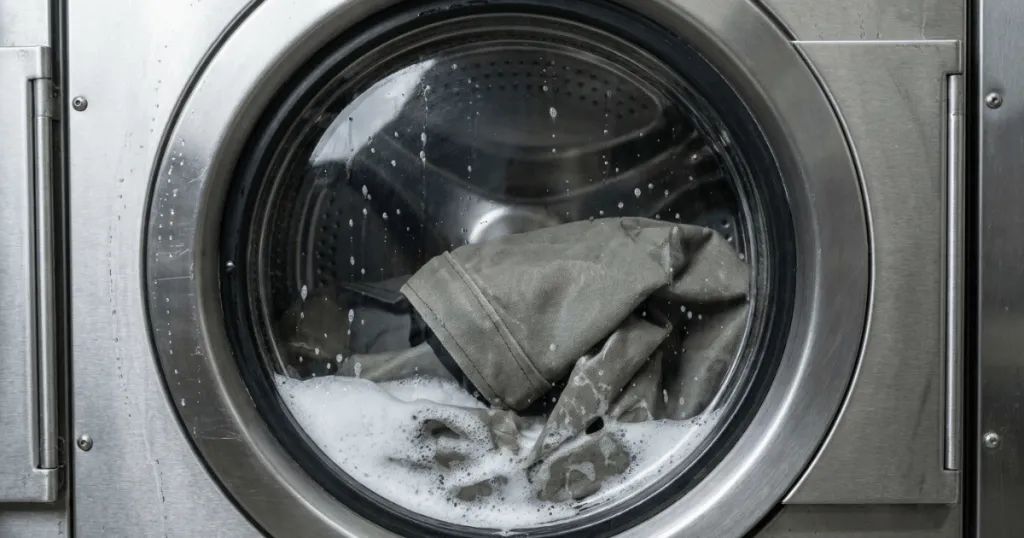
Commercial front-load washers offer more drum space than home units, but the high-speed spin cycles and tumbling friction can still snap reinforced seams and strip away factory waterproof coatings. Hand washing on the vehicle remains the safest approach.
What kind of soap should I use to clean my vehicle shield?
Always use a mild, pH-balanced automotive wash soap or a specialized cleaner designed for synthetic fabrics. Avoid household laundry detergents, dish soap, or fabric softeners, as they leave chemical residues that degrade UV and water-resistant treatments.
How do I remove tree sap or bird droppings from the fabric?
Dab the affected spot with a mild automotive cleaner and a soft microfiber cloth, letting it loosen the debris gently. Never scrub aggressively or use harsh chemical solvents, which can dissolve synthetic weave fibers and create permanent holes.