When autumn winds sweep through your neighborhood or winter coastal gales begin to howl, standard vehicle protection often fails at the worst possible moment. A loose protective shield can flap aggressively, turning soft fabric into an abrasive pad that scuffs clear coat and mars pristine paint panels. The primary distinction that separates stable vehicle protection from blowing debris is the inclusion of an integrated retention system passing beneath the chassis. By anchoring the fabric from side to side or front to rear, an underbody strap car cover neutralizes the lifting forces generated when high-velocity air rushes over the roof and down the sides of an automobile.
Vehicle owners living in open regions, coastal zones, or storm-prone areas quickly learn that standard elastic hems alone cannot resist strong gusts. Understanding how belly straps distribute tension changes how you select and secure exterior protection for long-term outdoor storage. Let us examine the mechanics, material choices, and practical considerations that make these anchored designs essential for severe weather environments.
Choosing the correct shelter setup involves evaluating local climate patterns, parking terrain, and the physical dimensions of your automobile. Whether you park an exposed sedan in an open driveway or leave a daily commuter exposed to relentless valley breezes, managing wind shear requires more than simple surface tension. The following sections explore structural mechanics, installation strategies, and long-term maintenance protocols to keep your vehicle safe.
The Mechanics of Wind Lift and Why Standard Hems Fail
When wind blows across a parked vehicle, it creates a classic aerodynamic lift profile similar to an aircraft wing. High-pressure air accumulates against the windward side, while low-pressure zones form over the roof and down the rear slope. This pressure differential constantly attempts to pull the material upward and away from the body panels.
Elasticized bottom hems work well in calm or moderate conditions by gripping the lower bumper edges and rocker panels. However, once wind speeds exceed thirty miles per hour, that elastic stretches and allows air pockets to inflate the interior cavity. Once air enters underneath, the entire protective shell acts like a parachute, ballooning upward until the tension overcomes the elastic grip.
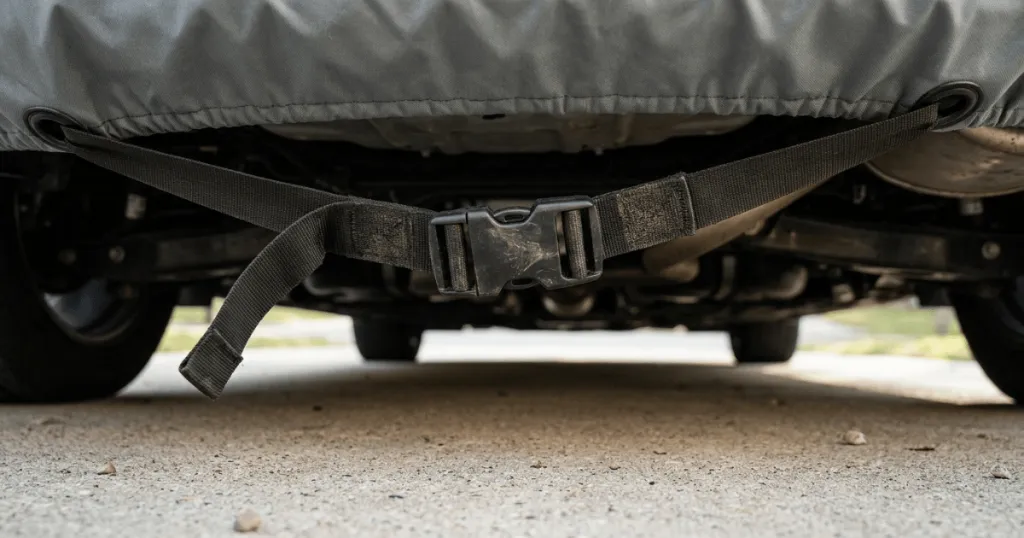
An underbody strap car cover solves this vulnerability by physically tying the left side of the material to the right side underneath the floorpan. Instead of relying on friction at the perimeter, the entire assembly becomes mechanically locked to the vehicle footprint. Wind pressure can still push against the sides, but the fabric cannot lift upward because the chassis straps prevent vertical displacement.
Furthermore, persistent flapping causes friction points where the fabric repeatedly strikes the paint surface. Over time, trapped dust acts like microscopic sandpaper, wearing away the exterior finish. Securing the material with a heavy duty storm car cover featuring robust underbody attachments completely eliminates this abrasive motion, ensuring that weather exposure does not result in costly cosmetic damage.
Key Design Features of an Underbody Strap Car Cover
Not all anchoring systems are engineered with the same level of care or durability. Knowing what separates a robust retention setup from a cheap strap helps you choose equipment that survives multiple storm seasons.
Center-Belly Buckle Straps
The most common and effective configuration utilizes heavy-duty webbing that spans the width of the chassis. These straps feature quick-release plastic or metal side-release buckles positioned on one side for easy cinching. You toss the weighted toss-bag or the strap end under the vehicle, retrieve it from the opposite side, and pull it snug. This prevents the middle sections from billowing outward during crosswinds.
Dual-Pass Front and Rear Anchors
Some heavy-duty storm covers incorporate both a center belly strap and independent front-to-back or diagonal security loops. These extra attachment points distribute tension across multiple vectors to stop shifting during erratic windstorms. They are particularly useful for long vehicles like pickup trucks and large SUVs that catch massive amounts of lateral air pressure.
Scratch-Resistant Buckle Guards
Hardware placement is critical when cinching nylon webbing near painted rocker panels or lower door sills. Quality designs incorporate fabric sleeves or neoprene guards that slide over the plastic buckles and metal adjusters. These protective pockets ensure that the hard components never make direct contact with your vehicle paint during installation or high wind flexing.
When shopping for an outdoor car cover with straps, examine the quality of the stitching where the webbing attaches to the hem. Double-stitched box-X patterns provide the tensile strength required to handle high-tension pulling without ripping away from the main body fabric during violent squalls.
How to Safely Install and Adjust Your Anchored Cover
Proper installation ensures maximum wind resistance without causing accidental scratches or stressing the fabric seams. Taking your time during the initial setup prevents frustration later.
Step 1: Clean the Vehicle Surface
Always start with a dust-free or recently washed vehicle before placing any protective layer over the paint. Trapped grit combined with wind-induced friction creates micro-scratches over time. If the car is heavily soiled, a quick rinse and dry makes a significant difference.
Step 2: Center and Drape the Fabric
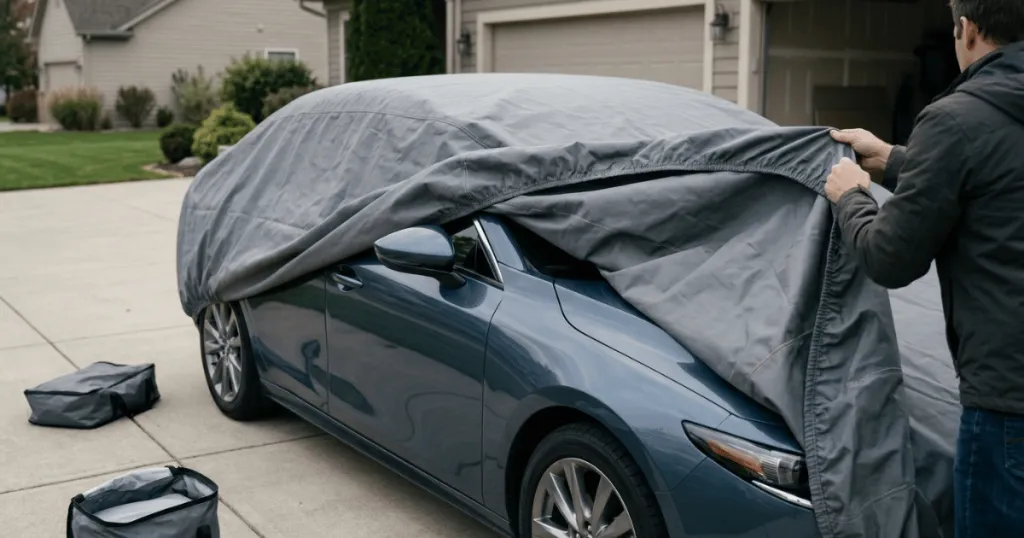
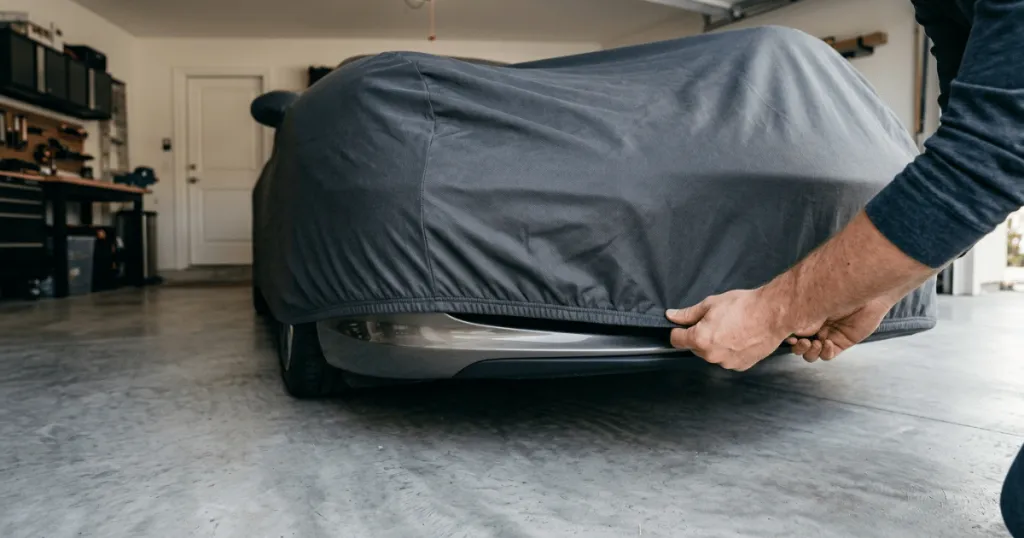
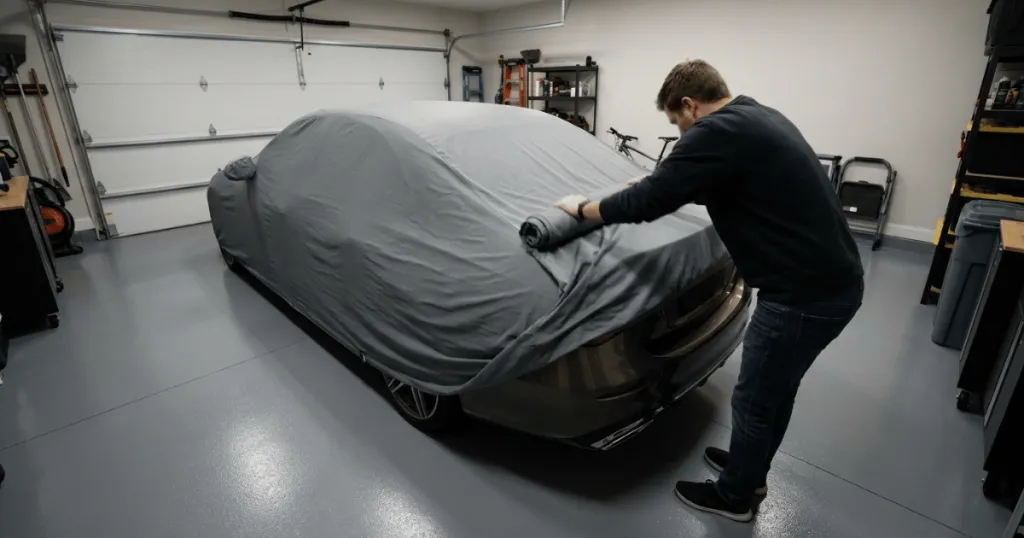
Unfold the material lengthwise down the center of the roof, working the mirror pockets into place first. Pull the front and rear hems over the bumpers, ensuring the elastic grips the lower fascia securely. Smooth out major wrinkles along the hood and trunk panels before moving underneath.
Step 3: Pass and Secure the Underbody Straps
Take the strap end attached to one side and guide it across to the opposite side beneath the vehicle floor. Many owners find it helpful to use a flexible weighted pole or toss-strap to push the webbing across without crawling on wet pavement. Click the buckle into the receiver and pull the adjuster strap until it is snug.
Step 4: Check Tension and Adjust
The straps should be firm enough to prevent the fabric from lifting, but they should not act like tourniquets that distort the lower body panels. Check that any loose tail ends of the webbing are tied off securely so they do not whip against the paint in heavy gusts.
For motorists seeking a truly wind resistant car cover, mastering this installation routine transforms a potentially frustrating chore into a quick, repeatable habit. Taking thirty extra seconds to ensure proper belly strap tension pays immense dividends when severe weather strikes overnight.
Real-World Scenarios Where Anchored Protection Shines
Different parking environments present unique weather challenges that highlight why an underbody strap car cover is worth the extra installation effort.
Consider an open suburban driveway during autumn leaf-drop and heavy seasonal windstorms. Unsecured covers slide around, trap wet debris, and allow grit to grind into the clear coat. An anchored design stays locked in position, keeping the paint clean and dry underneath.
Coastal parking presents another demanding environment where salt spray and constant sea breezes test automotive materials. Wind speeds near the water rarely drop to zero, meaning standard covers fail within weeks. A securely strapped heavy multi-layer fabric withstands the constant pressure without tearing or lifting off the mirrors.
Urban street parking often exposes vehicles to swirling wind tunnels created by tall buildings. These sudden gusts catch loose fabric instantly. Chassis straps keep the cover tightly fitted against the sheet metal, reducing noise and preventing pedestrian interference or accidental snagging.
Owners of classic car collections or specialized weekend cruisers stationed outdoors benefit immensely from this level of mechanical security. Because these vehicles often feature fragile vintage paint or older clear coat formulations, preventing friction damage is paramount to long-term preservation.
Common Misconceptions About Chassis-Strapped Protection
Many vehicle owners hesitate to purchase an underbody strap car cover because of persistent myths regarding installation difficulty and paint safety.
A widespread belief is that crawling under a parked car to feed straps through is dangerous or overly time-consuming. In practice, modern accessories include weighted toss-tethers that let you slide the webbing across from a standing position in seconds. You rarely need to lie on the ground.
Another myth suggests that tight straps will damage the vehicle undercarriage or exhaust system. Automotive chassis components, frame rails, and pinch welds are exceptionally durable steel structures. Routing nylon webbing underneath in safe clearance zones causes zero mechanical or structural impact.
Some drivers assume that custom-fit covers never need auxiliary straps. Even a tailored fit can inflate like a balloon if high winds catch the lower side panels from a specific angle. Supplementary retention hardware provides a crucial safety margin that custom tailoring alone cannot guarantee.
Understanding these realities helps demystify the equipment. When tie down straps for car cover systems are properly adjusted, they operate seamlessly as part of a comprehensive weather mitigation strategy.
Why Choosing the Right Wind Protection Matters
Investing in quality exterior protection safeguards your automotive investment against costly paint correction and weather degradation. Unchecked fabric flapping causes dull spots, clear coat failure, and edge wear on vulnerable body lines.
Selecting an underbody strap car cover eliminates the constant worry of finding your vehicle uncovered after a night of severe weather. It provides peace of mind whether you are storing a classic weekend cruiser or protecting a daily driver from harsh seasonal elements. By prioritizing mechanical retention over simple friction, you ensure your vehicle stays clean, secure, and protected year-round.
FAQ
How do I pass straps under my car without crawling on the ground?
Most quality covers include a weighted toss-strap or a flexible plastic wand. You simply toss or slide the weighted end from one side of the vehicle to the other while standing upright, then retrieve it from beneath the opposite rocker panel.
Can underbody straps damage my vehicle paint or wheels?
No, provided you use a cover with padded buckle guards and adjust the nylon webbing correctly. The straps rest against durable undercarriage components or lower rocker panels rather than delicate painted surfaces.
Are these anchored covers difficult to put on alone?
They take slightly longer to install than basic stretch-hem covers because of the extra step underneath. However, once you establish a routine with the toss-strap, the entire process takes less than two minutes.