A buckle strap car cover relies on integrated anchoring systems to secure the fabric tightly beneath the vehicle body, preventing high winds from lifting or shifting the protective barrier. When severe weather hits open driveways or unprotected parking stalls, standard elastic-hem covers often balloon, pull loose, or flap violently against delicate clear coat finishes. Choosing a design equipped with physical straps and click-in buckles transforms a loose draping sheet into a wind-resistant shell.
Understanding how these retention systems function helps vehicle owners maintain reliable outdoor storage without risking finish damage from constant friction. This breakdown covers the mechanical design features, material trade-offs, correct installation habits, and practical decision criteria for keeping parked cars safe in challenging weather environments.
The Mechanics of Wind Resistance in a Buckle Strap Car Cover
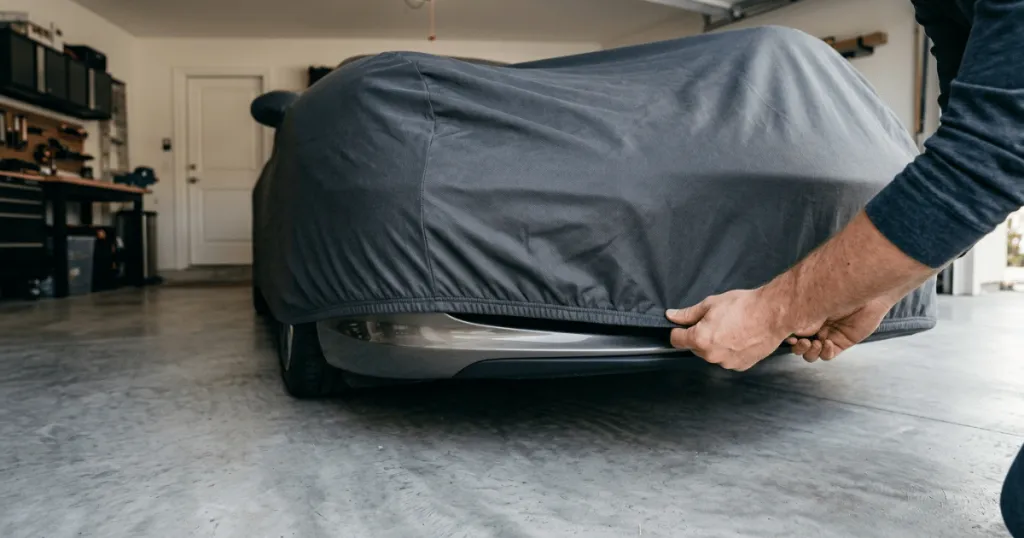
Outdoor vehicle storage presents distinct challenges, particularly when strong gusts sweep across open lots or suburban streets. A standard elastic hem provides baseline tension around the front and rear bumpers, but persistent crosswinds easily break that passive seal. Once air gets underneath the fabric, the entire cover acts like a parachute, lifting upward and exposing the paint to moisture, debris, and UV rays.
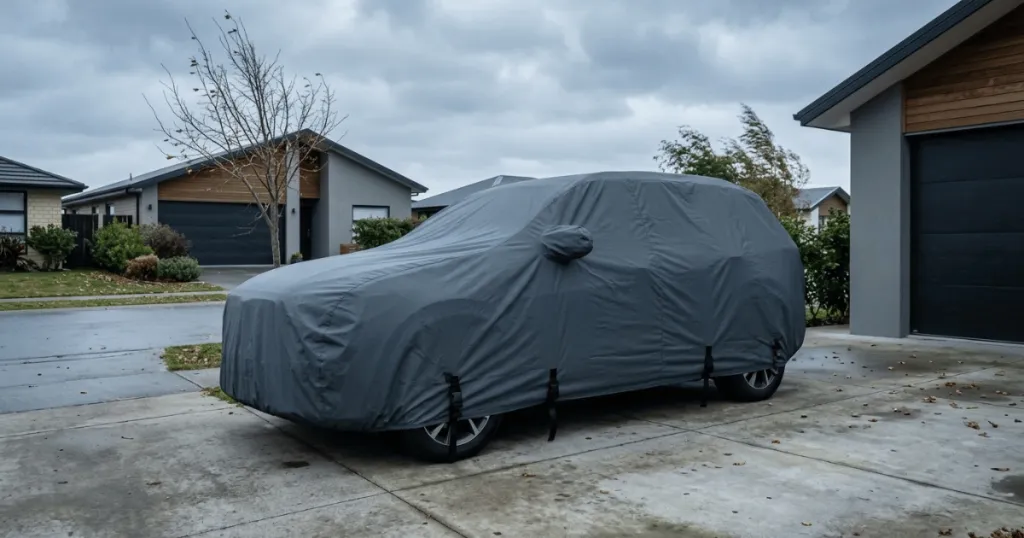
Adding a central under-body strap changes the physics completely. By running a heavy-duty webbing strap from one side of the vehicle, underneath the chassis, and clicking it securely into a buckle on the opposite side, the cover is anchored to its lowest stable point. This prevents vertical lift and stops the fabric from billowing.
When wind flows over a parked car, pressure differentials naturally try to pull loose sheets upward. A wind resistant car cover counteracts this effect by distributing tension across the entire undercarriage rather than relying solely on the perimeter. This mechanical advantage is vital for owners living in coastal zones, mountain passes, or flat plains where uninterrupted air currents create constant stress on parked vehicles.
Center-Chassis Webbing and Click-In Buckles
The core retention component of any buckle strap car cover is the center strap system. Most full-coverage designs feature a reinforced fabric loop sewn into the driver and passenger door panels, allowing a polypropylene or nylon strap to pass beneath the floor pan. Quick-release plastic or metal side-release buckles make tensioning and removal straightforward without requiring the user to crawl flat on the ground.
In practice, this means the cover stays anchored even during severe thunderstorm gusts or coastal sea breezes. High-quality designs often include dual or triple strap configurations, adding a strap near the front wheels and another near the rear wheels for maximum stability on long sedans or oversized SUVs.
When dealing with a heavy duty car cover, these straps must support greater fabric weight and wind resistance. The webbing width typically ranges from one to two inches, ensuring that tension loads spread across a wide surface area instead of biting into the fabric tunnels or pulling out stitching anchor points.
Grommet Reinforcements and Security Locks
Beyond the central belly strap, many models incorporate built-in reinforced metal or fabric grommets near the rocker panels. These serve a dual purpose. Owners can thread a coated cable lock through the grommets to deter theft, or use additional bungee cords to cinch up excess slack in localized high-wind corridors.
Reinforced stitching around these high-stress points prevents the fabric from tearing under heavy tension. When evaluating these attachment points, look for multi-row box stitching rather than simple single-pass seams, as wind stress concentrates heavily right where the strap meets the main body fabric.
Pairing your setup with a dedicated car cover strap kit allows you to supplement existing attachments if your region experiences extreme seasonal storms. These secondary tie-downs wrap entirely around the perimeter or cross diagonally over the hood and trunk, offering ultimate stability when standard center-straps need extra reinforcement.
Evaluating Fabric Construction and Environmental Protection
Securing a cover against wind is only half the battle. The textile composition must also manage solar radiation, moisture accumulation, and airborne pollutants. A buckle strap car cover is manufactured in various material grades, ranging from lightweight single-layer poly materials to heavy multi-layer composite textiles.
Matching the material weight to your local climate prevents premature degradation and ensures the vehicle remains clean and dry between drives. Selecting the right tier requires looking closely at how fabric layers handle breathability and weather resistance.
Multi-Layer Polypropylene and Fleece Linings
Outdoor covers intended for year-round sun and rain exposure typically utilize spunbond polypropylene bonded with a waterproof yet breathable inner film. The outer layers shed rain and reflect UV rays, while a soft inner fleece lining rests gently against the automotive paintwork.
This fleece backing is crucial when using a buckle strap car cover, because any cover will experience micro-movements during wind events. A soft interior layer prevents abrasion, protecting delicate clear coats, chrome trim, and plastic headlamp lenses from getting scuffed by abrasive dust trapped against the car.
The interaction between the under body strap and the exterior elements means that fabric stability directly affects paint preservation. When an outdoor car cover with straps locks the textile firmly against the body panels, it eliminates the rubbing motion that turns trapped dirt into an abrasive compound.
Breathability versus Total Waterproofing
A common misconception is that a car cover should act like a heavy plastic tarp. Truly non-porous materials trap ambient ground moisture underneath the vehicle as temperatures fluctuate. When the sun hits the car, that trapped water turns to vapor, forming condensation pools that can stain clear coats or promote rust.
Quality outdoor covers maintain microscopic porosity, allowing trapped humidity to escape into the atmosphere while keeping liquid rain drops outside. The presence of straps ensures that even breathable, slightly looser fabrics remain stable and do not whip against the body panels.
Maintaining proper breathability prevents mold and mildew growth inside the cabin and across exterior rubber seals. When paired with effective chassis retention, breathable fabrics deliver balanced protection without sacrificing long-term paint health.
Installation Best Practices and Common Securing Mistakes
Proper installation dictates whether a buckle strap car cover performs as intended or causes accidental cosmetic damage. Taking shortcuts during setup or letting straps drag on rough pavement can lead to frustrating experiences during daily driving routines.
Establishing a consistent workflow protects both the vehicle finish and the hardware components of the cover itself, extending the lifespan of the protective investment.
Step-by-Step Setup and Under-Car Routing
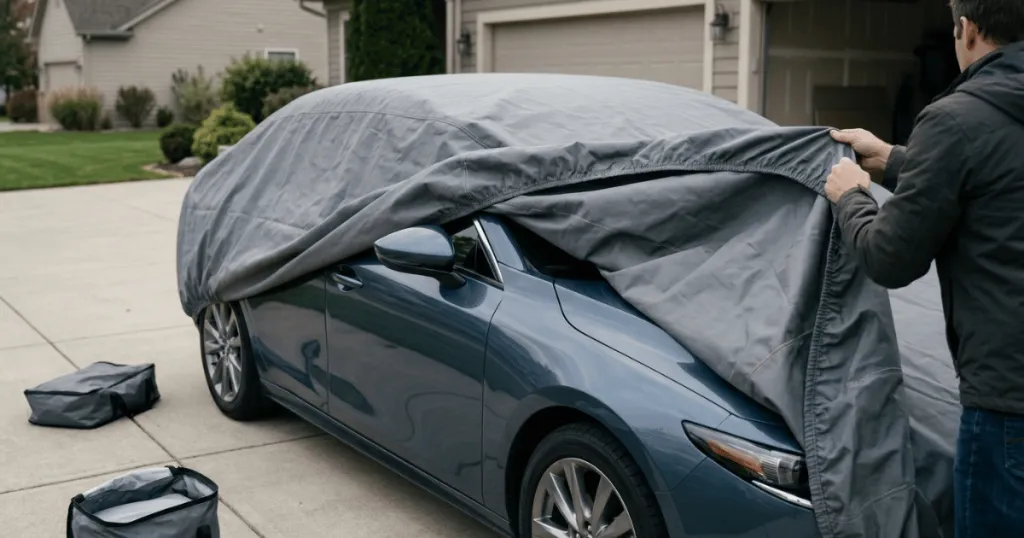
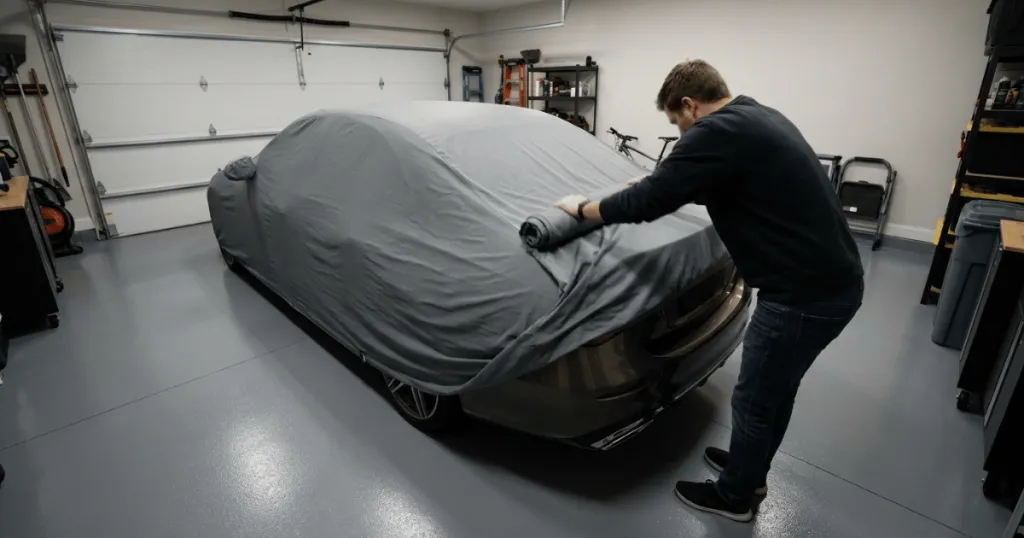
Begin by unfolding the cover across the roof of the vehicle, draping the front and rear pockets over the respective bumpers before pulling the sides down. Locate the middle strap pocket or built-in strap end hanging near the driver side door.
Toss the weighted or flexible end of the strap underneath the vehicle toward the passenger side, or use a long-handled retrieval tool if clearance is low. Walk to the opposite side, retrieve the strap, and click it firmly into the receiving buckle. Adjust the tri-glide slider until the strap is snug, leaving just enough slack to prevent stretching the fabric seams to their absolute breaking point.
Taking your time during this routing process prevents the strap from twisting or wrapping around hot exhaust pipes or sharp suspension components underneath the chassis. Securing the retention hardware correctly guarantees that wind gusts will not catch a loose end and slap it against your door panels.
Preventing Paint Scratches and Strap Flutter
A frequent error is over-tightening straps to the point where the fabric bows inward or puts extreme shear stress on mirror pockets. Another common mistake is letting loose plastic buckles dangle freely against the side of the car, where wind can whip them directly into the door panels.
Always tuck loose strap ends back into the buckle assembly or tie them off neatly. If your vehicle features aftermarket accessories like lowered suspension or custom ground effects, ensure the under-body strap does not snag on sharp chassis edges during routing.
Paying attention to these small details keeps your clear coat pristine and ensures the buckle hardware operates smoothly over years of seasonal use. Routine inspection of the webbing and stitching prevents unexpected failures when major weather systems arrive.
Why Choosing the Right Retention System Matters for Vehicle Longevity
Vehicle preservation involves mitigating environmental hazards before they cause permanent degradation. Unprotected outdoor parking exposes exterior finishes to aggressive ultraviolet radiation, tree sap, industrial fallout, bird droppings, and abrasive wind-blown grit. Over time, these elements oxidize clear coats, fade plastic trim, and pit glass.
Investing time in a secure outdoor setup directly influences how well the vehicle maintains its cosmetic condition and resale value. A loose cover that shifts constantly in the wind defeats its own purpose by acting like fine sandpaper on the paint surface. A properly tensioned buckle strap car cover eliminates this friction, holding the protective barrier rigidly in place regardless of surrounding weather conditions.
Furthermore, an unsecured cover frequently departs during severe storms, leaving the vehicle completely exposed and turning the runaway cover into a roadside hazard. Establishing reliable mechanical retention provides peace of mind through changing seasons, ensuring the car remains shielded and ready for the road whenever required.
Frequently Overlooked Factors When Selecting and Using Protective Covers
Beyond basic wind security, vehicle owners frequently encounter practical edge cases regarding mirror placement, antenna cutouts, and seasonal storage shifts. Modern cars feature varied exterior profiles, from integrated roof rails and shark-fin antennas to bulky towing mirrors on full-size trucks.
Forcing a generic cover over these protrusions stretches the fabric unevenly, creating high-tension zones where wind can catch an edge and pop the buckles loose. Custom or semi-custom patterns account for factory body contours, reducing excess loose material that catches the wind.
Maintenance is another overlooked detail. Covers accumulate fine particulate dust and pollen in their pores over months of outdoor exposure. Periodically washing the cover while it remains draped on the vehicle, using mild automotive shampoo and rinsing thoroughly, restores fabric breathability and prevents embedded grit from transferring onto the car finish during high-wind events.
Understanding these subtle factors ensures your vehicle remains protected through every season. By combining proper material selection with diligent strap management, you safeguard your automotive investment against the unpredictable forces of nature.
FAQ
How do I keep a buckle strap car cover from scratching my paint in high winds?
Ensure the cover features a soft fleece or non-abrasive inner lining, adjust the center strap snugly to prevent excessive fabric billowing, and tuck any loose plastic buckles away so they cannot whip against the vehicle body.
Is it difficult to route the under-body strap on a low-clearance sports car?
Low-slung vehicles require slightly more care when passing straps underneath. Using a weighted strap end or a flexible retrieval wand makes it easy to slide the webbing across the floor pan without crawling on wet pavement.
Can I use a buckle strap car cover during heavy winter snowstorms?
Yes, heavy-duty multi-layer covers with secure straps handle snow loads well, but you should brush off heavy accumulations carefully rather than pulling hard on frozen fabric to avoid tearing the seams.