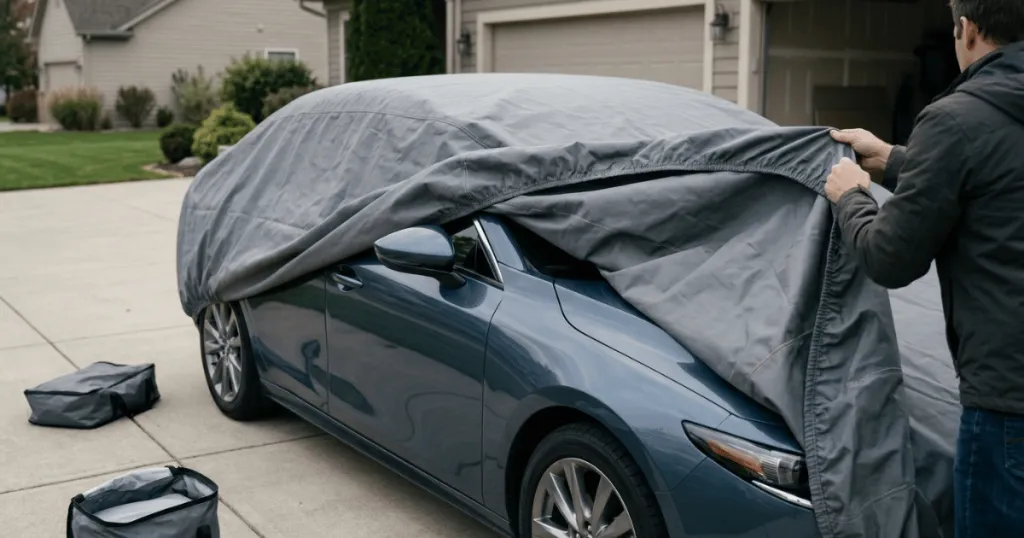
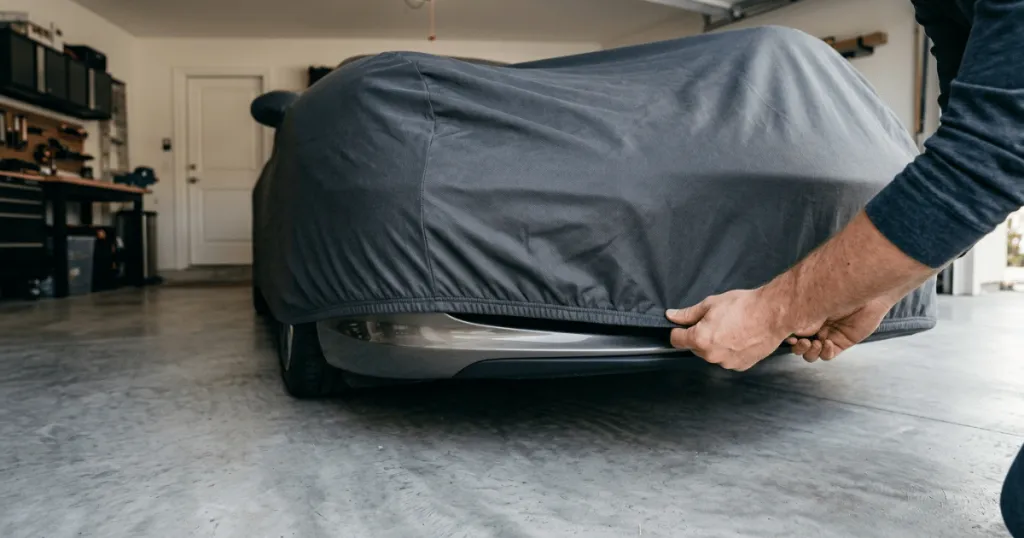
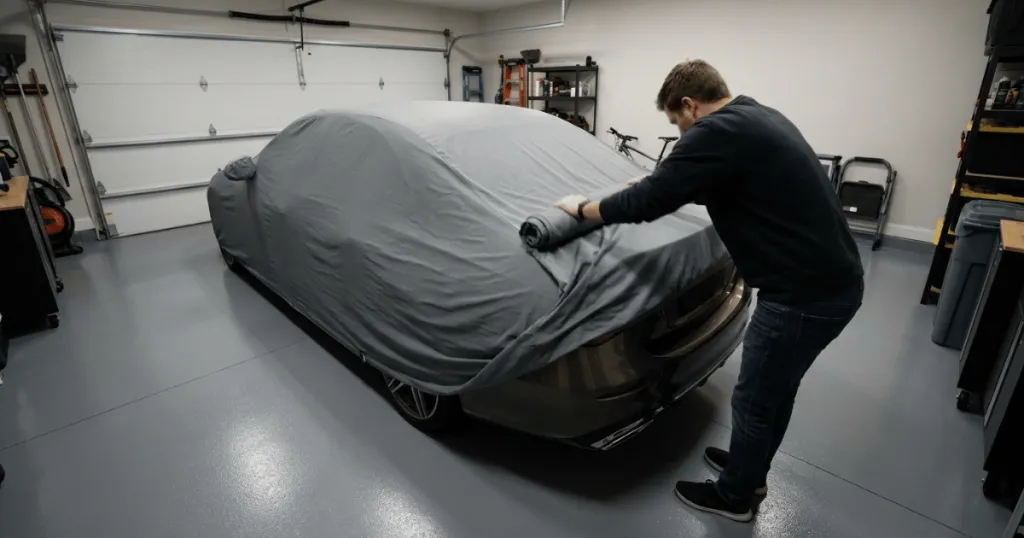
An elastic hem car cover fit relies on sewn-in elastic bands along the front and rear base edges to gather the fabric tightly around the bumpers of a parked vehicle. This mechanical gathering action creates a snug seal that prevents wind from lifting the fabric off the paintwork during stormy weather. Vehicle owners often prioritize this feature because loose covers can flap violently against clear coat surfaces and cause micro-scratches over time.
Finding the right balance between stretch tension and fabric durability requires looking closely at how different car models interact with standard sizing. While a custom-patterned shield naturally contours to body panels, universal designs depend heavily on that bottom stretch to compensate for extra slack. Evaluating these physical mechanics helps vehicle owners choose options that stay anchored without stretching out prematurely or scratching the finish.
The Mechanics Behind an Elastic Hem Car Cover Fit
The core purpose of a gathered bottom edge is physical retention. When manufacturers insert heavy-duty elastic cordage inside a hem tunnel, they create a self-adjusting perimeter. This design element eliminates the need for complex rigging in calm weather while still providing a baseline anchor point against light gusts.
Material memory plays a massive role in how long that tension lasts. High-grade rubber cores encased in marine-grade stitching maintain their elasticity through repeated cycles of stretching, sun exposure, and temperature swings. Cheap threads or low-density rubber degrade quickly under ultraviolet rays, leaving the hem limp and incapable of gripping the lower bumper.
Vehicle geometry also dictates how well the bottom gathers. Sedans, coupes, and trucks feature vastly different overhangs, meaning the stretch factor must accommodate sharp angles near wheel wells and exhaust tips. A properly sized cover uses the hem to pull the material underneath the bumper lip rather than just hugging the outer vertical painted surfaces.
When assessing how an elastic hem car cover fit performs in daily use, vehicle owners must also account for the friction generated between the textile and the painted surfaces. If the hem is too loose, the entire cover shifts laterally whenever a breeze passes, causing the inner lining to drag grit across vulnerable rocker panels. Conversely, when the tension is correctly calibrated, the hem acts as a stationary anchor that keeps the upper panels suspended just clear of the vehicle body.
Key Factors Influencing Retention and Wind Resistance
Wind is the primary enemy of any outdoor vehicle protection strategy. Without a secure lower border, air travels underneath the sheet and inflates it like a parachute. A tight bottom seal cuts off that airflow and keeps the protective layers pressed firmly against the body panels.
Fabric Weight and Tension Balance
Heavy multi-layer fabrics require stronger elastic tension to stay anchored than lightweight indoor dust shields. If the hem is too weak for a heavy canvas or thick woven polyester material, gravity and wind will pull the fabric down off the sides. Manufacturers must calibrate the pulling force of the cordage to match the total mass of the textile overhead. Furthermore, universal car cover tension must account for variable slack, meaning the elastic has to work harder on generic cuts than on tailored alternatives.
Bumper Design and Coverage Depth
Modern vehicles feature aerodynamic bumpers, aggressive front splitters, and recessed rear diffusers that complicate anchoring. An elastic hem car cover fit must stretch over these protruding elements without getting hung up or tearing. If the cut is too shallow, the hem rides up onto the painted body lines and exposes the lower rocker panels to road grit and moisture. Ensuring adequate coverage depth prevents the hem from slipping above the bumper line during sudden thermal contraction caused by dropping evening temperatures.
Environmental Exposure and UV Degradation
Constant exposure to direct sunlight and extreme heat bakes the rubber components inside the hem. Over several seasons, this thermal stress causes the elastic to lose its memory and snap or stretch out permanently. Choosing products treated with ultraviolet inhibitors helps preserve the lifespan of the perimeter tensioner, ensuring that the car cover bottom hem remains functional long after initial purchase.
Real-World Context and Practical Usage Scenarios
Consider a vehicle parked outdoors in an open driveway subjected to frequent coastal gusts. In this scenario, a standard universal sheet with a weak bottom cord will quickly lift, exposing the hood and roof to salt mist and wind-blown dust. The constant flapping creates friction that dulls the clear coat finish over time. Maintaining robust car cover wind resistance under these harsh conditions depends entirely on the integrity of that lower elastic perimeter.
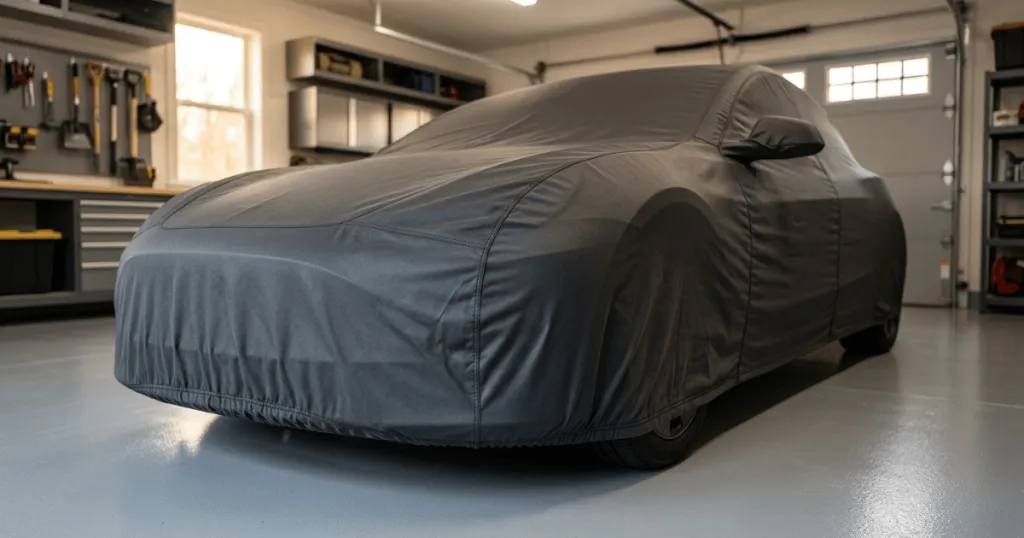
Conversely, a vehicle stored inside a residential garage faces entirely different priorities. While wind lift is virtually non-existent indoors, dust accumulation and accidental bumps from foot traffic or tools remain concerns. In a garage setting, a softer flannel-lined barrier with a gentle gathered hem keeps airborne dust from settling on the paint without requiring extreme tension.
Another common scenario involves vehicles parked underneath deciduous trees that drop sticky sap, pollen, and twigs. A snug lower perimeter prevents falling debris from sliding underneath the fabric margins and making direct contact with the rocker panels or lower door sills during removal. When utilizing outdoor vehicle storage, pairing the elastic hem with supplementary security measures ensures the barrier stays put despite unpredictable weather patterns.
Evaluating vehicle placement also involves noting whether the parking spot is sheltered by fences, buildings, or natural windbreaks. Even in seemingly protected residential yards, wind tunnels can form between structures and subject a parked vehicle to unexpected crosswinds. A dependable elastic hem prevents these sudden drafts from lifting the fabric margins and exposing the lower flanks of the vehicle to abrasive environmental contaminants.
Why Proper Lower Tension Matters for Paint Protection
Paint preservation depends heavily on stopping abrasive particles from moving between the fabric and the clear coat. When wind forces a loose cover to shift back and forth, any trapped dirt acts like fine sandpaper against the finish. A secure lower border minimizes this sliding action by locking the textile in place.
Furthermore, maintaining proper perimeter tension prevents moisture from getting trapped in deep pockets underneath the vehicle. When wind pumps air under a loose hem, it forces humidity upward against the undercarriage and lower body panels. A tightly gathered base encourages stable airflow patterns around the vehicle perimeter rather than erratic turbulence.
Vehicle owners invest in protection to shield their paint from environmental hazards, bird droppings, and UV fading. Compromising on the lower anchor system defeats that purpose by inviting mechanical damage from the shield itself. Prioritizing robust perimeter construction ensures the material performs its primary job without introducing secondary cosmetic flaws, supporting long-term vehicle protection goals.
It is also worth noting how temperature fluctuations affect tension. As metal body panels expand in the midday sun and contract during the night, the physical dimensions of the vehicle shift slightly. A high-quality elastic hem adapts to these subtle dimensional changes without slipping off the bumper ledges or over-tightening to the point of seam failure.
Common Misconceptions About Perimeter Elasticity
A frequent error among vehicle owners is assuming that tighter is always better when evaluating retention features. Forcing an undersized cover onto a large vehicle overstretches the hem and puts immense strain on the stitching. This often leads to torn seams near the bumper corners within the first few months of use.
Another widespread myth is that an elastic hem alone can withstand hurricane-force winds without auxiliary straps. While a good bottom seal handles everyday breezes effortlessly, severe weather events require dedicated wind straps or tie-down grommets passing underneath the chassis. Relying exclusively on perimeter stretch during major storms usually ends with the cover in a neighbor’s yard.
Many buyers also assume all elastic materials perform identically regardless of price point. Budget products frequently use exposed rubber bands that dry out and crack rapidly under minimal thermal stress. Premium options encase marine-grade shock cords inside protective fabric tunnels to shield them from environmental degradation.
Securing your vehicle properly requires evaluating how the lower perimeter interacts with your specific parking environment and vehicle shape. A well-chosen design provides dependable wind resistance and safeguards your paint against abrasion. By paying close attention to material quality and sizing accuracy, you ensure long-term durability and reliable daily performance from your investment.
Understanding the limits of an elastic hem prevents unrealistic expectations during severe weather seasons. While the gathered border excels at routine neighborhood wind defense and garage dust management, recognizing when to deploy physical tie-down straps ensures complete vehicle safety during extreme meteorological events.
FAQ
Can an elastic hem car cover fit securely without extra straps?
Yes, in normal weather conditions and typical residential parking areas, a high-quality elastic hem car cover fit provides enough tension to keep the fabric anchored against everyday breezes.
What causes the bottom elastic to stretch out over time?
Continuous exposure to ultraviolet radiation, extreme heat cycles, and mechanical over-stretching during installation gradually break down the rubber core hidden inside the hem tunnel.
Does an elastic hem work better on custom or universal covers?
Custom covers integrate the hem with precise body contours, whereas universal covers rely more heavily on the stretch factor to compensate for extra fabric slack across different vehicle shapes.