Many vehicle owners assume that keeping a car parked inside a garage or under a carport means any basic fabric throw will protect it indefinitely. In practice, long-term parking creates distinct environmental challenges that quick-dust shields simply cannot handle, ranging from trapped ambient humidity to settling microscopic abrasive grit. Selecting a proper long term car storage cover requires looking past simple sun protection and evaluating how materials manage moisture vapor, temperature swings, and prolonged physical contact over many months.
When a vehicle sits idle for half a year or more, environmental stressors change character entirely compared to daily driving use. Understanding these shifting variables helps clarify why standard protective accessories often fall short during multi-month hibernation periods. Choosing the right shield means recognizing that static vehicles interact with their surroundings differently than cars moving daily through traffic.
The Main Factors Influencing Long Term Car Storage Cover Selection
Choosing the right protective barrier for extended parking involves balancing several competing environmental and physical factors. Unlike short-term parking, where UV blocking is usually the primary concern, long-term dormancy introduces continuous micro-climate challenges around the vehicle’s painted surfaces and rubber seals. When a car remains unmoved, localized heat build-up, shifting relative humidity, and tiny airborne particles interact with the exterior in ways that demand specialized material engineering.
Moisture Management and Vapor Permeability
The most critical feature of any extended parking shield is breathability. Non-porous materials like heavy plastic tarps trap rising ground moisture underneath the fabric, creating a humid greenhouse effect that accelerates corrosion on metal components. A quality long term car storage cover uses multi-layer breathable composite fabrics that allow trapped humidity to evaporate safely into the surrounding air rather than condensing against the clear coat. Moisture barrier performance must be balanced carefully against liquid water repellency, ensuring that ambient humidity escapes outward while accidental spills or overhead leaks shed away from the vehicle body.
Fabric Density and Abrasion Resistance
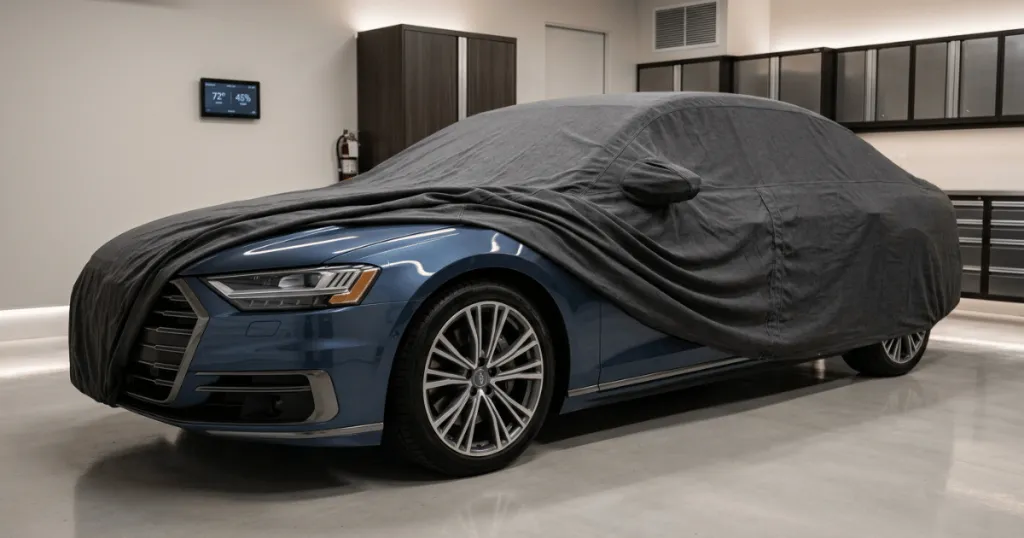
Prolonged contact between fabric and paint creates microscopic friction whenever air currents shift the protective layer. Multi-layered non-woven synthetic materials provide a soft fleece inner lining that glides gently over painted body panels without scratching. High-density outer layers resist dust penetration while maintaining enough flexibility to contour cleanly around mirrors and spoilers without creating tight tension points. Fabric density also dictates how well the cover handles minor impacts from falling garage items or stray twigs in outdoor settings.
Indoor Versus Outdoor Environmental Demands
Where the vehicle rests dictates which performance traits matter most. Indoor garage storage prioritizes dust defense, soft interior linings, and breathable loft to prevent musty odors. Outdoor long-term parking demands rugged UV inhibitors, water-shedding exterior membranes, and reinforced strap systems to withstand persistent wind loading without abrading the finish. Evaluating the specific storage micro climate prevents owners from buying an overly aggressive outdoor canvas for a climate-controlled garage or an under-powered indoor dust sheet for an exposed driveway.
Real-World Scenarios and Practical Storage Contexts
Every parking environment places unique demands on vehicle preservation materials. Examining real storage locations reveals why one-size-fits-all protective solutions rarely deliver ideal results over multi-month timelines.
Sealed Garage Environments
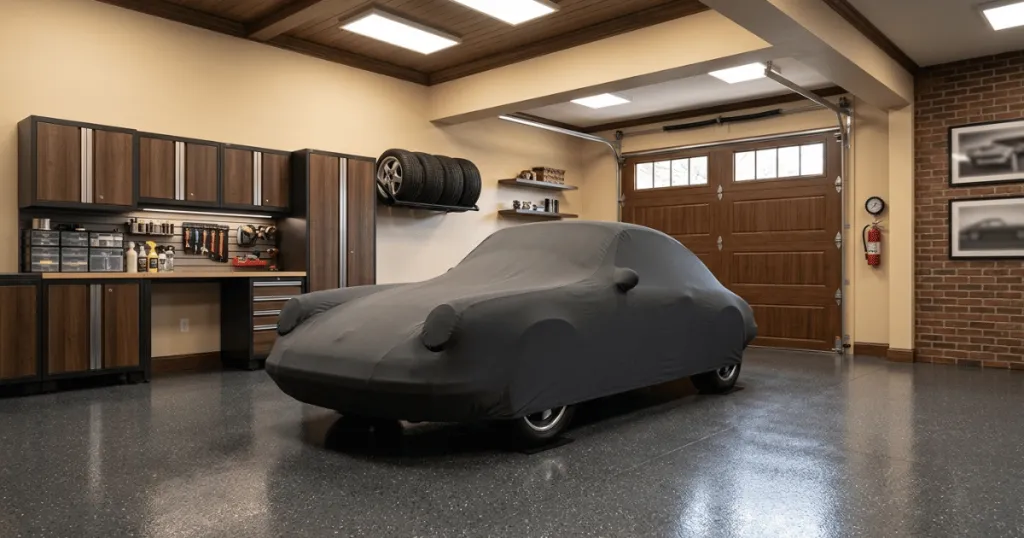
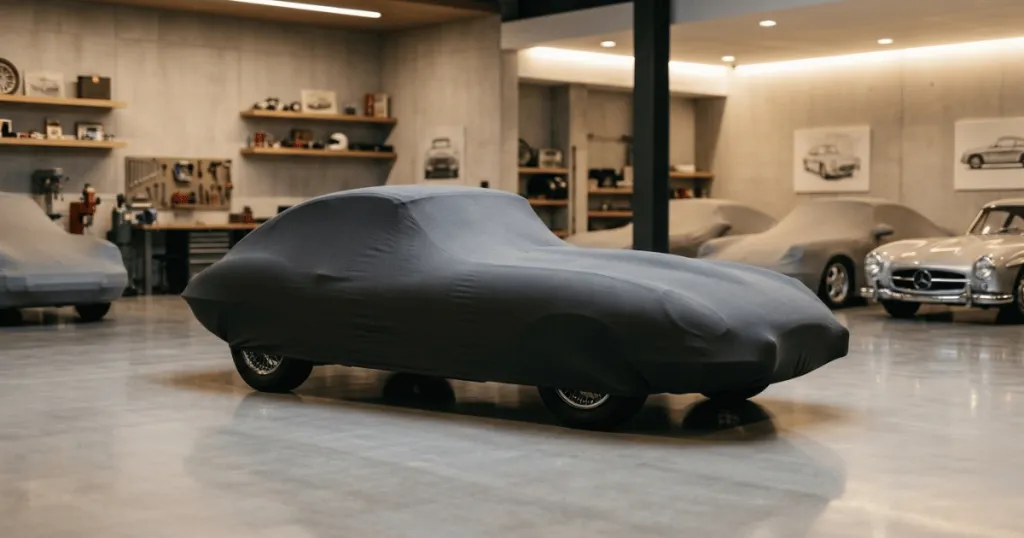
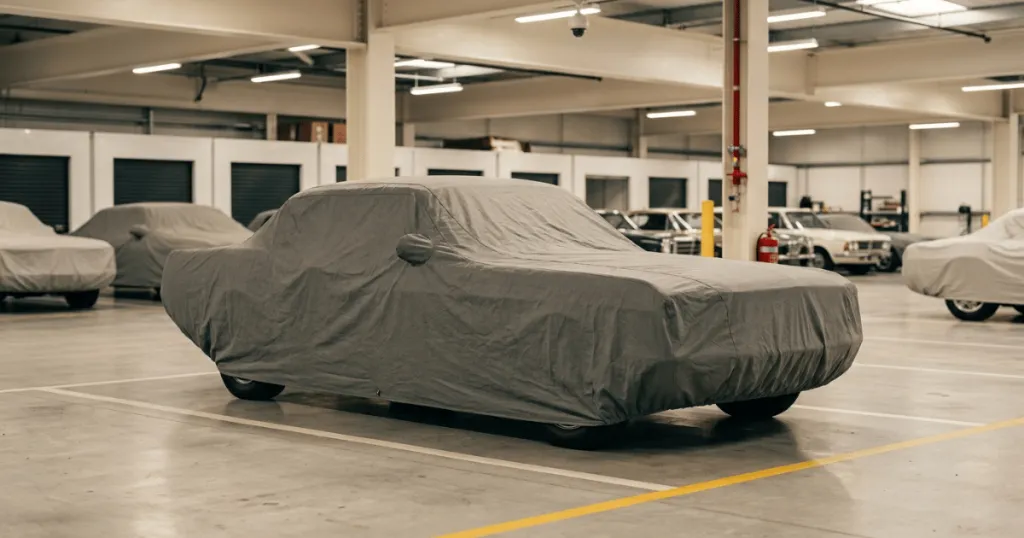
A vehicle parked inside a residential garage for the winter faces minimal UV exposure, but it remains vulnerable to airborne abrasive dust, settling debris, and seasonal humidity shifts. In this setting, a lightweight multi-layer woven fabric prevents dust accumulation while allowing maximum breathability. Securing the perimeter with a bottom hem cord ensures the material stays clean and elevated off the concrete floor, minimizing contact with floor-level grit and moisture.
Open Outdoor Lots and Driveways
Leaving a collector vehicle or seasonal convertible parked outside for months exposes the protective barrier to relentless sunlight, heavy rain, and wind-driven debris. A specialized outdoor long term car storage cover must incorporate heavy-duty elastic hems, under-body strap integration, and ultraviolet stabilizers that resist fabric degradation. Without robust tie-down security, wind buffeting will cause the hemline to rub against painted rocker panels and bumper fascias, eventually wearing through the clear coat.
Unheated Barns and Outbuildings
Agricultural or rustic outbuildings introduce unique threats such as nesting rodents, high ambient moisture, and falling organic matter. Owners storing vehicles in these spaces need specialized multi-layer barriers that feature dense outer weaves to discourage small pests while maintaining high breathability to combat damp barn air. These environments often experience rapid temperature fluctuations, making continuous condensation prevention essential for rust avoidance.
Why Proper Long-Term Vehicle Shielding Matters
Neglecting the specific demands of extended parking often leads to expensive cosmetic and mechanical restoration down the road. When paint and trim remain unprotected from environmental settling and chemical oxidation for months, clear coats oxidize and rubber window seals dry out prematurely. Investing effort into a dedicated long term car storage cover preserves the vehicle’s structural integrity, aesthetic finish, and eventual resale value by preventing slow, cumulative degradation that routine washing cannot easily reverse.
Furthermore, managing the micro-climate directly adjacent to the metal body prevents rust blooms from forming in hidden seams and wheel arch lips. Taking a systematic approach to vehicle hibernation ensures the machine emerges from storage in the exact condition it entered it, free from unexpected paint correction needs or deteriorated rubber trim.
Common Misconceptions About Extended Parking Protection
Several persistent myths surround vehicle preservation during long periods of inactivity, often leading owners to make counterproductive choices.
A frequent error is believing that wrapping a vehicle in heavy plastic sheeting provides superior defense against moisture. In reality, impermeable plastics trap condensation and cause severe paint damage through prolonged moisture contact. Another common misunderstanding assumes that indoor storage eliminates the need for any protective layer because the car is out of the rain. Indoor dust accumulation mixes with natural oil films on paint, turning into an abrasive paste if the car is moved or wiped improperly without a soft barrier in place.
Finally, some owners assume that universal-fit sheets work just as well as semi-custom or custom patterns during long-term storage. Loose fabric excess creates flapping wind pockets outdoors and unnecessary wrinkles indoors, increasing the risk of friction wear on sharp body lines and mirrors.
FAQ
How often should a long term car storage cover be removed for inspection?
It is wise to inspect the vehicle every four to six weeks if conditions permit. Removing the long term car storage cover allows you to check for moisture accumulation, pest activity, and dust settling on the paint surface.
Can I put a car storage cover on a damp vehicle?
Never install a protective layer over a wet or dirty vehicle. Trapping moisture against the paint for an extended period creates an ideal environment for mold growth, water spotting, and clear coat damage.
What is the difference between indoor and outdoor storage fabrics?
Indoor materials focus on breathability and soft interior fleece to prevent dust and scratches, whereas outdoor materials require heavy UV stabilizers, waterproof exterior membranes, and wind-resistant tie-down straps.