Many vehicle owners assume that simply wrapping their car in any protective sheet is enough to keep outdoor dust and debris at bay. A common assumption is that soft fabric equals safe paint, leading people to purchase thin, generic covers that shift constantly in the wind. In practice, loose-fitting materials can trap grit underneath and grind against clear coats during breezes, causing dull spots and fine scratches over time. Choosing an abrasion resistant car cover requires looking past basic softness and evaluating how the inner lining, fabric weight, and anchoring system interact to prevent surface friction.
Understanding what makes a textile resilient against rubbing helps safeguard vulnerable vehicle finishes from premature wear. Modern automotive covers rely on specialized multi-layer composites or tight-weave textiles to isolate the paint from external particulate matter. When outdoor elements test your parked vehicle, the right exterior shield absorbs the mechanical stress instead of transferring it directly to the clear coat.
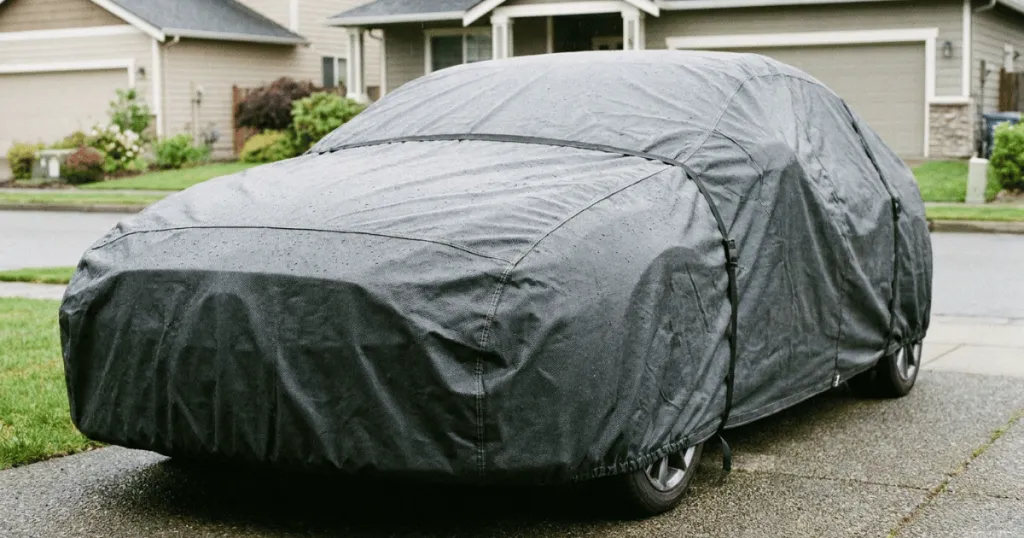
Core Factors That Define an Abrasion Resistant Car Cover
Evaluating textile durability involves looking closely at inner lining construction, fabric weight distribution, and secure anchoring methods. A properly engineered exterior shield manages environmental contact without wearing down the underlying clear coat.
The Inner Lining and Paint Protection
The layer of fabric touching your vehicle exterior matters more than the rugged outer shell. Smooth, non-abrasive inner linings act as a gentle buffer against micro-movements caused by thermal expansion and wind gusts. Brushed fleece or soft woven polypropylene liners prevent trapped dust particles from acting like sandpaper against sensitive paint surfaces.
Fabric Weight and Wind Stability
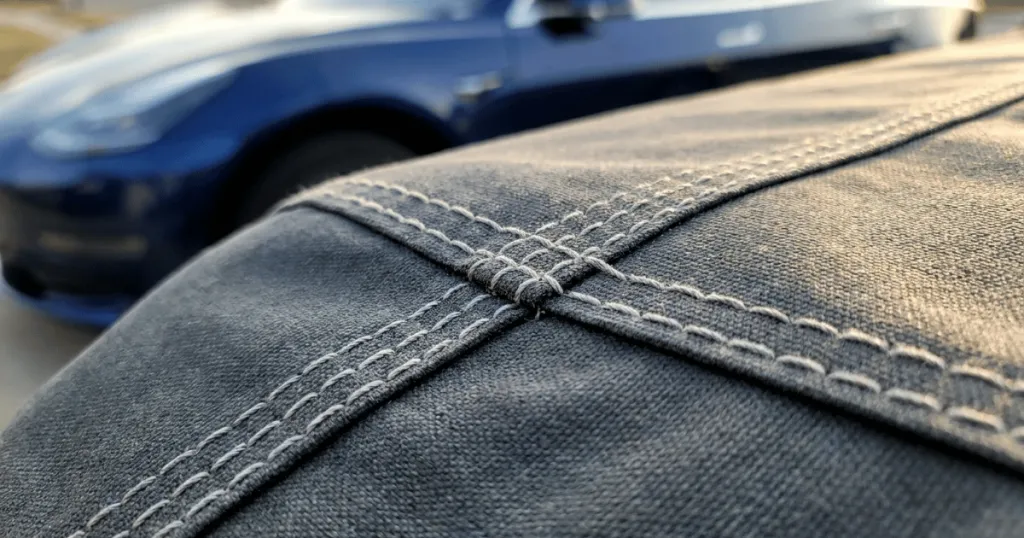
Lightweight covers flutter violently in moderate breezes, creating continuous friction that wears down high points like side mirrors, roof lines, and spoiler edges. An abrasion resistant car cover typically features a balanced, substantial weight that dampens wind flap. Heavier multi-layer textiles hold their position steadily, reducing the constant rubbing cycles that damage clear coats.
Tension and Secure Anchoring Systems
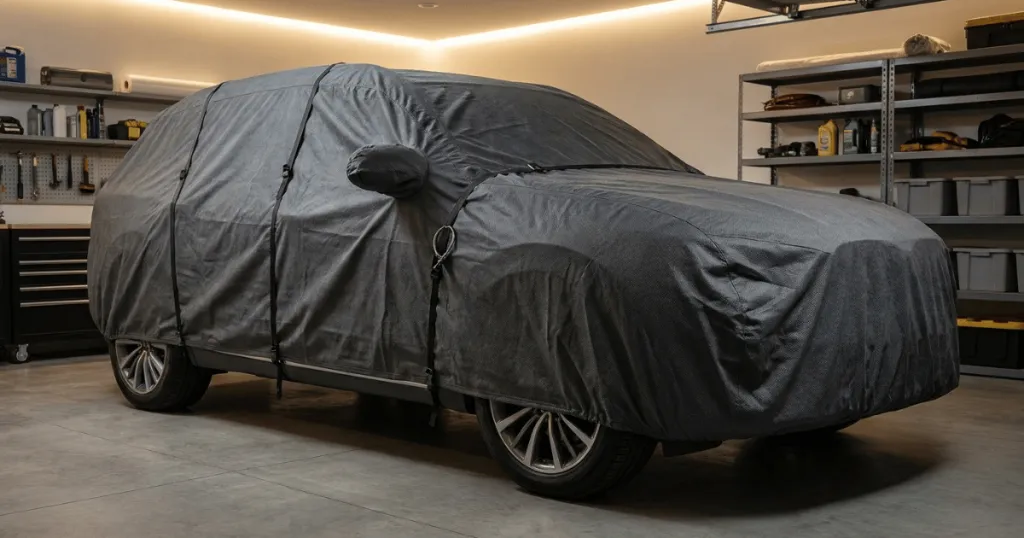
Even the softest textile will cause surface marring if the cover slides back and forth across the body panels. Built-in hem cinches, underbody strap systems, and reinforced grommets keep the entire barrier locked tightly against the vehicle chassis. Restricting movement ensures that friction occurs between the environment and the outer shell rather than between the inner lining and your paint.
Real-World Scenarios and Environmental Exposure
Different parking environments impose distinct mechanical stresses on vehicle protection systems. Understanding how specific weather patterns and geographic factors interact with your vehicle helps clarify why standard covers often fail in demanding conditions.
High-Wind Open Parking Lots
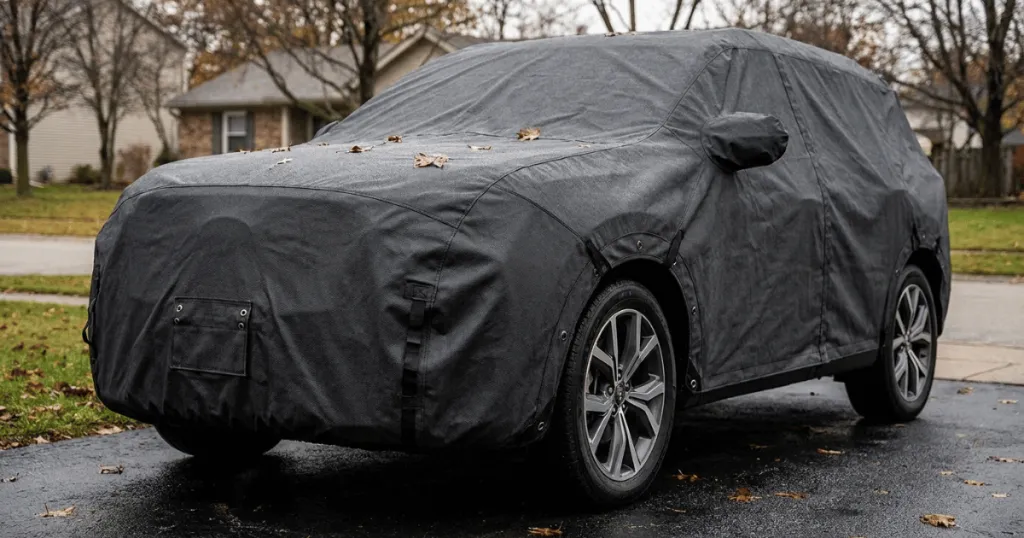
Exposed driveway or street parking puts vehicle covers under constant mechanical fatigue. Constant gusts pull at loose fabric panels, transforming microscopic airborne dirt particles into abrasive polishing agents. A heavy-duty, wind-resistant shield remains stable under these punishing conditions, protecting exterior trim and paint from friction burns.
Tree-Lined and Industrial Storage
Parking beneath shedding trees or near manufacturing zones exposes paint to falling organic debris, fine soot, and gritty particulate fallout. When moisture mixes with these deposits underneath a loose cover, it forms a slurry that accelerates surface wear. Choosing an abrasion resistant car cover prevents heavy falling debris and trapped contaminants from grinding into the clear coat during routine placement and removal.
Frequent Daily Commuter Use
Putting a protective shield on and taking it off twice a day introduces friction every single morning and evening. Dragging a dry, dusty cover across a bumper or hood creates swirl marks if the inner lining lacks smooth anti-friction properties. Daily users need materials that glide effortlessly over body lines without trapping or sliding grit across the surface.
Why Surface Protection and Friction Control Matter
Preventing physical friction on your vehicle exterior is fundamentally about preserving clear coat integrity and long-term aesthetic value. Modern automotive paints are remarkably thin, and every micrometers-deep scratch removed through machine polishing takes away a finite layer of protective clear coat. Minimizing mechanical wear at the root prevents the need for aggressive paint correction down the road.
Beyond cosmetic concerns, compromised clear coats invite environmental oxidation, UV degradation, and chemical etching from bird droppings or acid rain. An abrasion resistant car cover acts as a physical barrier against these compounding vulnerabilities. Maintaining a smooth, intact surface finish also supports higher vehicle resale value when you decide to upgrade or sell.
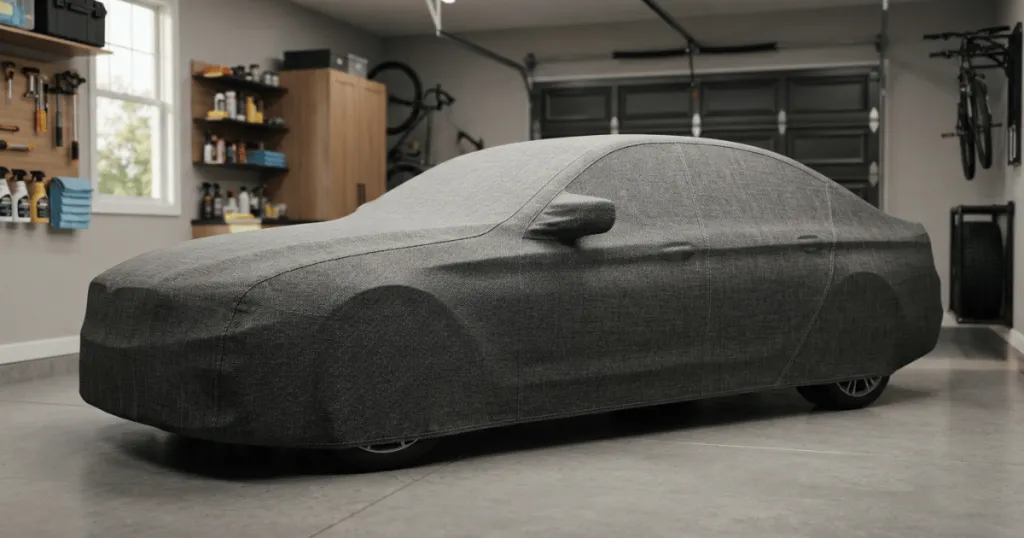
A common mistake is assuming that indoor garage storage eliminates the need for friction-conscious material choices. Dust accumulation indoors mixes with routine garage traffic drafts, still causing minor surface contact if the cover is poorly fitted. Prioritizing proper material texture and snug installation delivers reliable peace of mind across all storage environments.
Common Misconceptions About Protective Vehicle Covers
Many vehicle owners rely on outdated assumptions regarding how textiles interact with automotive paint finishes. Clearing up these misunderstandings helps guide better selection choices for long-term vehicle care.
One widespread myth is that thicker multi-layer tarps are inherently safe because they feel heavy and durable. In reality, a rigid, abrasive outer material with a rough backing can cause severe marring if wind whips it against the vehicle body. Another frequent error is believing that universal sizing offers enough tension to prevent rubbing. Universal covers often leave slack pockets that catch the wind and generate relentless friction against hood corners and fender flares.
Some drivers also think that washing the car immediately before installing a cover eliminates all abrasion risks. While removing large grit chunks is necessary, microscopic dust always settles on outdoor vehicles, meaning the inner lining must still possess micro-finishing characteristics to prevent scratching. Understanding these nuances ensures your investment actually protects the finish instead of slowly damaging it.
Selecting the Right Material Composition for Your Climate
Different geographic regions present distinct atmospheric challenges that dictate which textile engineering features matter most. In arid desert climates, intense solar radiation breaks down inferior fibers, causing them to shed internal threads onto the vehicle surface. A proper abrasion resistant car cover utilizes UV-stabilized exterior weaves that resist solar degradation, ensuring the outer shell maintains its structural integrity over months of direct exposure. Meanwhile, humid coastal environments introduce moisture that can combine with trapped salt crystals, turning loose debris into an abrasive paste if the fabric lacks breathable properties.
Breathability is a critical partner to friction control. When daytime temperatures rise, trapped moisture beneath a non-porous tarp expands and creates vapor pressure against the paint. As the vehicle cools at night, this moisture condenses directly onto the clear coat. A high-quality protective shield allows trapped humidity to escape outward while blocking external liquid water from entering. This balance prevents moisture-induced paint softening, which makes the clear coat far more vulnerable to scratching from any fabric movement that does occur.
Understanding Fit Styles and Their Impact on Surface Wear
The physical dimensions of how a cover drapes over a car dictate how much mechanical play exists during wind events. Universal-fit options rely on generic scaling, which inevitably creates loose folds along the roof, trunk lid, and door panels. These loose pockets act like sails in a breeze, catching lateral air currents and driving the inner lining repeatedly against the underlying metal. Over extended periods, this constant whipping motion polishes the clear coat in undesirable ways, creating distinct matte patches on otherwise glossy surfaces.
Custom-fit covers eliminate excess slack by mapping the exact contours of specific make and model body lines. By hugging mirror housings, bumpers, and body creases tightly, a custom shield removes the loose fabric that generates wind flap. When paired with a heavy-duty, dense textile construction, this snug geometry ensures that environmental forces dissipate safely across the exterior shell rather than translating into localized friction points on the vehicle finish.
Maintenance and Care Practices for Long-Term Performance
Even the most advanced protective textile requires routine maintenance to retain its non-abrasive qualities. Over months of outdoor exposure, the inner lining inevitably collects airborne dust, pollen, and microscopic grit that settles through the weave or enters during installation. If left unaddressed, these accumulated particles embed in the fleece or soft polypropylene fibers, effectively transforming the inner lining into fine-grit sandpaper.
Owners should routinely inspect and clean their covers according to manufacturer guidelines, which often involves gentle washing in commercial-sized machines or targeted rinsing while the cover is secured to the vehicle or laid flat on a clean driveway. Allowing the material to dry completely before reinstallation prevents mold growth and ensures the fabric remains supple. Storing the cover in a designated breathable storage bag when not in use also protects it from gathering garage dust or workshop debris that could later transfer to the vehicle paint.
FAQ
What makes an abrasion resistant car cover different from a standard outdoor cover?
An abrasion resistant car cover uses specialized inner linings like brushed fleece and dense multi-layer composites designed to minimize friction against clear coats, even when wind causes the fabric to shift.
Does a heavy cover guarantee better paint protection against wind?
Weight alone does not guarantee safety, but a properly weighted, well-anchored cover reduces flutter and wind flap. This stability prevents the constant rubbing that creates swirl marks on vehicle paint.
How often should I clean the inside of my car cover to prevent scratching?
You should inspect and clean the interior of your cover every few months or whenever you notice dust buildup. Shaking it out or washing it per manufacturer instructions removes trapped grit that could otherwise cause abrasion.
Can custom-fit covers reduce paint friction better than universal options?
Yes, custom-fit options eliminate loose fabric slack and billowing pockets that catch the wind, significantly reducing the surface friction and paint wear associated with loose universal covers.