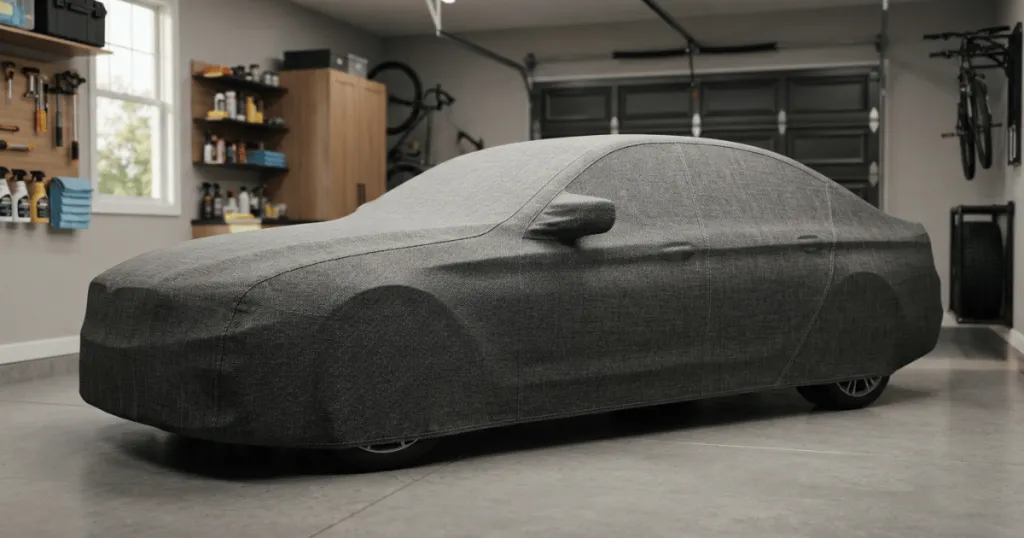
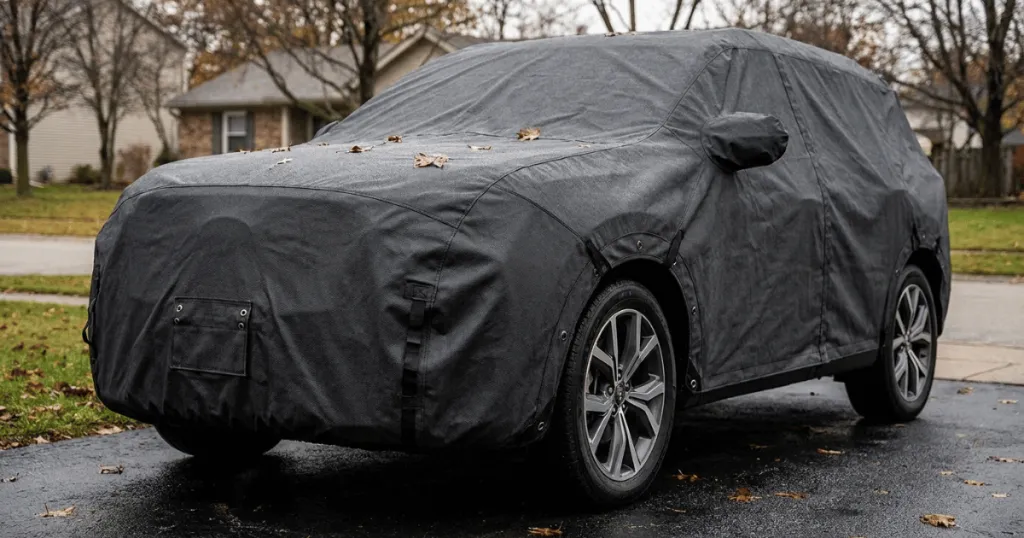
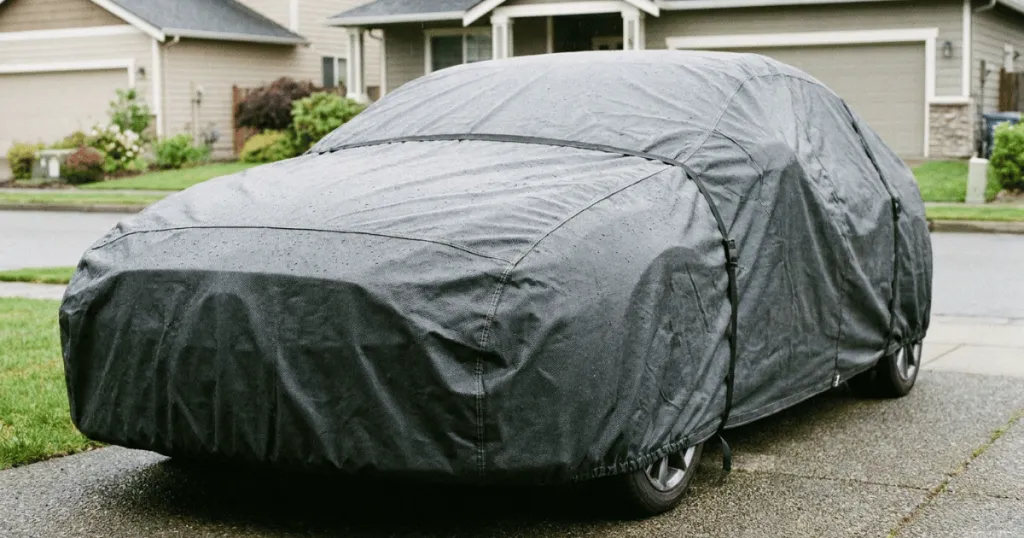
Protecting a vehicle stored outdoors requires shielding it against constant environmental stress. A standard fabric shield often frays or splits when subjected to severe winds, falling branches, and aggressive ultraviolet radiation. Selecting a tear resistant car cover prevents premature fabric failure and keeps your vehicle finish safe from harsh elements. When evaluating protection for cars, trucks, or SUVs left outside for extended periods, understanding the physical demands placed on the textile helps ensure long-lasting defense without unexpected damage.
Choosing the correct protective gear involves balancing material resilience, breathability, and structural design. A heavy duty car cover designed with advanced engineering prevents environmental degradation, keeping painted surfaces and exterior trim secure against wind, rain, and debris.
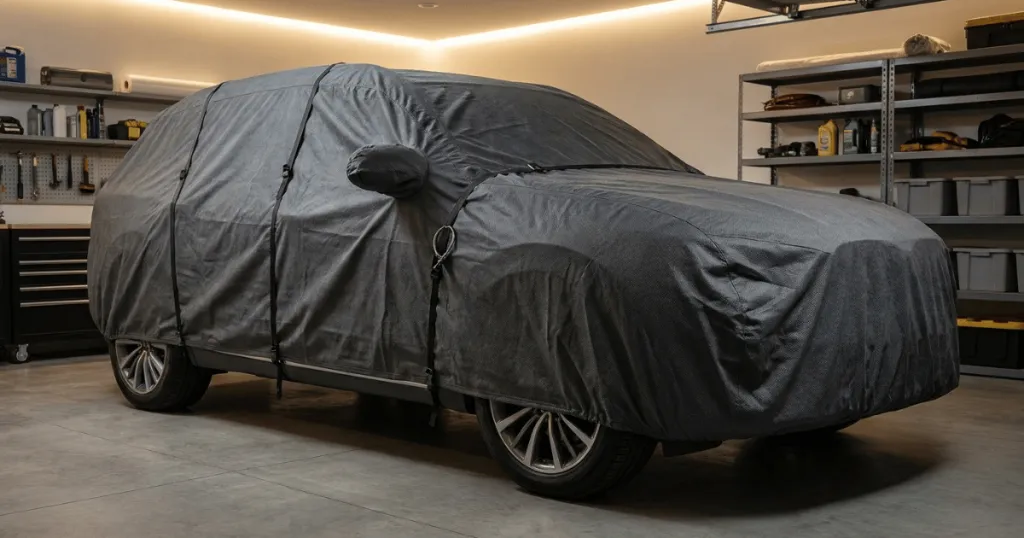
The Core Mechanics of Rip-Stop Vehicle Protection
Outdoor vehicle protection involves more than simply keeping dust off the paintwork. When high winds sweep across an open driveway or parking area, standard fabric covers snap and billow violently. This continuous flapping motion exerts immense physical stress on the seams and fabric weave, eventually causing the material to split wide open and expose the vehicle finish to damage.
A tear resistant car cover addresses this vulnerability through specialized multi-layer engineering. Manufacturers often integrate woven rip-stop grids into synthetic textiles like heavy-duty polyester or polypropylene. These embedded grid patterns act as a physical barrier that stops minor punctures or small cuts from turning into catastrophic structural failures across the entire panel.
Selecting the right textile thickness is just the starting point for effective defense. Reinforcing stress points, such as mirror pockets and antenna patches, ensures the shield maintains its structural integrity over months of continuous weather exposure. Understanding these foundational engineering details helps vehicle owners choose covers that survive punishing seasonal storms without ripping apart at the seams. Proper tension distribution across the entire surface prevents localized weak spots from forming when gales sweep across open terrain.
Furthermore, maintaining fabric integrity requires careful attention to how the material interacts with the clear coat finish of modern automobiles. When inferior materials whip back and forth, they generate friction that dulls paintwork over time. A properly structured rip stop vehicle cover minimizes this abrasive contact by holding a stable silhouette over the vehicle body.
Material Strength and Fabric Construction Standards
Vehicle covers rely on specific material weights and weaves to withstand physical strain. Evaluating the underlying textiles reveals why certain shields endure severe weather while others degrade rapidly under heavy tension.
Woven Polyester and Rip-Stop Grids
Heavy-duty polyester serves as a primary foundation for most high-end vehicle shields. Woven with an integrated grid of thicker reinforcement threads, this material resists puncturing from falling twigs and localized friction. The grid design ensures that if a sharp object pierces the outer layer, the tear cannot propagate across the surface.
Multi-Layer Composite Films
Many modern protective shields bond multiple material layers together for enhanced durability. A typical construction sandwiches a waterproof breathable film between a soft inner fleece and a rugged outer shell. This layered approach distributes physical tension evenly across the entire vehicle body, reducing localized stress that normally causes fabric splitting.
Reinforced Seam Architecture
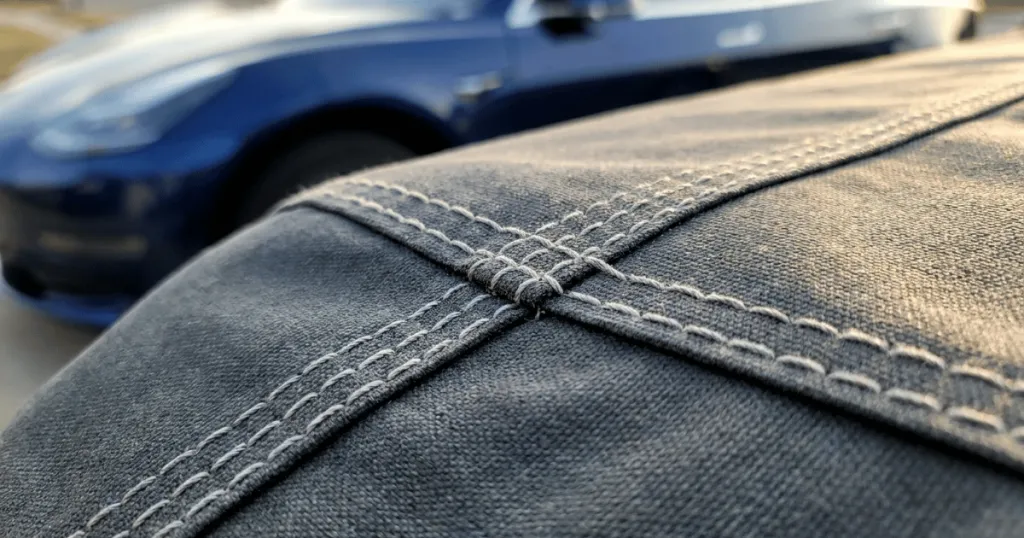
Fabric strength means little if the stitching fails under tension. A durable vehicle shield utilizes double-needle stitching and sealed seams to handle the pulling forces exerted by high winds. These reinforced joints prevent the cover from splitting open along the roofline or hood edges during severe weather events. Utilizing uv resistant auto cover construction standards ensures that solar radiation does not break down the thread integrity over months of direct exposure.
Real-World Environmental Challenges and Mitigation
Vehicle owners face diverse environmental threats depending on their geographic location and parking situation. Deploying a rugged protective shield prevents unexpected damage from seasonal weather patterns and everyday hazards.
In high-wind corridors, standard covers often self-destruct within a single season. The constant friction of loose fabric rubbing against clear coat finishes creates microscopic abrasions, while the whipping motion snaps weaker threads. Using a properly fitted shield with heavy-duty construction eliminates excessive slack and stops the destructive flapping cycle entirely.
Trees present another constant hazard for parked vehicles. Falling acorns, heavy pine needles, and sharp branches routinely puncture thin fabric shields, leaving the underlying paint exposed to sap and moisture. A reinforced textile blocks these falling hazards effectively, ensuring the vehicle remains pristine beneath the barrier. When selecting an outdoor car cover durability is paramount, especially in regions experiencing extreme seasonal shifts from freezing winter snow to intense summer heat.
When wind resistant vehicle cover options are implemented correctly, they prevent the billowing effect that typically leads to fabric fatigue. Owners should evaluate local weather patterns before choosing a specific material weight, ensuring the cover matches the severity of the surrounding environment.
Evaluating Long-Term Value and Durability Factors
Investing in a heavy-duty protective shield changes how vehicle owners approach long-term outdoor storage. Replacing a flimsy cover every few months due to wind damage or ultraviolet degradation quickly becomes frustrating and costly.
From a practical standpoint, premium textiles maintain their structural integrity through freezing winters and scorching summers. This longevity means the vehicle stays continuously shielded without unexpected gaps appearing in the middle of a storm season. Prioritizing robust construction over bargain pricing ultimately saves time and prevents unexpected paint damage.
One important thing many people overlook is how grommet placement affects overall durability. Inferior covers often tear right around the reinforced tie-down rings when high winds pull on the security cable. High-quality designs distribute this tension across wider anchor patches, preventing the grommets from ripping straight out of the fabric.
Material thickness must be evaluated alongside breathability. A weatherproof car shield that traps condensation underneath will damage exterior trim just as quickly as direct exposure to rain. Modern composite textiles solve this problem by venting moisture vapor outward while blocking external water droplets from entering.
Common Misconceptions about Heavy-Duty Vehicle Shields
Many vehicle owners assume that maximum durability requires an extremely heavy and rigid material. In reality, modern textile engineering provides high puncture resistance without adding unmanageable weight during daily installation and removal.
Another frequent misunderstanding involves the relationship between thickness and waterproof performance. A thick cover does not automatically guarantee superior weather defense if the underlying weave lacks structural integrity. True durability comes from engineered rip-stop matrices rather than sheer bulk alone.
Property owners also occasionally believe that a tight fit eliminates the need for strong fabric. While a custom fit reduces wind flutter, severe gusts will still test the limits of any material. Combining a precise fit with robust tear resistance provides the ultimate safeguard for outdoor vehicle storage. Incorporating a puncture resistant car tarp concept into custom vehicle protection ensures that even stray gravel kicked up by passing traffic cannot pierce the defense layers.
FAQ
What makes a tear resistant car cover different from a standard cover?
A tear resistant car cover features reinforced multi-layer construction or integrated rip-stop grid threads that stop small punctures and wind stress splits from spreading across the fabric.
How do high winds damage ordinary vehicle covers?
High winds cause loose fabric to billow and whip violently, creating friction against the paint and placing immense physical tension on the seams until the material splits.
Do heavy-duty protective shields trap moisture against the paint?
Quality heavy-duty covers use breathable multi-layer textiles that allow trapped moisture vapor to escape while blocking external rain, snow, and UV radiation.
How can I prevent tie-down grommets from ripping out of the fabric?
Choose a cover with reinforced anchor patches and double-stitched perimeter hems that distribute wind tension evenly across the lower edge rather than concentrating it on a single ring.